Pilot Requirements (Legal and physiological)
 | Currency. Three takeoffs and landings to a full stop in category, class, and type within the preceding 90 days. (Perfect time to practice IFR procedures, even if not filing an IFR flight plan.) |
 | Proficiency. Not the same as legal currency, but every bit as important. |
 | Oxygen (for flight above 5,000 or 10,000 MSL). Night vision is one of the first things to go if you become hypoxic. |
Flight Planning (Especially for cross-country flights)
 | Route selection. If you have an engine failure, the nearby terrain and airports assume supreme importance. Choose wisely. |
 | Appropriate charts. IFR charts are more readable after dark. |
 | Course lines in black or blue. Red lines on a chart disappear completely in red cockpit lighting, and yellow highlighter lines aren't much better. |
 | Charted Altitudes. Use ASF's Terrain Avoidance Plan to determine safe altitudes in advance. |
 | Weather briefing. Many pilots prefer to double their daytime VFR minimums over flat terrain; quadruple them in mountainous terrain. |
 | Temperature/dew point spread. Fog is a terrible thing to discover by surprise. |
 | Night-related NOTAMs. Look for runway or beacon lights out, nearby towers, etc. |
 | Fuel. Many pilots insist on a minimum of one-hour reserve over their absolute worst-case scenario. Planning a fuel stop? Make sure you check availability of services in the evening hours. |
 | IFR skills. Over unlit terrain on a dark night, basic instrument proficiency is strongly encouraged. Has it been a while since you've used these skills? If so, begin your review with ASF's free online courses, Single-Pilot IFR and IFR Adventure. Most importantly, get some hands-on practice in with a safety pilot or better yet, a flight instructor. |
 | IFR flight plan or ATC flight following. ATC is as good as 911 for getting help on the way. |
 | Reading glasses. It's much harder to see charts clearly at night. |
Aircraft Preflight
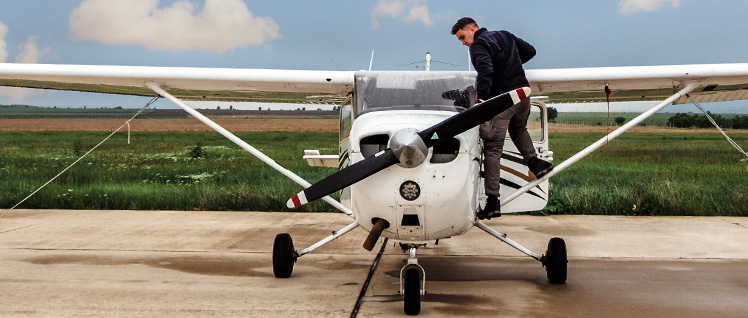
 | Lights and Switches. Verify operation. Be familiar with location and operation of interior switches (Include navigation, anticollision, landing, taxi, panel, and interior lights). |
 | Panel/interior lights. Verify operation. Be familiar with location and operation of interior switches. |
 | Electrical system. Verify health of battery, generator, alternator, and voltage regulator. |
 | Flashlights. Two, minimum — one for exterior preflight, and a smaller dimmable one on a lanyard around the neck (or at least nearby). |
Airport Operations
 | Airport taxi diagrams. It's easy to get lost at night in a vast sea of lights at a large airport. |
 | VASI/PAPI or ILS glide slope guidance. Use them to add a considerable margin of safety on approach. |
 | Airport Environment. Shorter, darker, and more obstructed fields are bigger challenges. |
Kneeboard-friendly format (pdf) | Return to Safety Hot Spot
Updated Thursday, March 31, 2005 10:21:29 AM