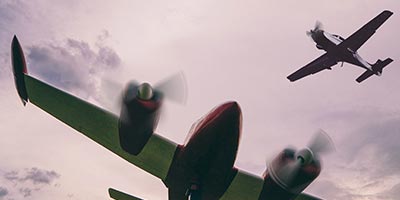
Flight Planning  | Things change — Check notams for the departure and destination airports. The one time you don't get notams could be the time the runway at your destination airport is closed. Don't forget to check Temporary Flight Restrictions (TFRs). |  | Airport frequencies — Review the sectional, instrument approach charts, or Airport/Facilities Directory (A/FD) for the airport's CTAF frequency. Are your publications current? AOPA members can reference AOPA's Airport Directory Online (also available in print) for current frequencies. |  | Airport weather information — AWOS and ASOS frequencies can be found on sectionals, instrument approach charts, and in the A/FD. If the destination airport does not have an automated weather system, locate a nearby airport that does and note the frequency. This will allow you to get a weather update while inbound to land. |  | Airport diagrams — Don't leave home without them! Airport diagrams help you get your bearings at unfamiliar airports. AOPA members can download free airport diagrams from AOPA's Airport Directory Online. |  | Fly friendly — Some airports have noise abatement procedures. Check the A/FD to see if the airports you'll be using have special departure or arrival procedures to keep the neighbors happy. |  | Educate yourself — Review the AOPA Air Safety Foundation's Operations at Nontowered Airports Safety Advisor. | | Aircraft Preflight  | Check operation of radios — If there's any doubt, unicom for a "radio check" before departing to ensure the radios are working and the volume and squelch are adjusted properly. |  | Check exterior lights — Even during the day, exterior lights (especially landing and recognition lights) make your aircraft much easier to see and avoid. | Airport Operations  | Entry and exit strategies — Have a plan before you get there. Know how to enter and exit the airport area safely. |  | Remember your manners — Be familiar with the correct communication terminology and keep it short — you're sharing the frequency. If the CTAF is busy you may be able to pick up all the information you need, such as the landing runway, without ever talking. When it comes to disagreements, be courteous and set a good example. |  | Don't hit 'em — See and avoid is the pilot's responsibility. Know where midair collisions are most likely to occur and use extra vigilance to avoid other aircraft. See the AOPA Air Safety Foundation's Collision Avoidance Safety Advisor for more information. Remember that not all aircraft have radios, so some folks in the traffic pattern may not be talking. |  | No automated weather — No problem. Overfly the airport and check the windsock, wind tee, or tetrahedron. |  | Airport diagrams — Remember the airport diagrams you got while planning this flight? Use them! |  | Which way — If you're not familiar with the airport, signs and markings will lead the way. For a refresher on what they all mean, review the AOPA Air Safety Foundation's flashcards and the free Runway Safety online course. | |
Kneeboard-format (PDF file — 595KB) | Return to Safety Hot Spot
Updated Wednesday, March 23, 2005 12:16:02 PM