How slow can you go?
Learning to play the FAA’s slow flight limbo
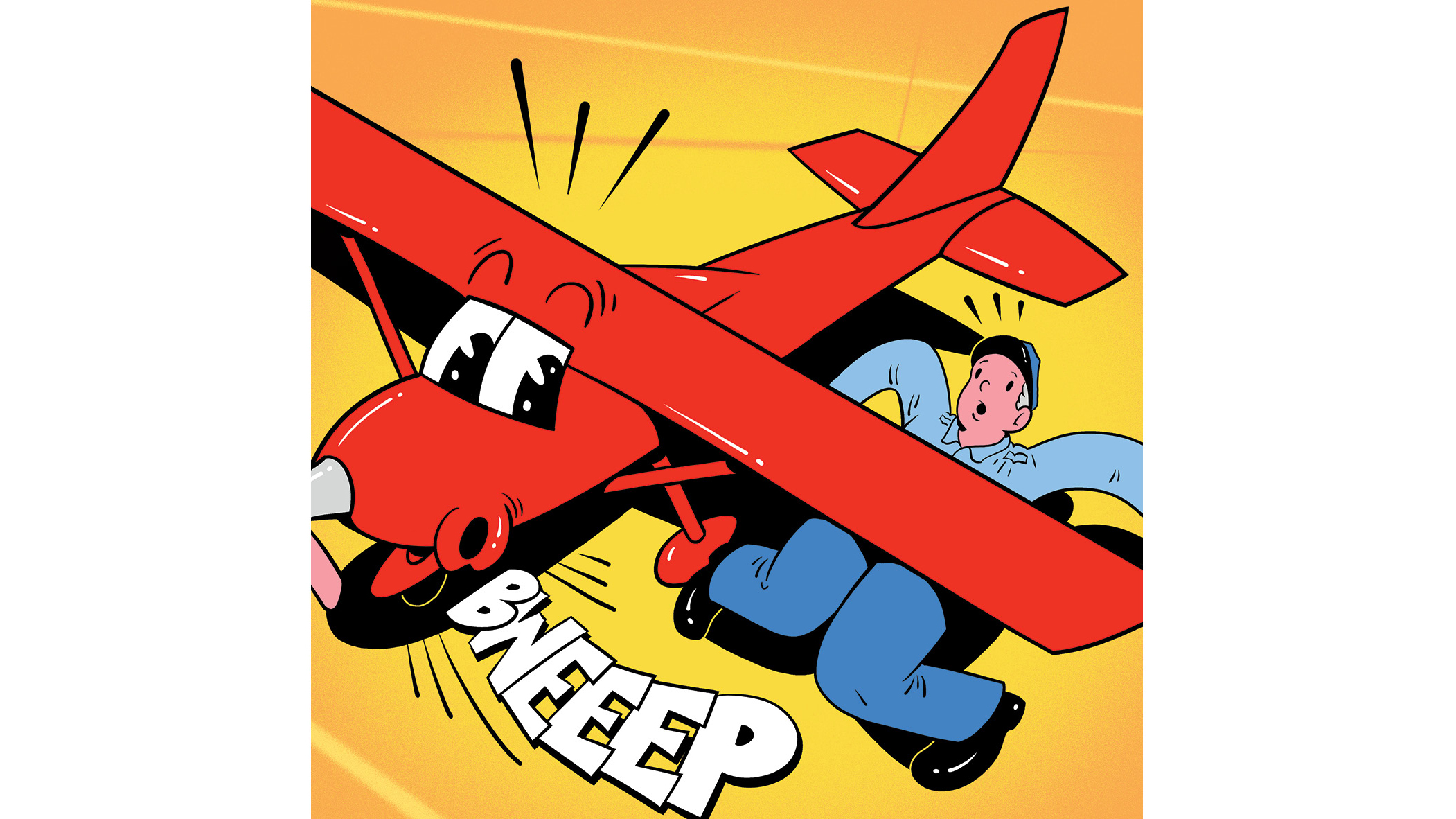
For certification at the private, commercial, or instructor level, maneuvering the aircraft in slow flight and recovery from stalls with and without power, in level flight and in banked turns are all part of the test.
While slow flight might be considered to occur at any airspeed below cruise, FAA airman certification standards (ACS) precisely define the airspeed that constitutes slow flight for which a pilot must show mastery. And the standards offer similarly specific guidance for exactly how far into the stall the pilot should initiate a recovery.
But pilots routinely show up to their practical exams having missed the memo and botch the slow flight and stall tasks. Those precise definitions, it turns out, have changed over the years, and flight instructors likely haven’t kept up with them as they should. And the vacillating changes that appear in new editions of the standards hasn’t made that easy.
The last Commercial Pilot Practical Test Standards for Airplane (PTS, FAA-S-8081-12C), for example, defined slow flight as using an airspeed for which “any further increase in angle of attack, increase in load factor, or reduction in power, would result in an immediate stall.” Of course, that means that the stall horn, mandated by FAR 23.207 to alert the pilot at least five knots above the stall, would be blaring during the entire demonstration. The new Commercial Pilot for Airplane Category Airman Certification Standards (FAA-S-ACS-7) upped the critical speed to that at which increasing angle of attack, load factor, or reducing airspeed would cause a stall warning. To those accustomed to the old regulations, slow flight didn’t seem so slow anymore, and the FAA received considerable pushback from the training community.
Proponents for the change felt that pilots shouldn’t believe that flying around with a blaring horn is normal and that it warrants immediate corrective action. I confess that argument isn’t lost on me. I recently got my Beechcraft Bonanza, Niky, back from maintenance and flew a practice instrument approach on my way home. As I reduced manifold pressure to 16 inches, a typical setting I use at the initial approach fix, the gear warning horn began beeping. That annoying pulse continued for several minutes until, near the final approach fix, I finally extended the landing gear. Gear-up accidents occur all the time, and I realized that if I didn’t restore the warning onset to 13 inches manifold pressure, I would get used to that sound and end up adding Niky to the list of aircraft that meet that unfortunate fate.
Stall recovery requirements have undergone analogous changes over the years. The commercial pilot PTS (FAA-S-8081-12A) required recovery of a power-off stall, in a banked turn of up to 30 degrees, only after a full stall occurred. The full-power version was similar, but the bank angle was limited to 20 degrees. The next version (-12B) maintained the full stall but limited the bank angle to 20 degrees for both stall types.
The last version (-12C) added a new task, the accelerated stall, involving a 45-degree bank but required recovery for all stalls to begin at the first sign of buffeting. The new ACS (FAA-S-ACS-7) maintained this stance. The next version (-7A), though, allowed examiners’ discretion to require a full stall for the power-off and power-on versions. It’s no wonder that candidates seem surprised when I ask for a full stall demonstration in a turn.
My disappointment with slow flight and stalls is not with the ever-changing examination standards but with the inadequate and unrealistic training pilots receive. To many, these are merely specific skills to demonstrate on a checkride and to dust off again only when it’s time for a flight review.
Slowing down is a great tool in many flight situations. It’s my go-to maneuver when I’m on the downwind leg of the pattern and want to allow straight-in traffic to land ahead of me. Reducing my airspeed allows me to extend my own pattern with respect to time while keeping my ground track close to that of a normal pattern. If ATC issues a hold to sequence Niky onto an approach, pulling back on the throttle eases the toll the delay will exact on the airplane’s fuel supply. The chandelle maneuver starts at the aircraft’s maneuvering speed and ends with the airspeed “just above a stall.” And, of course, every flight should end with a landing at or near a full stall. A pilot should feel comfortable flying her airplane at any airspeed.
If it’s been a while since you’ve practiced slow flight and stalls, it might be time to grab an instructor and fly. Find one who recognizes that slow flight and stalls are not rote tasks to be completed on a practical exam but tools that can be used in various phases of flight. Set up stall situations not just in the typical nose-pointed-at-the-sky practical exam version but in the more realistic, nose-low configurations that make pushing to recover seem counterintuitive. With comprehensive training, you’ll be a safer pilot and able to satisfy the practical exam tasks—no matter which ones are in place at the time.
Related Articles


