Accelerated stall
Learning what causes them helps prevent them
One of the most dramatic and well-documented accelerated stalls took place during a Red Bull Air Race in Ontario, Canada, in 2010.
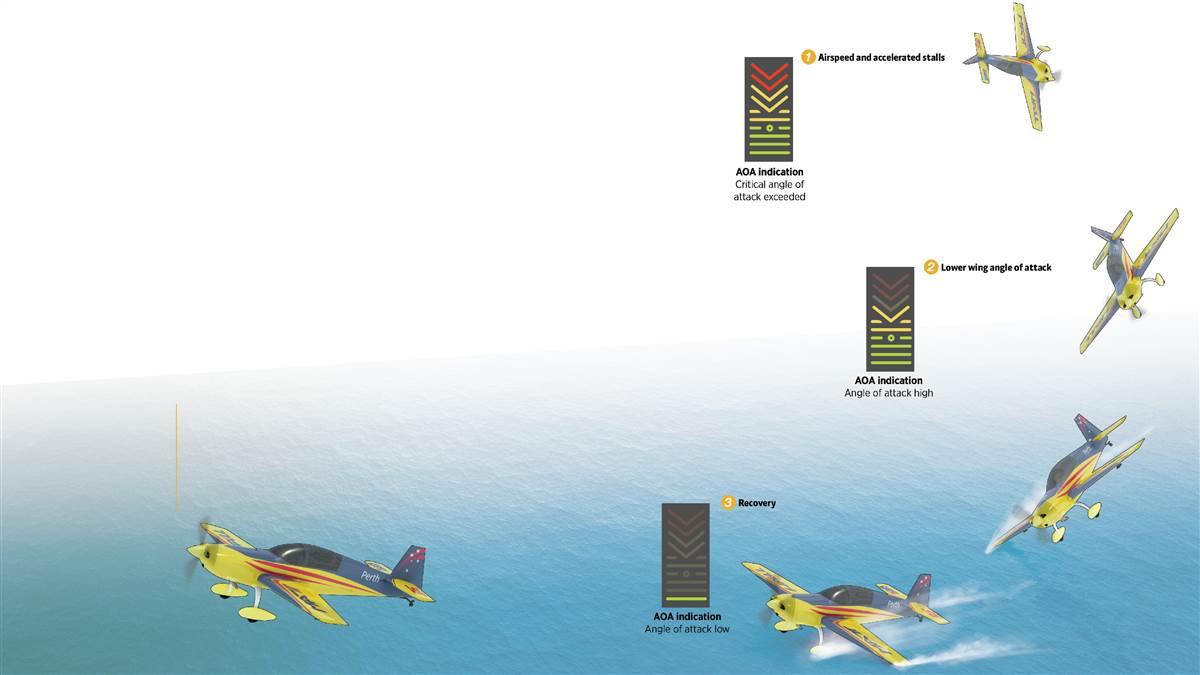
Accelerated stalls take place in the real world when pilots overshoot turns in the airport traffic pattern, botch stall or spin recoveries by pulling too hard in a nose-low position, or maneuver aggressively at low altitude.
Students seeking private pilot certificates aren’t required to demonstrate accelerated stalls. That comes during commercial pilot training. But all pilots should be familiar with the factors that can produce them (see “Unusual Attitude: Demystifying Spins").
Illustration by Charles Floyd
Australian pilot Matt Hall was maneuvering aggressively through the low-level racing course when he pulled too hard during a steep bank and exceeded his airplane’s critical angle of attack.
The airplane stalled, rolled well beyond 90 degrees, and the nose fell toward the river about 100 feet below. Hall’s recovery had to be immediate, decisive, and correct—and it was.
He reduced back-pressure on the stick to lower the angle of attack, even though that meant the airplane continued its rapid descent toward the river. Once smooth airflow over the wings resumed, he rolled the wings level. The airplane’s main wheels touched the water and the impact tore away the right wheel fairing. The right aileron also touched, severely damaging the control surface. Then Hall applied back-pressure on the stick and climbed away to safety.
Hall’s accelerated stall and recovery contain learning points for all pilots.
Related Articles


