Happy birthday, Air and Space
Celebrating 50 years with five new galleries
It was July 1, 1976. Gerald Ford was president. It had been just seven years since Neil Armstrong walked on the moon and nearly—yet only—75 years since the Wright brothers’ first flight. As a nation, we were in love with flight, space, and the universe’s vast unknown.
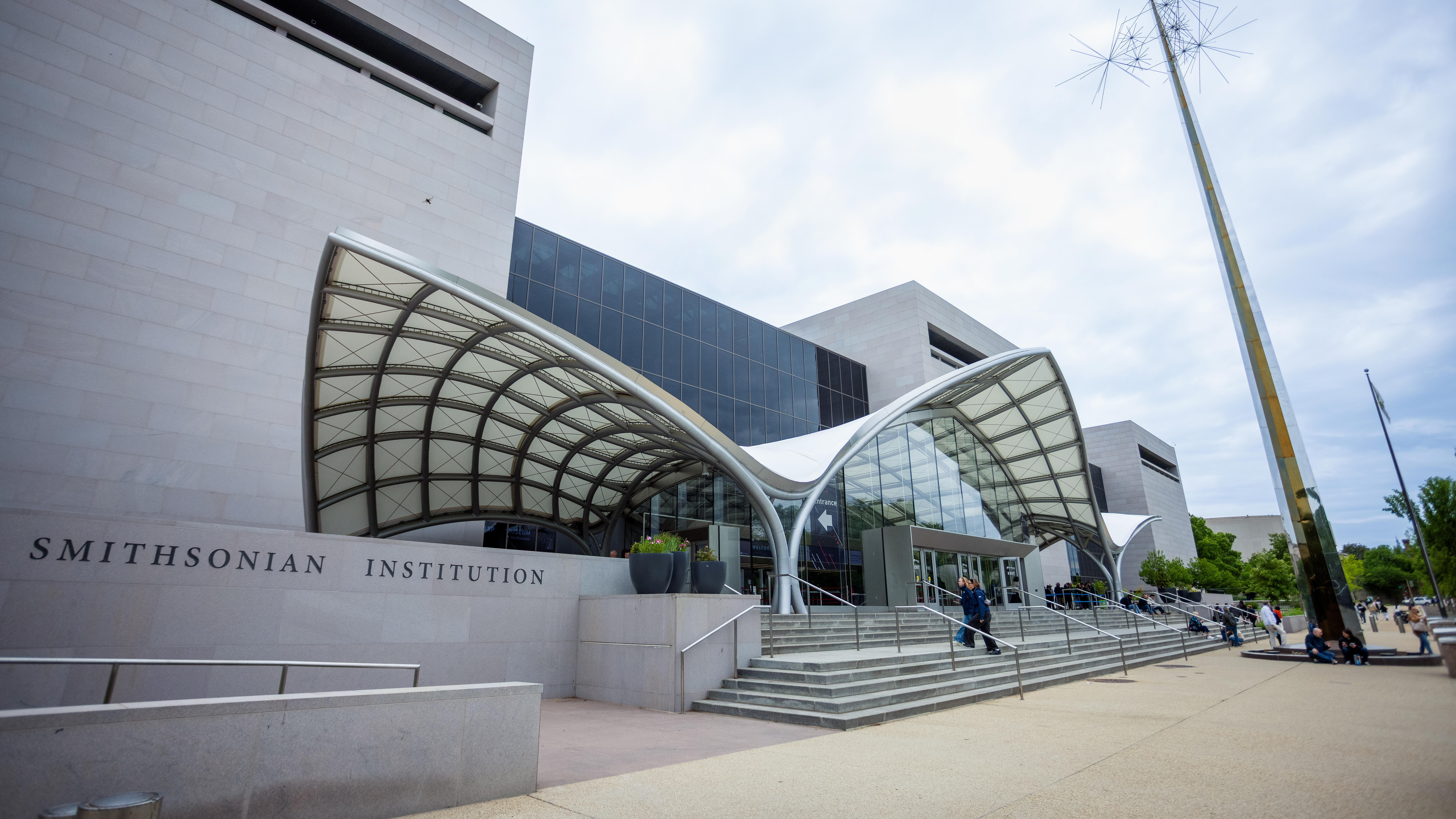
As a birthday present to ourselves, the Smithsonian Institution opened its National Air and Space Museum to the public, presenting such incredible sights and vehicles as an Apollo lunar module, the Wright Flyer, the Mercury capsule, and so much more in an impressive gallery of light, marble, and steel. Astronaut Michael Collins was the museum’s director, and President Ford conducted the red, white, and blue ribbon-cutting ceremony with the assistance of the Viking 1 spacecraft, which was orbiting Mars. The spacecraft sent a signal to Earth to trigger the ribbon cutting.
This was the nation’s bicentennial, and the museum opening exceeded all expectations. By its sixth month, the museum had already welcomed five million visitors. Walking through the doors on opening day, visitors found 10 acres of exhibition space comprising 22 distinct galleries. In the 50 years since its opening, the museum has delighted more than 375 million visitors with its many dedicated galleries that celebrate flight and space exploration.
Five new galleries will open on July 1, 2026, the museum’s fiftieth anniversary and to mark the country’s 250th anniversary. The remaining two renovated galleries will open in the fall, which will complete the multi-year project that began in 2018. Programming will take place throughout this year to celebrate 50 years, including a film series, lectures, special merchandise for sale, and digital offerings.
We knew we had to connect with visitors in a way we hadn’t before.
—Roger Connor, curator
The galleries
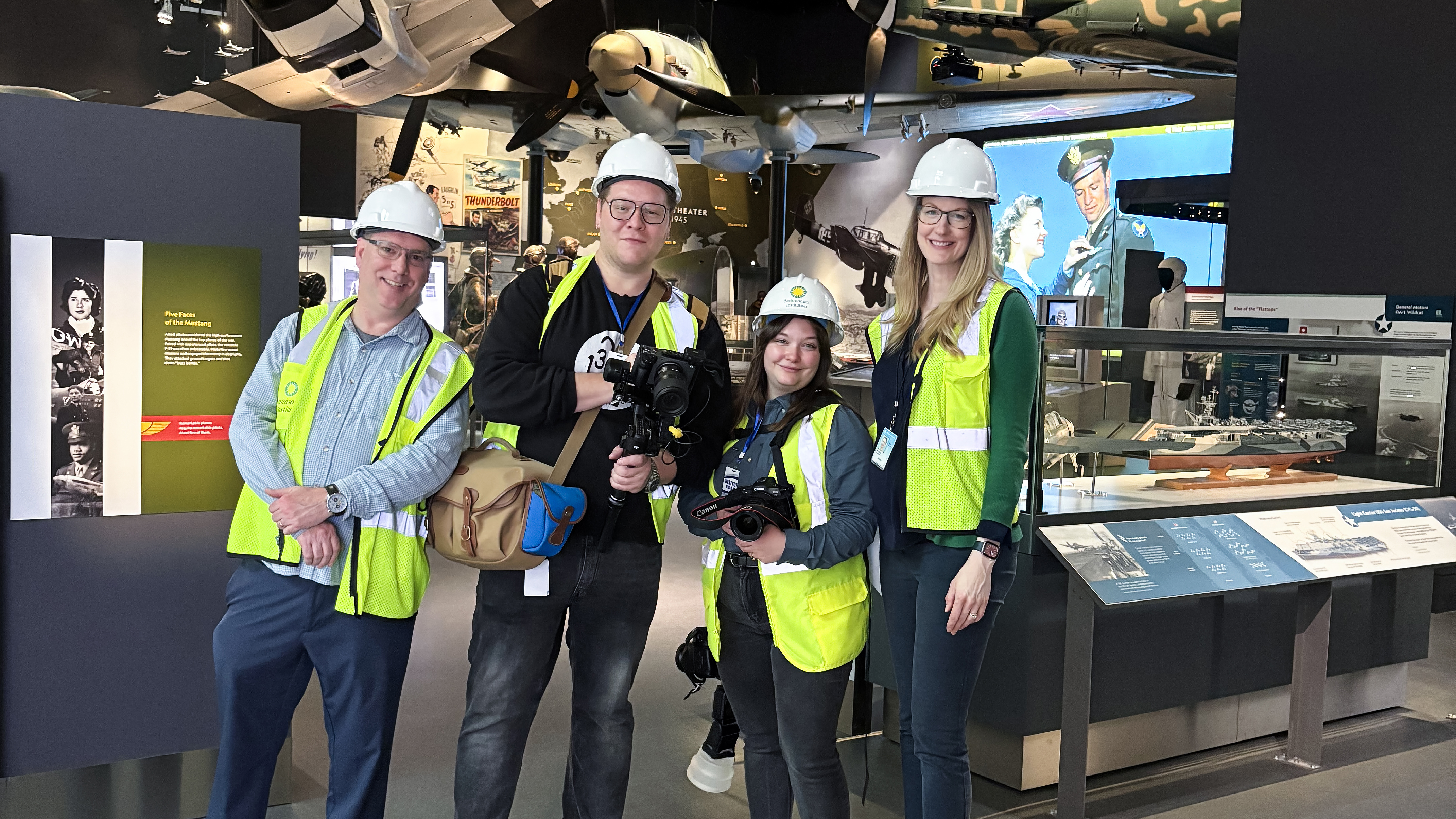
Let’s take a walk, shall we? Meet Roger Connor. He’s the curator of the new World War II exhibit, the Jay I. Kislak World War II in the Air gallery. Wearing hard hats and safety vests, we are given a behind-the-scenes first look at one of the galleries still under construction. Connor thought the World War II gallery would be of most interest to us for AOPA as it heralds the aviation boom of the war’s end. And, let’s face it, the aircraft that appeared and fought during the war were the granddaddies of what GA would eventually become. Of course, there was a World War II gallery when the museum opened in 1976. Because structural issues in the museum forced the refurbishment of the whole museum, each gallery was given the chance to rethink itself. Connor is most proud of the infusion of a sense of community and humanity this new gallery will present.
“If you go back to 2012 there was the big earthquake in D.C. and we started looking at the building’s structure and realized it wasn’t just the earthquake but the life limit of materials on the exterior. They were failing. We essentially had to take the shell of the building completely apart. That would expose all the artifacts to the outside environment,” he said. Many of the artifacts were housed in the Udvar-Hazy Center in Chantilly, Virginia.
“When we opened the original World War II gallery—the one that was open from 1976 to 2018, 42 years—more than half of the visitors had some lived experience in the World War II era. And it was a very simple gallery. However, even though it was simple, it was an incredibly popular exhibit. It was a big deal. But today, we’re at a different point. The millennial, Gen Z, Gen Alpha do not have that kind of baked-in connection with World War II. We knew we had to connect with visitors in a way we hadn’t before and be more interpretive.”


That concept meant looking at the way history is taught today, identifying the key moments of time and phenomena that intersected with aviation—so Pearl Harbor, D-Day, the atomic bomb, Rosie the Riveter, the Women Airforce Service Pilots, Tuskegee Airmen, the Holocaust. “Hopefully the visitor—no matter how into or not into the subject they are—is going to see something new and, what the goal here is, we want to it be a start of a conversation,” Connor said. “One of the things we want to emphasize in this space is that the Allies won the war by essentially fighting smarter. That is particularly true in aviation.”
Hanging above us is the Douglas SBD Dauntless. In the space beside this gallery is the World War I equivalent aircraft, the Dayton-Wright DH–4. “It’s the World War I counterpart in the same role and there’s less than 25 years between the two aircraft. You get an immediate sense of the technological improvement,” he said. “Our technical focus throughout the gallery has been in those areas that made aviation particularly central to World War II. The World War I gallery tells the story of how aviation got its start in the military and how aviation became important to warfare. This gallery basically says aviation is now central to warfare; that it is the deciding factor, in World War II and in almost every conflict since then.”
New stuff
Redoing the galleries has afforded the curators and exhibit staff the opportunity to seek out and discover new ways to tell the stories and new ways to visualize the events. Overhead 10 different aircraft will fly over (the sound anyway) every two minutes. From a Messerschmitt to a North American P–51 Mustang, to an Avro Lancaster and a Boeing B–17. There’s a graphic of the intelligence report by the Japanese Air Group commander at Pearl Harbor. It was presented to the emperor after the task force got back to Japan. After the war it fell into the hands of U.S. Naval intelligence, and they did all the markup and translation you’ll see on it in the exhibit.
“One of the things we’re doing right now is prepping for the install of a chunk of the USS Arizona,” Connor said. “And this is a window pane from Wheeler Field in a hangar there. You can see the hole from a Zero round that went through it.”
There are a lot of maps throughout the gallery, which Connor says will visually tell the story of engagement. Many are interpretive; press this button and it illuminates a sector and tells the story of the battle there.
A surprise to me was two very different but important contributions to the war effort by Walt Disney. Yeah, the Mickey Mouse guy. First, for aviators, Disney and company created the aircraft identification system, crucial to the war effort because fighter pilots needed to be able to ID a friend or a foe quickly. It compares two similar aircraft and highlights their differences. It’s called the WEFT—wings, engine, fuselage, tail—to ID fast-moving aircraft quickly. I could not ID the friendly aircraft until, luckily since my father flew in the North American B–25, I got that one right.
There’s also a cute little stuffed animal character—Gremlin Gus. “I think one of my favorite artifacts is this little guy,” said Connor. “He’s a character from a Roald Dahl story. Dahl was a RAF pilot in the Battle of Britain. Disney loved the story and wanted to do an animated feature-length movie, but Dahl was still active duty, so the RAF claimed copyright. Disney reissued some versions of the Gremlin characters; it’s great to have this one. He’s got on his little suction boots so that’s how he walks on the airplane in flight.”
Connor’s “passion project” for the exhibition is the collection of slideshows that illustrate the human side of the war in original vivid Kodachrome images, most never seen before. On one massive wall are the photographs, beautifully restored and vibrant, showing real people in the reality of war. “With an army of interns, we’ve now done over 1,500 of these scans and we are really looking forward to expanding the coverage of this wonderful wartime original photography.” 
 airandspace.si.edu
Related Articles


