Little airport, big impact
This is the story of how my small, grassroots pilots association took its aviation scholarship program from a small drop-in-the-bucket contribution to an $18,000 offering, thanks to a revamped airport open house, generous sponsors, and the coming together of the south Santa Clara County, California, community.

When I took over the scholarship program for the South County Airport Pilots Association based at San Martin Airport (formerly South County Airport) in 2012, it was somewhat unremarkable. At the time, we were awarding three scholarships each year to students pursuing flight training or a career in aircraft maintenance. The scholarships ranged from $1,500 to $2,500 each, depending on the year and whether we received any additional donations from our modest membership of around 100 members.
At the same time, our open houses, although popular with the community, didn’t seem to be doing much to increase our scholarship funds, or even get the word out about our scholarships. I hadn’t been involved with the airport open house for many years, and even when I was, I was mostly volunteering with the EAA Young Eagles, loading eager kids into a Robinson R44 for a helicopter ride.
By 2020, there were rumblings within the association about the need for a new event at the airport, but unfortunately, nothing materialized. That’s when I decided to take matters into my own hands.
I knew one of our members and airport tenants, Joe McMurray, had been pushing to have a fall airport festival, but the idea had been completely shut down by the rest of the membership. Whether it was a lack of availability, a lack of interest, or simply not wanting to take on another big project, it became abundantly clear that if we wanted to have an event, we would need to do it ourselves.
One of the biggest hang-ups for the group was food. Traditionally, serving our own food had been viewed as a way to make money, but it wasn’t particularly lucrative and came with a lot of work and the potential to do more harm than good.
The easy solution was food trucks.


We wouldn’t make any money from food sales that first year, but we would get people onto the airport. That was the goal. If the event was successful, we could think about charging food trucks and other vendors to participate the following year. The first year was strictly experimental.
As a side note for any airport group considering something similar, check with your local health department early. In many counties, there is a big difference between a food vendor operating from a tent and a food truck with all the necessary permits. Additional permits, fees, and inspections may be required for temporary food booths. For us, food trucks made that part of the event much easier.
Surprise, surprise: Our first year was a total success.
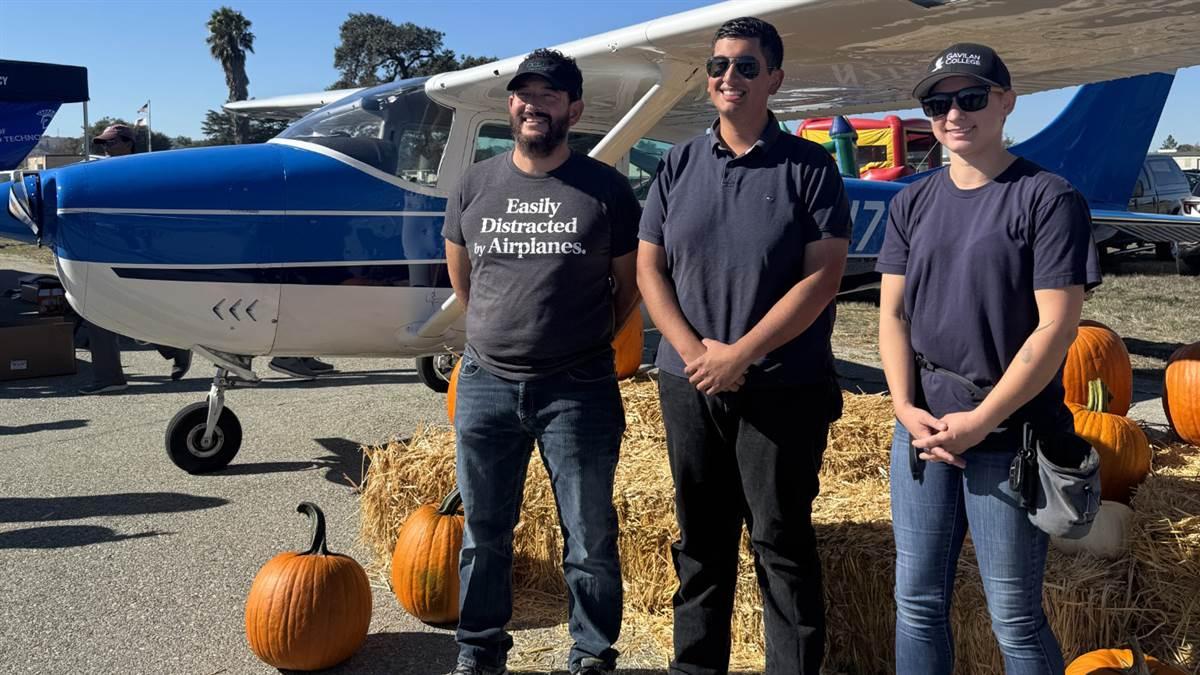
With seven food trucks, a handful of community-sponsored booths, a classic car show, and even some World War II-era tanks, we saw 3,000 people throughout the day. Fly-in traffic was great, too. We had so many airplanes arrive that we ended up parking some of them in the grass between the taxiways. The food trucks completely sold out, and before the day was over, people were already asking us when we were going to do it again.
Fast-forward to today: I have a new event co-chair, David Stites, and the event now boasts roughly double the attendance of that first year. On October 17 we are featuring 16 food trucks; more than 70 vendor booths spanning aviation, community resources, and small businesses; a Kids Zone; formation flyovers; a dozen fixed-wing and rotor-wing aircraft on display; a skydiving demonstration; a T-33 flyby; tethered hot air balloon rides; live bands; a Swift Fuels town hall; an AOPA Rusty Pilots seminar; an aviation silent auction; a radio control airshow; and more.
Every food truck, vendor booth, and car participating in the car show pays a nominal fee, and that money goes directly toward our scholarship fund. We have also been fortunate to bring in title sponsors who help fund individual scholarships and offset some of the costs associated with the event.
Obviously, none of this happens overnight. Events like this are a tremendous amount of work for everyone involved, especially when much of the planning falls on just two people. But we’ve also learned a lot along the way. We’ve automated most of our registrations, created an online layout that is easy to update from year to year, developed relationships with returning vendors and sponsors, and figured out systems that make each event a little easier to put together than the one before it.
We also work directly with our airport sponsor, Santa Clara County, which has been a tremendous partner. The county covers the cost of our large shade tent, tables and chairs, and portable restroom rentals, while also assisting with airside operations. Not every airport sponsor can contribute financially, but it’s always worth asking your airport manager how or if they can help. Taking much of the event planning off the airport operations staff’s plate allows them to focus on what they do best, which has helped create a cooperative atmosphere.
The county does the same for the open house at our sister airport, Reid-Hillview of Santa Clara County Airport.
One of the most time-consuming parts of fundraising for an aviation scholarship is simply finding the right sponsors. Stites has become a master at reaching out to local businesses as well as aviation companies, both local and national. It takes a lot of emails and phone calls, and not every attempt gets a response, but the hard work is worth it when we can keep the event completely free to the public while thousands of dollars go directly into the hands of aviation students.
We also try to make those sponsorships worthwhile. Sponsors receive recognition on our event T-shirts, banners, website, and other materials. Aviation companies can host pilot town halls, participate in the event, or donate products to the silent auction. Some contribute directly to the scholarship fund. Over time those relationships become just as important to the event as the food trucks.
There are countless emails with vendors, county officials, sponsors, volunteers, community members, and aircraft owners. There are layouts to create, aircraft to coordinate, notams to organize, and schedules to build and revise and revise again just for six glorious hours of fun at the airport. But at the end of it all, we get to stand in front of our community and present scholarships to local students pursuing careers in aviation, and it all seems worth it again.
This year, we received 86 scholarship applications, the largest pool we have ever had and a huge increase from the six or seven we used to receive. Our scholarships have become incredibly competitive, and we now limit eligibility to students pursuing flight training or a career in aircraft maintenance at one of our Santa Clara County airports.
From that pool, we selected five students to receive $3,000 scholarships and two additional students to receive $1,500 honorable mentions. That’s $18,000 going directly back into aviation in our local community.