Tango and TEC routes
More tools in your IFR toolbox
By Bruce Williams
IFR pilots have long recited the “5Ts” (turn, time, twist, tune, talk) at key points of an instrument flight. Auto-slewing course arrows and distance-time displays have mostly made time and twist redundant, but adding two often-overlooked “Ts”—T-routes and TEC routes—to your IFR toolbox may help your IFR flights go more smoothly.
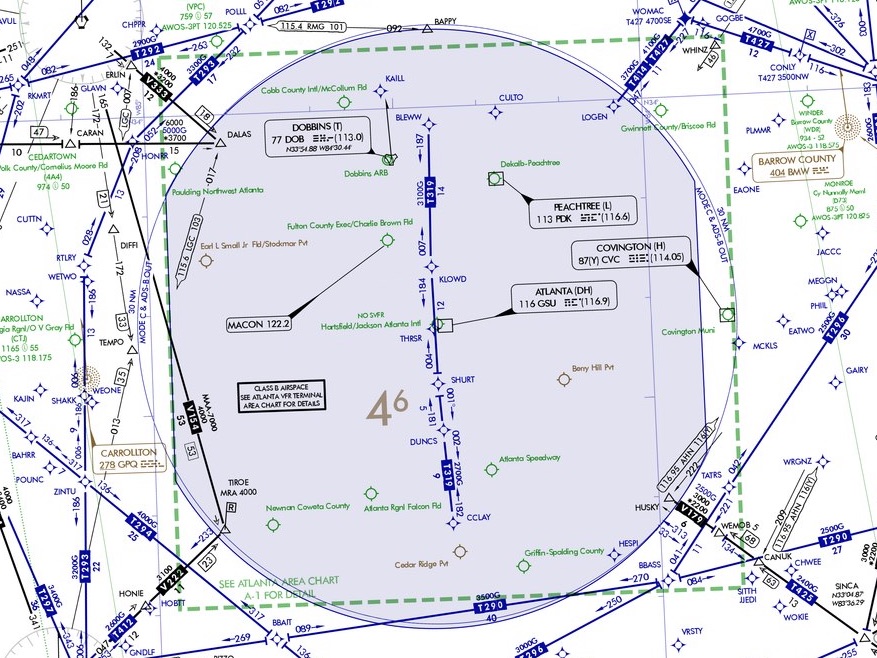
Let’s begin with low-altitude T-routes, also known as “Tango Routes.” They should be called “G- or R-routes,” because these GPS-based highways, like Q and Y routes, are now part of performance-based navigation (PBN) as described in the Aeronautical Information Manual 5−3−4: Airways and Route Systems. The “T” designation is a holdover from the original purpose of T-routes, as explained in an AOPA 2001 briefing, “RNAV Routes Through Terminal Airspace.” T-routes were conceived to provide an efficient flow of low-altitude traffic through or around Class B airspace. That purpose lives on in routes like T268 around Seattle. Other paths, such as T319 across the Atlanta Class B, may appear to serve the original concept, but such shortcuts remain at the discretion of ATC.
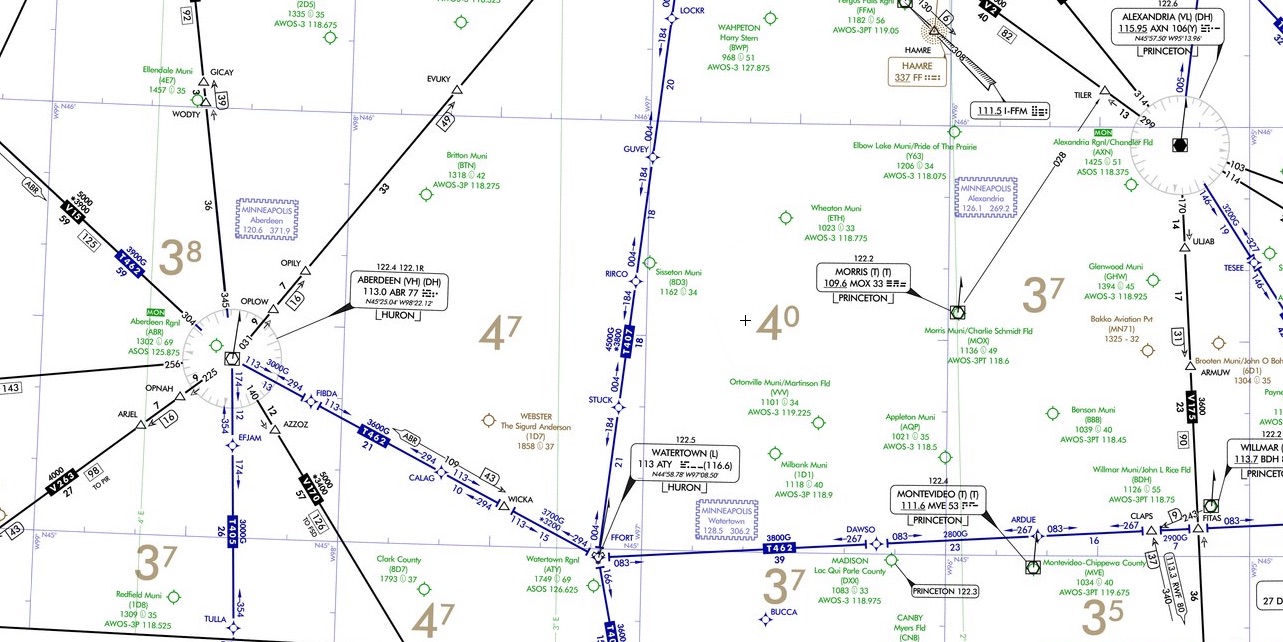
Today, T-routes, marked in blue on low-altitude IFR charts, mostly coincide with, fill gaps in, or replace Victor airways, especially when VORs are decommissioned as part of the minimum operational network (MON) program.
T-routes meet the RNAV 2 (en route) PBN specification, basically a lane 4 nautical miles wide, 2 nm each side of the centerline (half the width associated with VOR-based Victor airways). Like Victor airways, T-routes are Class E airspace and usually begin at 1,200 feet agl and top out at 17,999 feet. In the continental United States, you need only an IFR-approved GPS to fly T-routes under IFR, but WAAS is required in Alaska.
T-routes are especially useful paths across mountains and when icing may be a factor, because they often feature lower minimum en route altitudes (labeled with a “G” for “GPS” on charts) that still clear obstacles but without altitude limitations associated with receiving VOR signals. T-routes can also make navigating busy airspace easier for you and ATC. I’m usually “cleared as filed” along T265 around Chicago.
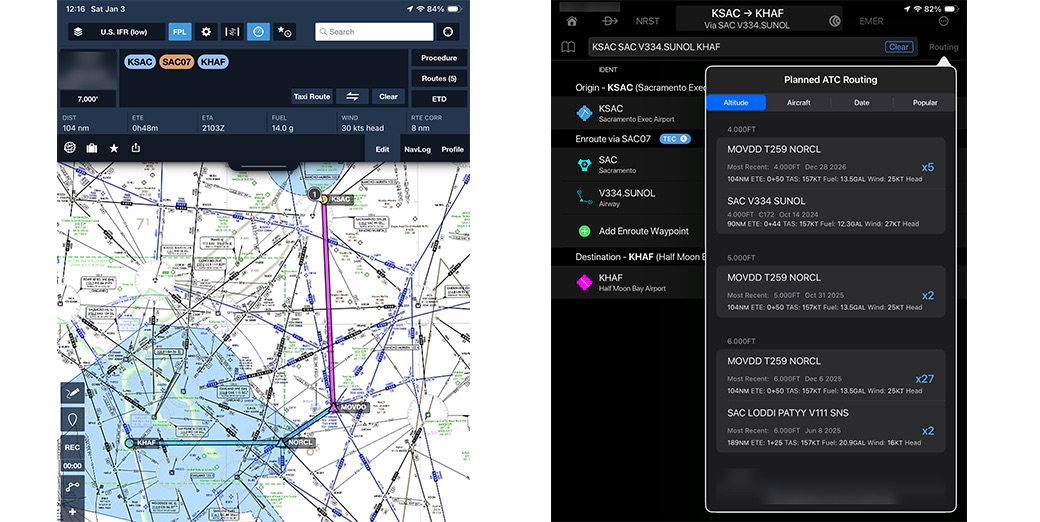

You can file and fly T-routes like other airways. EFBs usually recognize them, and you don’t have to enter T-routes by name from the database. The AIM notes that “selecting and inserting individual, named [airway] fixes from the database is permitted, provided all fixes along the published route to be flown are inserted.”
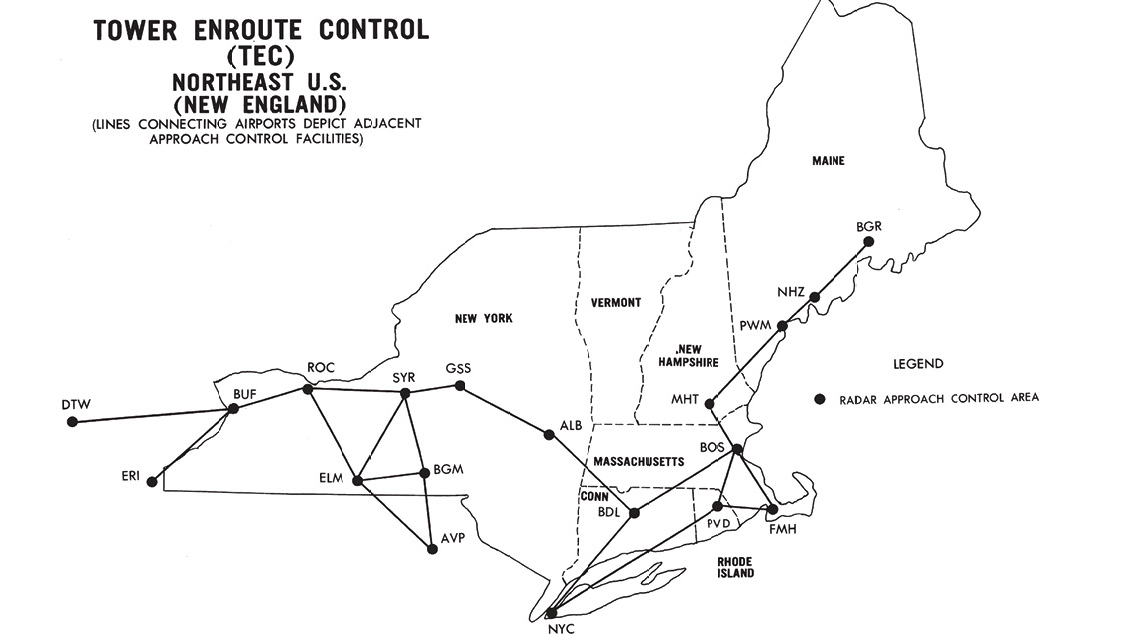
AIM 4-1-19 Tower En Route Control (TEC) describes another “T” that’s available in the Bay Area, Southern California, and much of the Northeast. Pilots based in those areas are probably familiar with TEC routes, but if you’re just passing through, you may not know about the TEC option.
TEC routes originally were intended as shortcuts for pilots who needed to depart IFR on short, low-altitude flights that remained within approach control airspace, perhaps to climb through a coastal marine layer enroute to a nearby sunny destination inland. In those situations, TEC routes resemble pop-up IFR clearances. You typically didn’t need to file before taxiing from the ramp. You could contact ground control or approach from a nontowered airport with your call sign, destination, and the name of a TEC route, and you would be on your way.
Today, it’s best to think of TEC routes as preferred routes, and in the EFB era, when it’s easy to file flight plans electronically, there’s no reason not to file them. And if you’re operating in one of the busy tracon airspaces that offer TEC routes, no matter what you file, you will probably get a route that corresponds, at least in part, to one of the published TEC routes. As the chart supplement description of TEC routes notes, “Other airways which appear to be more direct…may…[result] in additional delays or other complications.”
Like preferred routes, TEC listings appear in the appropriate chart supplements, which provide important background information and the keys to the codes for specific routes. The TEC introductions also note that, “Although all airports are not listed under the destination column, IFR flight may be planned to satellite airports in proximity to major airports via the same routing.”
The procedures for using TEC routes vary among the regions that offer the option. Read the instructions in the chart supplement carefully. In NorCal airspace, TEC routes have names like SIDs and STARs.
EFBs usually recognize named routes. Enter the departure and destination airports and the route code, and the app fills in the fixes, ready to transfer to your panel. But in NorCal, the chart supplement notes, “Until further notice, do not file coded route identifiers; file the full route listed.” In Southern California, however, the TEC introduction says, “When filing flight plans, the coded route identifier, i.e., SANL2, VTUL4, POML3 may be used in lieu of the route of flight.” When in doubt, file the complete route as listed.
In the Northeast, TEC routes aren’t currently assigned names. A TEC route between Lawrence, Massachusetts (LWM) and Northeast Philadelphia (PNE), for example, is just a series of waypoints and airways: BOSOX T303 GRAYM T320 YANTC T224 DIXIE T438 ARD.
Filing T-routes and TEC routes may not always result in hearing “cleared as filed,” but knowing about them may save last-minute scrambles when a controller asks if you’re ready to copy an amended clearance. With those routes loaded in your EFB, you’ll spend less time hunting for unfamiliar fixes on a chart. 
Bruce Williams is a CFII and specializes in IFR training in aircraft with advanced avionics. Find him at youtube.com/@BruceAirFlying and bruceair.wordpress.com.
Related Articles


