Bound for the backcountry
Advice for pilots looking to explore a new aviation frontier
Backcountry flying has an allure of boldness, grit, and adventure about it. One of the reasons we all learn to fly airplanes is to get a better view and to travel to places that might otherwise be inaccessible.
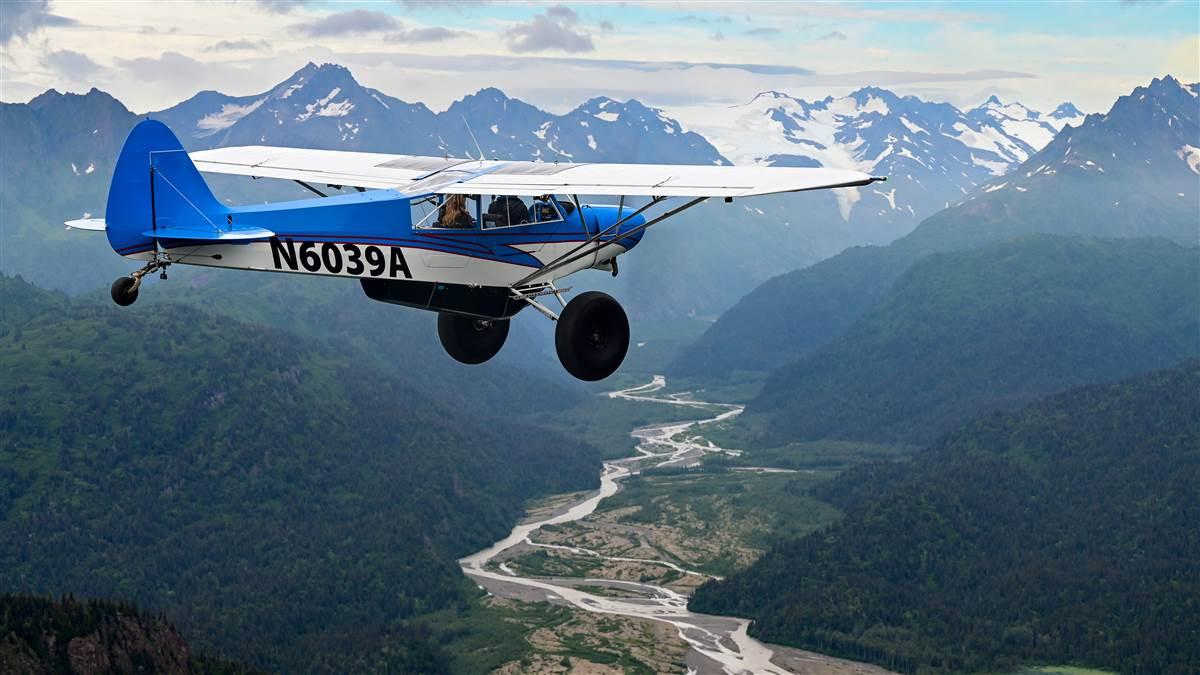
But venturing into the backcountry safely requires unique piloting skills, and a healthy sense of respect and responsibility for the land. For many pilots, the journey away from civilization and into remote areas of pristine wilderness will push them outside their comfort zone. And before attempting something like that, additional instruction as well as thorough preparation and planning is essential.
If you’re looking to get into backcountry flying, the AOPA Air Safety Institute’s “Backcountry Resource Center” is a great place to start gathering information, and learning about what it takes to fly safely in conditions that may be radically different from those you are accustomed to. What kind of aircraft do you need? What fundamental piloting skills are needed? What gear should you take? What environment are you operating in? Where can you get specialized training?
As backcountry flying becomes more popular across the country, ASI aims to reach more pilots looking to sharpen their skills and spread their wings to include flying (and landing) at remote airstrips.
Recently, a group of expert backcountry pilots from across the country came together to talk about their priorities for the new flying season and offer safety recommendations for aspiring and experienced bush pilots alike. These lessons are valuable in any flying environment, but remote wilderness airfields tend to be a lot less forgiving of hesitation and failure. Here are some of the experts’ recommendations.
- The backcountry is no place to start learning the skills you need in the backcountry. Improve your proficiency at home before going somewhere where the margins are thinner and help might be hours away.
- Basic stick-and-rudder fundamentals must be rock-solid. (Center the ball, slow flight, slips, spot landings, stall/spin avoidance, dead-stick landings.) Energy management and associated skills are critical.
- Fly tight, precise traffic patterns, practice aborted takeoffs and go-arounds with real decision points, and be proficient in 45-degree-bank turns in case you need to get out of a tight spot.
- Research your destination airstrip(s) and area thoroughly at home ahead of time, where you have good internet connectivity. Recognize rules on noise abatement, internalize standard operating procedures, and learn about local quirks of the terrain and weather. Learn backcountry etiquette and respect the wilderness.
- Respect increasing density altitude as the day goes on. Fly in the mornings when the air is cooler, avoid hot afternoons when the wind picks up, and know well what density altitude does to your airplane’s performance.
- Know your wind limits—crosswind, tailwind, winds aloft—and firmly stick to them. A 10-knot wind acts differently in a canyon than it does at your home airfield.
- Know your aircraft’s limits. And just because you have a great ride does not mean you’re a great pilot.
- Heed personal minimums and practice honest self-assessment. Resist peer pressure, and if you’ve tried something twice, stop. The third time is not a charm.
- Fly out in small groups—two aircraft are ideal, and three should be the maximum of any group. Beyond that, the group becomes unmanageable.
- Those with no experience flying into rural and remote fields should not venture out on their own based simply upon these recommendations. Far too many pilots try to figure it out on the fly and end up as a tragic statistic. Seek out an experienced flight instructor for some solid training, and it’s never a bad idea to take along a safety pilot.
In short, the experts say, “practice what you suck at” before you fly in the backcountry. And then get out and join the fun!
[email protected]
bcsafety.org

Related Articles


