Inside and out
Know your airplane
By Patrick Walker
As I opened the throttle on the 1936 Taylor J–2 Cub for the first time, I was pleasantly surprised at how quickly the little airplane accelerated and lifted into the cool morning air with only 37 horsepower. After this initial acceleration, the airplane’s climb performance left something to be desired. Still, I easily cleared the 100-foot-tall trees at the end of the runway and ended up experiencing one of the most relaxing and enjoyable flights of my life.
 My peace of mind on this flight is remarkable only because, unlike the later Piper J–3 Cub, the J–2 has no brakes or airspeed indicator, let alone an electrical or vacuum system, and is fitted with an unsteerable tailskid and 37-horsepower single-ignition engine of dubious reliability. While the lack of what many would consider indispensable equipment on the J–2 would give some pilots pause, one important factor kept my nerves at bay: I knew the aircraft and its systems inside and out.
Over the preceding few years, my wife, Michelle, and I had assisted in restoring it for the Old Rhinebeck Aerodrome Museum in Red Hook, New York. Under the supervision of Old Rhinebeck’s two staff A&P mechanics, we repaired and recovered the wings; fabricated new tail brace wires and control cables; fabricated new fuel lines; repaired the cowling; disassembled, cleaned, and inspected the Continental A-40 engine; and much more. By the time the aircraft was ready to fly, we had fabricated, overhauled, or at least cleaned and inspected, every component of the airplane and knew how, and why, each part functioned. This understanding gave me the confidence to fly the airplane knowing that if anything began to function abnormally, I would notice and be able to troubleshoot before it negatively impacted the safety of flight.
While most general aviation pilots spend time each year taking part in recurrent training with the dual aims of maintaining and improving their piloting skills, this training normally focuses on airmanship and stick-and-rudder skills instead of the mechanical aspects of aviation. The latter often receive little additional attention after flight training, which leads to them being viewed as realms of mystery that pilots and aircraft owners prefer to have no involvement in—aside from writing large checks to their shop and approving every recommended maintenance item. This is unfortunate because pilots and aircraft owners can benefit in important ways from a deeper understanding of, and involvement in, the mechanical aspects of the aircraft they fly. These benefits include reduced maintenance costs for aircraft owners, and fewer flights cancelled for mechanical reasons by all pilots. The most important benefit of increased mechanical knowledge is, however, safety.
A thorough understanding of the function of their aircraft and its systems will improve a pilot’s situational awareness and problem-solving ability on the ground and in the air. It will assist the pilot in noticing mechanical anomalies during the preflight inspection before they lead to a dangerous in-flight failure. Additionally, it will prepare pilots to more effectively mitigate the risk of an unsafe situation caused by mechanical failure in flight. By understanding not only what the various parts of their aircraft do but also how and why, pilots will know what to expect when something stops working as designed. Conversely, when an anomaly is noted and its source is not immediately evident this knowledge will help in pinpointing the problem and determining whether it is an isolated event or the symptom of some larger issue.
Chances are that you, like most general aviation pilots, can remember the answers to some basic questions about the function of aircraft systems from your days in flight training: Loss of engine rpm could indicate the presence of carburetor icing; a red puddle under the aircraft is a sign that brake fluid is leaking; vacuum pump failure will cause the directional gyro and artificial horizon to fail, and so on. While new technologies such as electronic flight displays and fuel injection have rendered some of this knowledge irrelevant, much of it is still important for pilots to know. And the mechanical knowledge gained during flight training is just the beginning.
So how can you undertake additional education around aircraft systems and maintenance? Pilots and aircraft owners have access to more resources today than ever before through webinars, podcasts (such as AOPA’s Ask the A&Ps podcast), and videos. As always, the value of any of these will depend on the skill and qualifications of those presenting it. Look for resources offered by aircraft type clubs, A&P/IA mechanics, and reputable organizations to make sure the information you are receiving is accurate. The two best resources, however, are your aircraft’s pilot’s operating handbook (POH) and related materials, and your A&P mechanic.
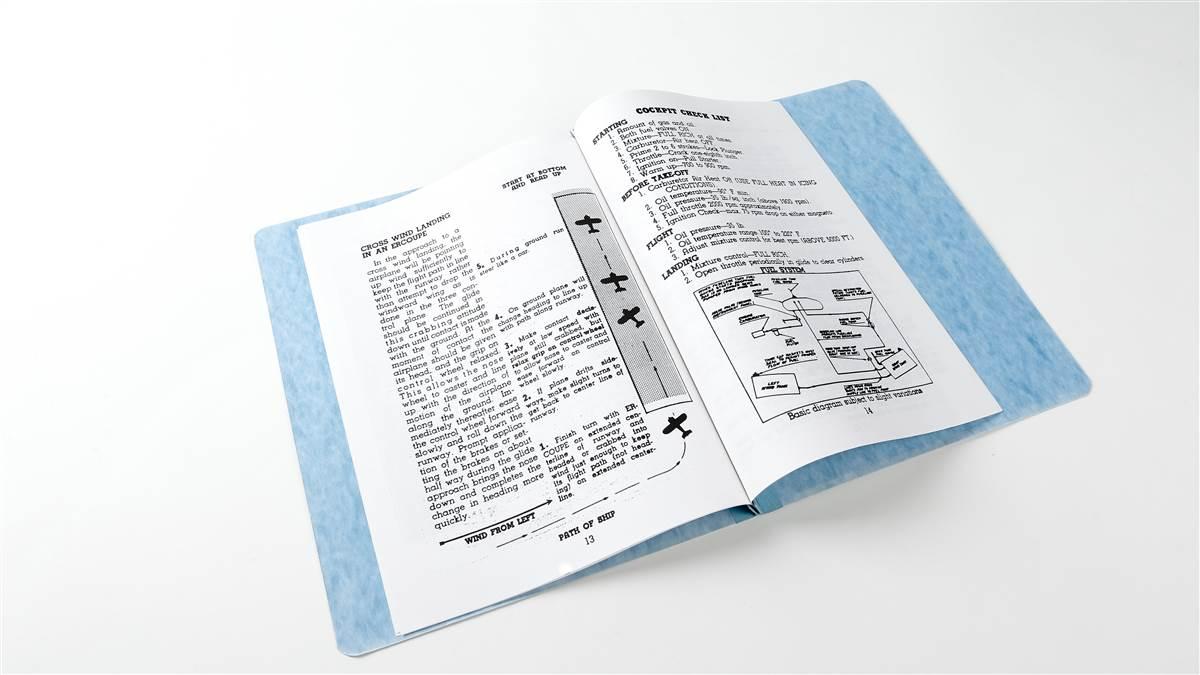
A great place to start your journey to learn more about the maintenance and mechanical aspects of your aircraft is where you start every flight: with the preflight inspection. Following the prescribed checklist in your aircraft’s POH, self-evaluate your understanding of the proper function and common failure modes of the various elements of the aircraft. Could you explain in detail why you are looking at each item and what exactly you are looking for? What would be the first sign of failure for any of these items? Many checklists use the phrase “visually inspect” without elaborating on what to look for. Is this a moving part that should move freely without resistance? Something that is under stress and could crack? Or a hard mounted item which should not be able to move? If you find you cannot answer these follow-up questions for any item on the checklist, consult the POH’s chapters on systems or service and maintenance. These will include detailed descriptions and diagrams of the various systems and descriptions of how they operate as well as explanations of why and how various maintenance tasks are undertaken to keep them operating correctly. If your aircraft, like many in the fleet today, has been fitted with aftermarket equipment or accessories, the information on the operation, inspection, and maintenance of these items will not be found in the original POH but in the manual for that piece of equipment or accessory.
Another great way to get to know your aircraft better as an aircraft owner is to learn to undertake preventive maintenance. As the holder of a private pilot certificate, FAR Part 43.3(g) allows you to perform preventive maintenance on any aircraft you own or operate. (Sport pilots may perform preventive maintenance as well but only on light-sport category they own and operate.) This preventive maintenance can be carried out and logged without the supervision of an A&P mechanic, but you should learn how to complete these items with a mechanic before attempting them on your own. Once you are comfortable performing them, tasks like oil changes, spark plug cleaning/rotation, tire replacement, and more (see Part 43 Appendix A for a complete list) become opportunities to get to know your airframe and engine and possibly spot issues before they become major problems.
One of the best ways to learn about the mechanical function and maintenance of your aircraft is to find an A&P/IA willing to undertake an owner-assisted annual inspection with you. This will provide the opportunity to get familiar with every part and system of your aircraft while gaining hands-on experience in its maintenance under the guidance of an experienced mechanic. You will learn to perform a compression check and borescope inspection on the engine, check the magneto timing, clean and lubricate the entire airframe and engine, clean and repack the wheel bearings, check the ELT for proper function, and so much more. Perhaps the most valuable element of an owner-assisted annual inspection, however, is the opportunity to ask questions of and learn from the mechanic you are working with. You will come away from this experience with a deeper understanding of your aircraft.
These are only a couple examples of the many ways you can learn to be more in tune with the maintenance and mechanical aspects of the aircraft you fly. The possibilities are endless and once you start down this path there is a good chance you will find that you enjoy the learning, the work, and the confidence gained from truly knowing your airplane inside and out. So, next time you preflight your choice steed of the sky, whether owned or rented, think back on your training and see if you can really remember why each item looks the way it does, why you wiggle some things and expect others not to wiggle, and what the result would be if one of these items ceased functioning as designed. 
Patrick Walker is a commercial pilot who has been flying for 10 years. He can often be found wrenching away on his 1946 Cessna 140 just outside AOPA headquarters at Frederick Municipal Airport (FDK) in Maryland.
Related Articles