Sharing aviation, changing minds
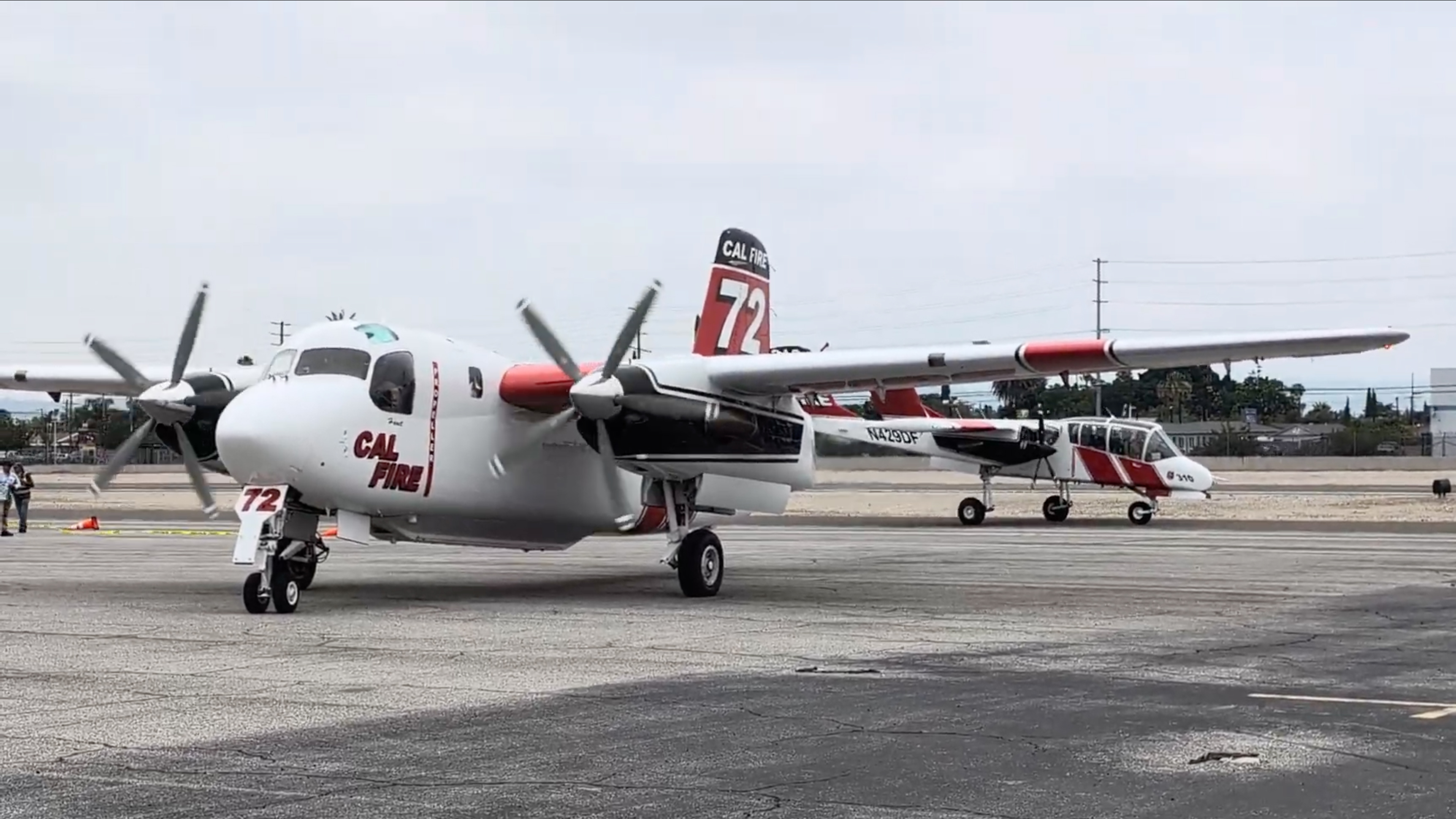
Just 30 miles apart, two very different Southern California airports welcomed thousands of visitors on the same day, in different ways, but with a shared mission: connecting with their communities.

Whiteman Airport, located in the Los Angeles suburb of Pacoima, opened in 1946 and became one of Los Angeles County’s five general aviation airports in 1970. Today, it sees over 100,000 aircraft operations per year and serves as an important hub for emergency response, flight training, news helicopters, community aviation, and more.
"It was an incredible privilege to host this event," EAA Chapter 40 President Clyde Carpenter said. "I'm overwhelmed with gratitude for the nearly 6,000 people from Pacoima and Los Angeles County who filled the event with joy; for the volunteers who powered 110 Young Eagles flights; and for the amazing exhibitors, music, and presentations that brought the day to life. Your passion made this event unforgettable."
Recently, the airport has come under fire from a small faction within the community calling for its permanent closure. And despite a January 2026 FAA letter reaffirming that federally funded land at Whiteman Airport must remain an airport unless the FAA formally releases it, the Los Angeles County Board of Supervisors expanded its now $2.1 million taxpayer-funded study aimed at exploring the airport's possible closure and alternative land uses.
Following an accident in April in which a pilot impacted power lines while attempting to land, and a gear-up incident at Whiteman last month, Supervisor Lindsey Horvath called for an immediate halt to operations at the airport until safety concerns were addressed and directed the public works department to identify actions to improve airport safety. While efforts to enhance safety are a positive step, halting operations would have been unprecedented. Horvath also voted in 2024 to freeze federal funding for the airport, funds that could have supported safety and operational improvements.
Also at the Community Aviation Family Festival was the Whiteman Airport Coalition, a small but mighty grassroots advocacy group at the heart of saving the airport. "One of the most common things we heard at the festival was, 'How can I help?'" Tara Finestone, communications and media consultant with the Whiteman Airport Coalition, explained. "Many people told us they support Whiteman Airport but felt their voices weren't being heard during the County's study process. That's why we created a simple way for anyone to get involved. In about 10 seconds, visitors could send a letter through our website to local leaders, urging them to preserve, improve, and modernize Whiteman Airport. Dozens of people sent letters during the festival, and many more have done so since. People left feeling heard. For many, it was the first time they had been asked what they wanted for the future of Whiteman Airport. Small airports matter. The fight for Whiteman Airport isn't just about one airport. It's about protecting the role that community airports play across America. If it can happen here, it can happen anywhere."
The coalition encourages AOPA members to join the effort by sending a letter via WhitemanAirport.com/Email-Leaders. Every letter helps ensure the LA County Board of Supervisors and LA City Council hear from the people who understand that community airports are essential to emergency response, aviation education, local economies, and the next generation of pilots.


Thirty miles to the south, another airport with an uncertain future welcomed the public for the grand reopening of the Museum of Flying. Established in 1923, Santa Monica Municipal Airport became the longtime home of the Douglas Aircraft Co. and today sees approximately 65,000 aircraft operations each year.
The Santa Monica airport has been at the center of a yearslong battle over its future. In a landmark 2017 settlement, the FAA agreed to allow the city of Santa Monica to close the airport at the end of 2028. Since then, the runway has been shortened from 5,000 feet to 3,500 feet, while charter operator JSX has launched scheduled public charter service with flights to Las Vegas; Napa, California; and Scottsdale, Arizona. The airline recently announced it will further expand service this September with three daily flights to Oakland, California.
The Museum of Flying Family Day was a three-hour event featuring food, a full-motion roller coaster simulator, aircraft on display, and exhibits showcasing Santa Monica Airport's rich aviation history from floor to ceiling. Among those in attendance was Ben Marcus, cofounder of the nonprofit Spirit of Santa Monica, who discovered his love for aviation at the Museum of Flying in the 1990s, when it was located on the north side of the airport.
"Lots of kids like me would come to the museum every weekend and enjoy it," Marcus said.
Today, Marcus is one of the airport's strongest advocates. Through Spirit of Santa Monica, he and his team have hosted several community events at the airport that have drawn more than 5,000 attendees and organized airport supporters from Santa Monica and surrounding communities to speak before the City Council about the airport's importance.
On May 13, more than 200 people attended a City Council meeting to voice their support for the airport, while more than 800 emails were submitted in favor of keeping it open.
"We have a very broad coalition of community members, not just pilots, not just aircraft owners, who see value in the airport and wish to see it continue to operate," Marcus said.
For years, public discussion has largely focused on the airport's planned 2028 closure, creating the impression that Santa Monica residents continue to support converting the site to parkland. However, a recent poll commissioned by Spirit of Santa Monica found that nearly 67 percent of voters support keeping the airport open in some capacity, while 25 percent favor closing the airport and converting it to parkland, suggesting public opinion may be shifting as the closure date approaches.
While national organizations like AOPA represent the voices of pilots and aircraft owners nationwide, it is often the local grassroots organizations that have the greatest impact in their own communities. They are the boots on the ground, building relationships with elected officials, organizing community events, educating neighbors, and showing up at public meetings. AOPA supports those efforts by bringing national resources, technical expertise, and advocacy experience to those local campaigns. At Whiteman Airport, AOPA has communicated with Los Angeles County officials, supporting airport safety improvements, opposing policies that could jeopardize the airport's future, and encouraging meaningful collaboration with industry stakeholders while continuing to highlight the airport's value through community outreach.
At Santa Monica, AOPA has continued to report on developments surrounding the airport, conveyed to decision makers its strong desire for continued operation, and worked alongside local advocates such as Spirit of Santa Monica to amplify community outreach efforts. While organizations like Spirit of Santa Monica lead the day-to-day fight at the local level, AOPA helps ensure those efforts receive national attention by providing advocacy support, sharing the airport's story with the larger aviation community, and reinforcing the importance of preserving one of Southern California's most historic GA airports.
It's events like those at Whiteman and Santa Monica that truly illustrate the community's desire to explore and immerse themselves in aviation, and for those on the fence, they provide an opportunity to shift perspectives. Breaking the misconception that airports are only for the affluent is an important first step in showing that airports are for everyone.