Passing the wrench
If you look up at departing planes, this Santa Monica shop is hiring
Fourth Front Aviation is tackling aviation's Airframe and Powerplant mechanic shortage by pairing experienced mentors with the next generation of technicians, including more women entering the profession.

The aviation industry has spent years warning about a growing shortage of mechanics. At Fourth Front Aviation in Santa Monica, California (SMO), founders Tom Schaefer and Greg Wellman believe solving the problem isn't simply finding more technicians, it's making sure decades of experience aren't lost with those aging out of the workforce.
For Wellman, Fourth Front's co-founder and director of maintenance, building that future begins with finding the right people, not necessarily the most experienced. "It's more about aptitude than it is about a rating," he said. "Excitement about aviation is much more important."
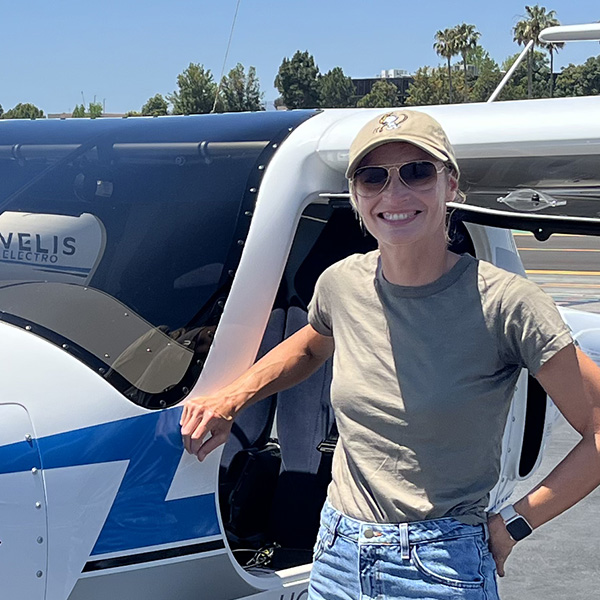
That has led that company to recruit apprentices from unexpected backgrounds. One of them is Aly Walsh. Before joining Fourth Front, Walsh earned a degree in biochemistry and worked in virus research. She had spent years pursuing a scientific career before realizing laboratory work wasn't where she belonged. "I found a shop that was doing a shadow day," she said. "We drained fuel out of a Lear and I got covered in jet fuel. I came out of that and I was like, 'This was so much fun. I want to do this forever.'"
Now nearing the end of her apprenticeship, Walsh recently helped install a ferry fuel system in a Beechcraft King Air that later departed on an international flight. "I really like how hands-on it is," she said. "You really see the product of your work. I'm not just sitting on my computer or working on spreadsheets all day."
Walsh also represents a changing industry. According to a 2022 Women in Aviation Advisory Board report, 2.6 percent of FAA-certificated aviation maintenance technicians are women, yet at Fourth Front, women restore aircraft, install complex modifications, troubleshoot systems, and prepare for careers that challenge long-held stereotypes.
"It's always kind of nerve-wracking when you're the only woman working on airplanes in a shop," she admitted. "Everyone's been super welcoming and kind." And she's not the only woman there. Among the apprentices is an experienced female mechanic who now serves as a mentor. The transfer of knowledge is exactly what Fourth Front hopes to preserve through its apprenticeship program and commitment to a diverse workforce.
That experience extends beyond routine maintenance. Mechanics at Fourth Front may troubleshoot piston engines, turboprops, avionics, or electrical systems, or perform sheet metal repairs and composite structures– sometimes all in the same week.
 Fourth Front also encourages apprentices to become pilots. Although it isn't a requirement, mechanics who understand both sides of aviation can better relate to pilots and diagnose the problems they're trying to describe. "The more they can relate to pilots," Schaefer said, "the better we can communicate and solve problems."
As Fourth Front expands beyond Santa Monica, apprentices will also have opportunities to cross-train in Colorado Springs, Colarado where the company's recently acquired repair station specializes in avionics and special mission aircraft.
For veteran inspection authorization mechanic Denys Leigh-Taylor, now 80, preserving that knowledge matters just as much as teaching technical skills. "Integrity isn't a skill," he said. "It's a guideline." He believes the profession carries responsibilities that extend far beyond repainting airplanes. "People are putting their lives in your hands." As aircraft systems become increasingly sophisticated, so does the work to maintain them. 'You're thinking, you're diagnosing." And some of the knowledge doesn't exist in manuals but through the conversations shared and experience on the hangar floor.
"There's really no substitute for time on the floor, troubleshooting and getting real live mentorship on actual problems," Wellman agreed.
Both Schaefer and Wellman, when interviewing prospective apprentices, notice the strongest candidates often stop mid-conversation to watch an airplane take off. For them, that's difficult to teach, and exactly the kind of curiosity the industry needs. After all, every aircraft eventually ends up in a maintenance hangar, and someone must know how to keep them flying.