Canine flair
A dogged military primary trainer
By Randy S. Bolinger
Aircraft manufacturers often demonstrate an affinity for something with their model names. Some have named aircraft after birds like Falcon, Swift, and Goose. Piper showed an affinity for Native American culture with tributes like Seneca, Cheyenne, and Navajo.

In Beechcraft’s case, royal titles inspired the model names Baron, Duke, and King Air. For the Beagle Aircraft company, the naming convention had a distinctly canine flair with model names including Terrier, Basset, and Bulldog. The company’s full name was British Executive & General Aviation Limited (BEAGLE), and the Beagle model B.125 Bulldog, the final aircraft designed by Beagle in the late 1960s, was a fully aerobatic military primary trainer.
The B.125 prototype had its first flight on May 19, 1969. However, Beagle went into the doghouse with creditors and entered receivership before the Bulldog went into production.
Scottish Aviation (SA) stepped in to spare the Bulldog from an ignominious end. Scottish Aviation, founded in 1935, played a key role in servicing B–24 Liberators during World War II. In the postwar era, SA began building its own STOL aircraft, which provided the expertise to take on the Bulldog project. In 1977, SA folded in a merger to form British Aerospace.
With orders in hand at the time of Beagle Aviation’s dissolution, the B.125 Bulldog was put into production by SA and later by British Aerospace. Sweden’s military was the launch customer for the Bulldog, having initially contracted for 58 units for its air force and 20 for its army. The Royal Air Force was the largest Bulldog customer, having ordered 130 in total. The final Bulldogs produced went to the Royal Malaysian Air Force in 1977.

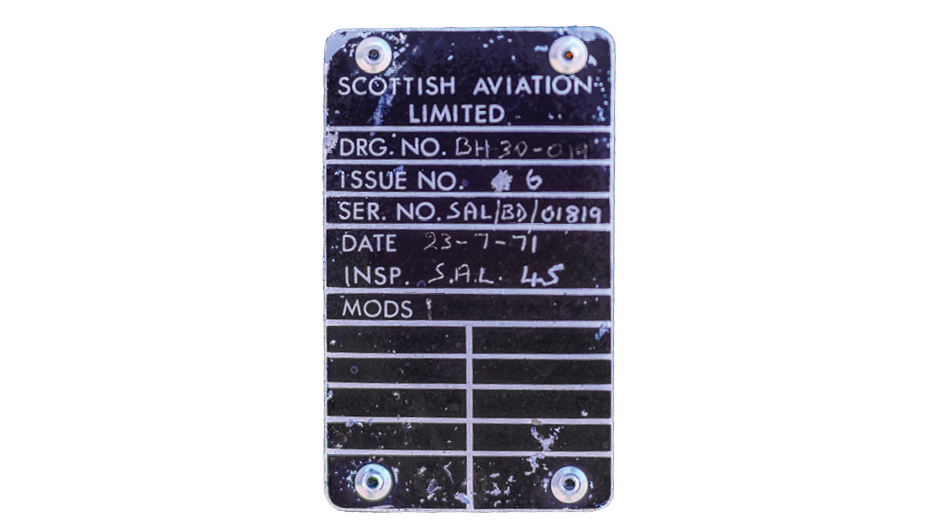
The B.125 Bulldog was redesignated the SK–61A and SK–61B by the Swedish Air Force (military serial numbers 61001 to 61058) but retained the Bulldog moniker. The 20 Bulldogs delivered to the Swedish Army were redesignated FPL–61C. The army versions were later transferred to the air force as the SK–61C.
The A and B models differ slightly. The A model was a three-seat aerobatic primary trainer that could also be used for observation with an inward-opening rear window designed for photography. The B model was a two-seat variant with the surplus payload allocated to carrying armament on four underwing hardpoints. While the Bulldog didn’t see combat duty with the Swedish Air Force, a variety of armament was explored on a flight test article that included .30 caliber machine guns, a 600-pound bomb load, and rocket pods. A model with skis was also tested.
Ultimately, a total of 323 Bulldogs were produced for 10 countries. One Series 200 model was produced as a four-place retractable-gear prototype.
After 30 years of service, the SK–61 was decommissioned by the Swedish military in 2001 and supplanted by a more modern trainer. Soon thereafter, Bulldogs began appearing in the commercial and civilian training fleet, and eventually, some were sold off to private owners. Approximately one quarter of all Bulldogs manufactured made it to the FAA aircraft registry.
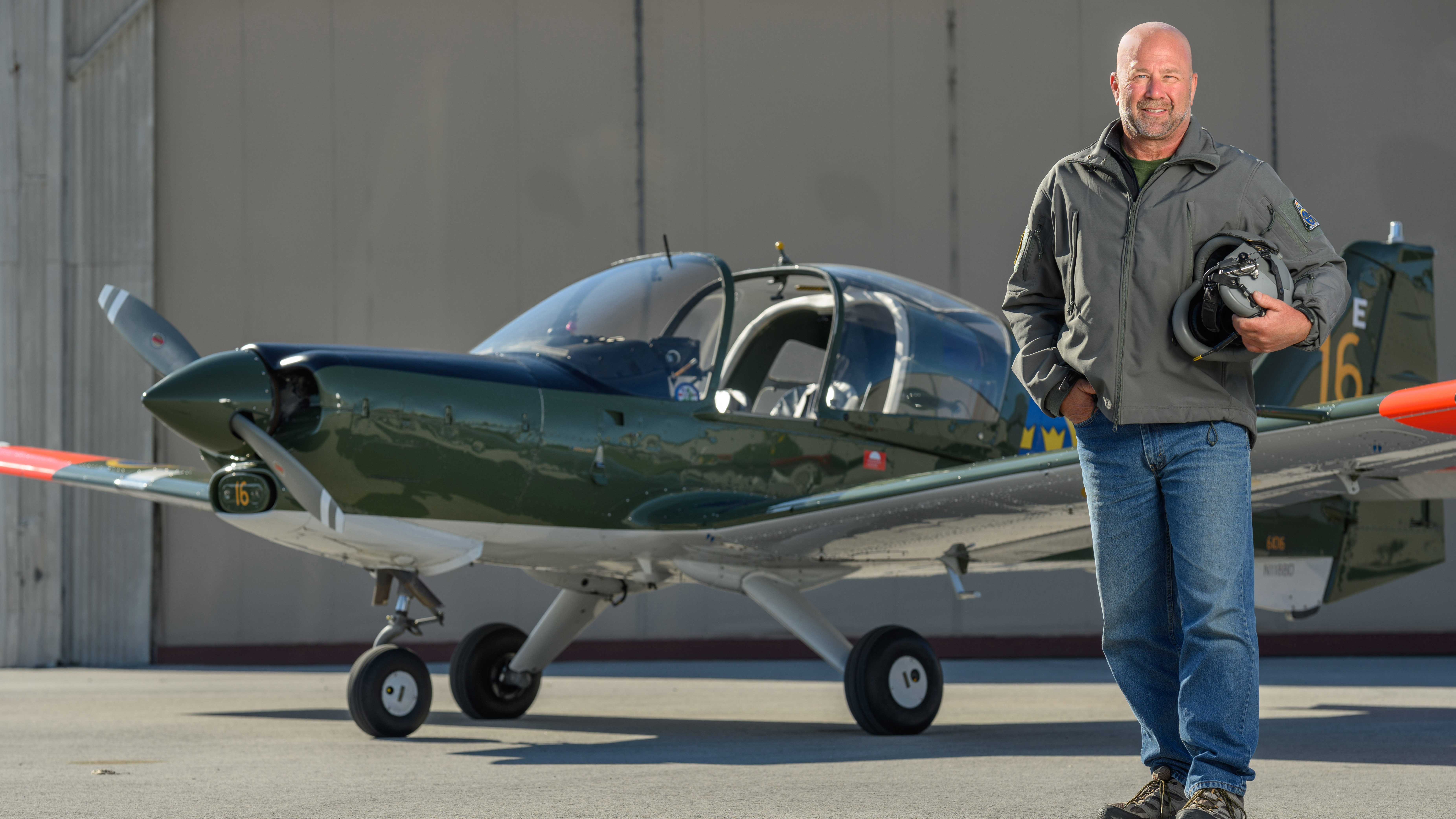
Swedish Air Force SN 61016 (OEM serial number BH100-118) found its first domestic home at the Marathon Jet Center in the Florida Keys, as N118BD, where current owner Steve Kortokrax discovered it. Kortokrax is a corporate pilot who has logged time in some other unusual aircraft, including the North American P–51 Mustang and F–100 Super Sabre, Hawker Sea Fury, Folland Gnat, and Aero L–39. As a corporate pilot, he is also one of the few to routinely fly both the Beechcraft Premier 1A and Starship, which often landed him in the Keys. With time on his hands during his Marathon layovers, he started exercising the Bulldog at the Jet Center beginning in 2003.


Bulldog rescue
In 2012, N118BD went into a hangar for an annual inspection and never emerged. The forgotten Bulldog languished, partially disassembled, for years until Kortokrax made a play to rescue the neglected aircraft.
Kortokrax purchased the aircraft in 2018 for $10,000 and began considering options for transporting the derelict relic from Marathon to Fort Wayne, Indiana. Before becoming an accomplished professional pilot, Kortokrax worked as an A&P, which made giving the Bulldog a thorough inspection and assessment an easy task. To his surprise, after some basic prep like cleaning the plugs, compression check, a bit of reassembly, installing a new battery, changing the oil, and adding fresh fuel, N118BD roared to life.
Encouraged, Kortokrax decided to obtain a ferry permit and attempt to fly the Bulldog home. While the engine seemed strong and the rigging was true, not much else was operational. So, with little more than a handheld radio, tablet, and optimism, Kortokrax began his 1,000-mile trek northward.
The direct route from Florida Keys Marathon International Airport (MTH) to Fort Wayne International Airport (FWA) began with a leg over the Gulf of Mexico before reaching mainland Florida. Even after reaching the shoreline, the environment below was the inhospitable Everglades National Park, with the first good option for an emergency landing being Everglades Airpark (X01), 70 nautical miles from Marathon.
“I flew boat to boat,” Kortokrax said, in case ditching was the last resort.
Kortokrax spent eight months restoring the aircraft, replacing the canopy and windshield, updating avionics, making a beautiful panel with flush-mounted instruments, and most recently adding a new paint scheme, returning the aircraft to its original Swedish Air Force camouflage livery, including Swedish language markings and SN 61016 on the empennage.
The Garmin avionics suite in N118DB includes two stacked G5s front and center for the left seat, accompanied by a GNX375 color touchscreen WAAS GPS and ADS-B transponder, GMC307 experimental autopilot, GTR200 com radio, GMA245 Bluetooth-enabled audio panel, and JPI EDM350 engine monitor, giving this vintage warbird state-of-the-art capability. The steam gauges on the right have UMA LED illumination for easy visibility after dark. And the extra headspace creates the perfect place for the Starlink antenna that provides in-flight entertainment and connectivity.


Taking out the dog
 Sitting on the ramp, two things make the Bulldog stand out—a very large rudder and a somewhat bulbous canopy. Climbing aboard the aircraft is easy since the A model has a step. The large rearward sliding canopy gives the cockpit an airy and open feel. Ingress is a simple step in and slide down the seatback. The canopy can create something of a solarium effect on a sunny day, but the sliding canopy has several stops that allow the canopy to be secured in a partially open position both on the ground and in flight.
The Bulldog has headroom to spare with what is seemingly an oversized canopy. But since the aircraft was designed as a military trainer, the jettisonable canopy was sized to accommodate a helmet-wearing student pilot and instructor who may also be sitting on military-issue parachutes. The surplus room available without a parachute and helmet means that there is little risk of driving your head into the canopy when the airplane shudders violently in turbulence or when hanging in the straps of the four-point harness while inverted.
With toe brakes, ample rudder authority, and a steerable nosewheel, ground handling is also effortless and familiar.
The Beagle B.125 Bulldog was designed as a military version of the civilian B.121 Pup. One notable difference in the Bulldog cockpit is the addition of a left sidewall-mounted throttle lever, something military aviators need to become comfortable with as they transition to more advanced aircraft. The Bulldog also has a traditional center-mounted throttle quadrant, which makes it easier to fly the aircraft with the left hand on the stick, leaving the right hand free to tune radios and manage power and fuel flow.
Takeoff roll is short after quickly reaching 60 knots to rotate. Climbout at VY provides 500 fpm at 80 knots at 25 squared. Once leveled off, the Bulldog cruises at a comfortable 125 knots at 75 percent power (110 knots for economy cruise with five hours of endurance).
As a trainer, the SK–61 flies as one might expect—very forgiving and stable. The aircraft is light on the controls, with the rudder pedals having a firm feel (which reduces dancing on the pedals during taxi).
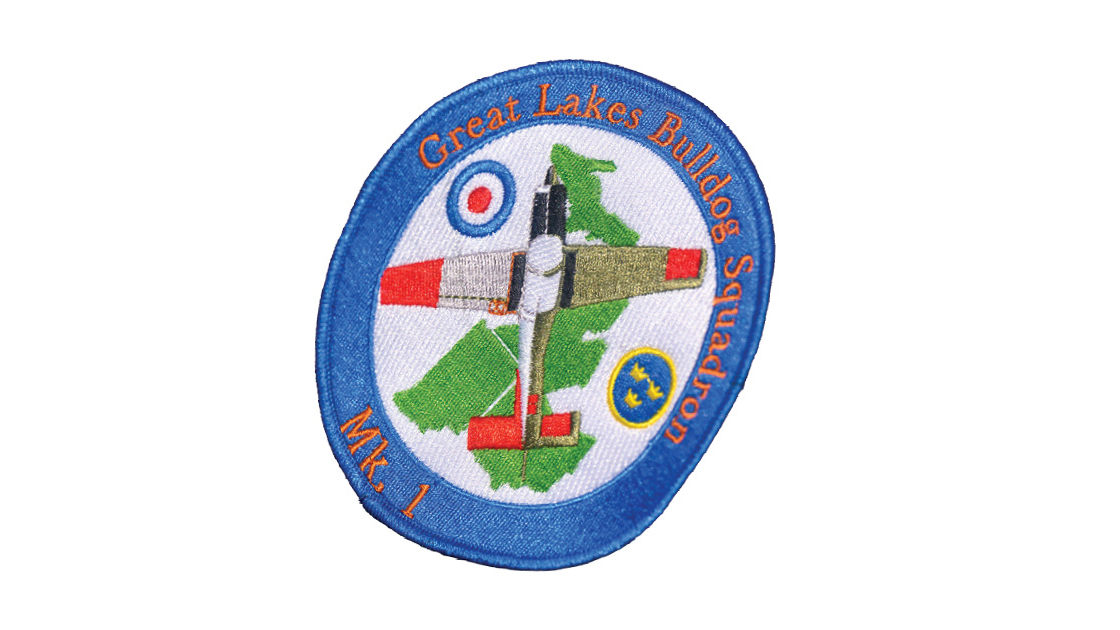
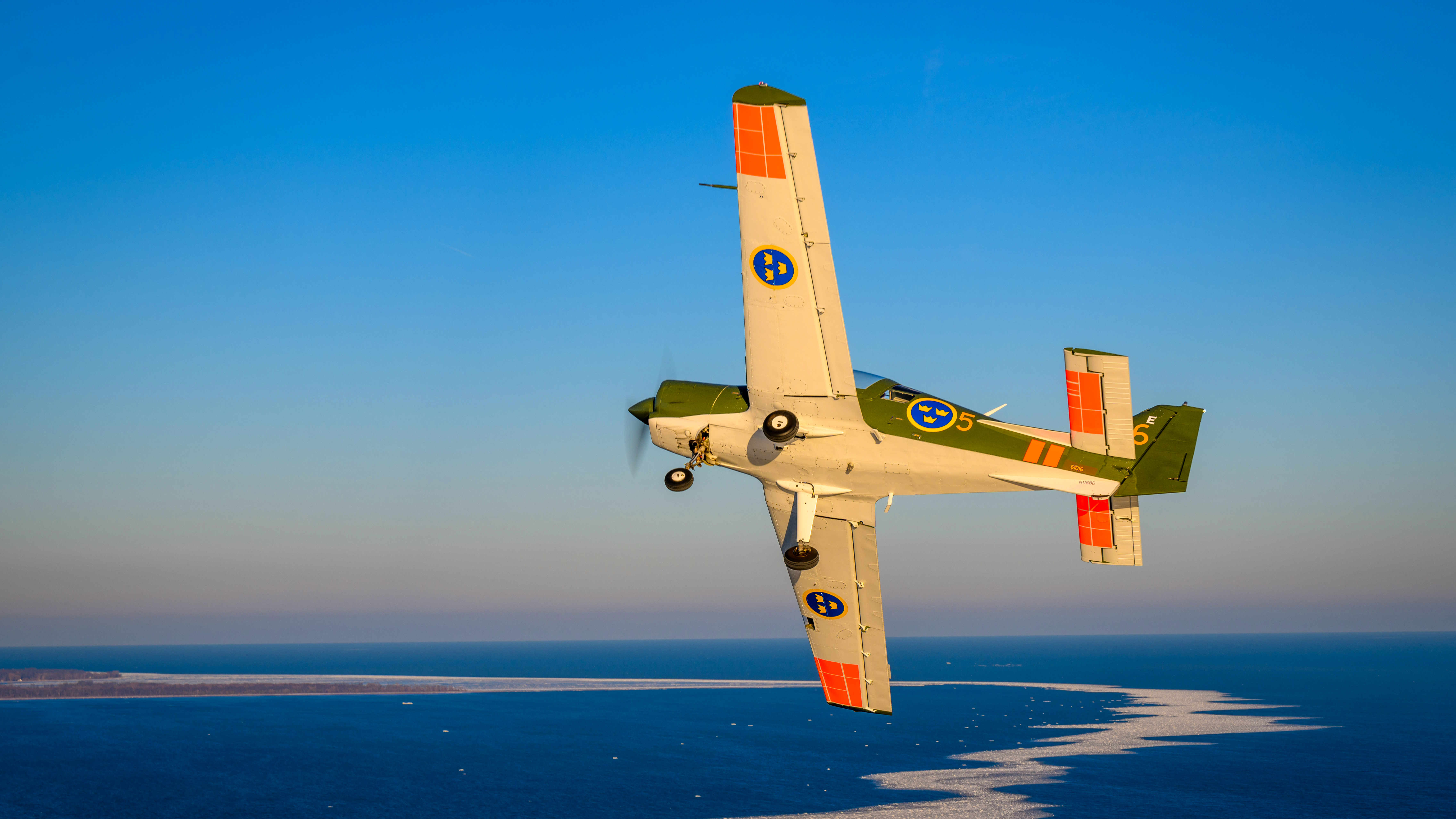
In steep turns, a slight input of elevator trim keeps the nose on the horizon—and the view through the unobstructed canopy is amazing. Slow flight is stable, and stalls are docile with a slight burble announcing an imminent stall without a hint of dropping a wing before the nose begins to drop.
The SK–61 is fully aerobatic, which makes it an excellent platform for spin and upset recovery training and initial air combat maneuvering training like the split-S, aileron roll, and loop (although inverted flight is limited to 15 seconds). The robust all-metal airframe is designed to withstand plus-6 and minus-3 Gs.
Powered by a four-cylinder 200-horsepower fuel-injected Lycoming IO-360-A1B6, the SK–61 has enough power for training, but it doesn’t have thrust to spare. However, properly managing energy and airspeed makes maneuvers like rolls and loops a fun departure from straight and level.
Landing the SK61 is forgiving with no surprises. The fixed gear is rugged, and the huge rudder provides enough vertical axis movement for the pilot to get the aircraft aligned on the centerline in crosswinds up to 30 knots. Electric flaps with settings for 10 and 45 degrees and predictable slow-speed handling make it easy to get the Bulldog in and out of tight spots.
The beautifully restored N118BD has the modern conveniences that make it an IFR-capable cross-country traveler. The original European steam gauges had long since been replaced with instruments showing altitude and vertical speeds in feet, and altimeter settings in inches of mercury. When Kortokrax updated the avionics, he retained the steam gauges for the right seat so his daughter Stephanie could learn to fly using traditional instruments before transitioning to glass. Now a college senior, Stephanie started flying the Bulldog at 15, soloed at 16, and passed the private checkride on her seventeenth birthday. She is pursuing a career as a professional pilot.
It’s a wrap
The Bulldog is a fun-to-fly, inexpensive to operate, legitimate warbird capable of light aerobatics, cross-country excursions, and pegging the joy meter. With a VS0 stall speed of just 50 knots (VS1 at 53), the SK–61 is potentially a sport pilot-eligible warbird under MOSAIC.
Kortokrax is living an aviator’s dream—flying a Challenger 350 by day and enjoying the fun and freedom of general aviation in his Bulldog.
While he’s outfitted the SK-61 as a capable cross-country traveler, it’s apparent that what he prefers to do is make the hula girl dance. Even en route to and from the photo shoot for this story, he simply couldn’t resist turning off the autopilot, pointing the Bulldog downhill before pulling back on the stick and coaxing the Bulldog into a gentle aileron roll.
That’s a good boy. 
Randy S. Bolinger is a marketing, communications, and brand management leader in the aviation, auto, and powersports industries. He is an instrument-rated pilot, has been flying for more than 30 years, and owns a Cessna 177 Cardinal.
Related Articles


