Life in a tube
Understanding the effects of jet lag
By Randy S. Bolinger
In the annals of aviation history, there isn’t much recorded about how the Wright brothers managed the dreadful effects of glider lag. Traveling just a few feet above ground level for not much farther than one could throw a butter churn didn’t do much to upset the body’s circadian rhythm.
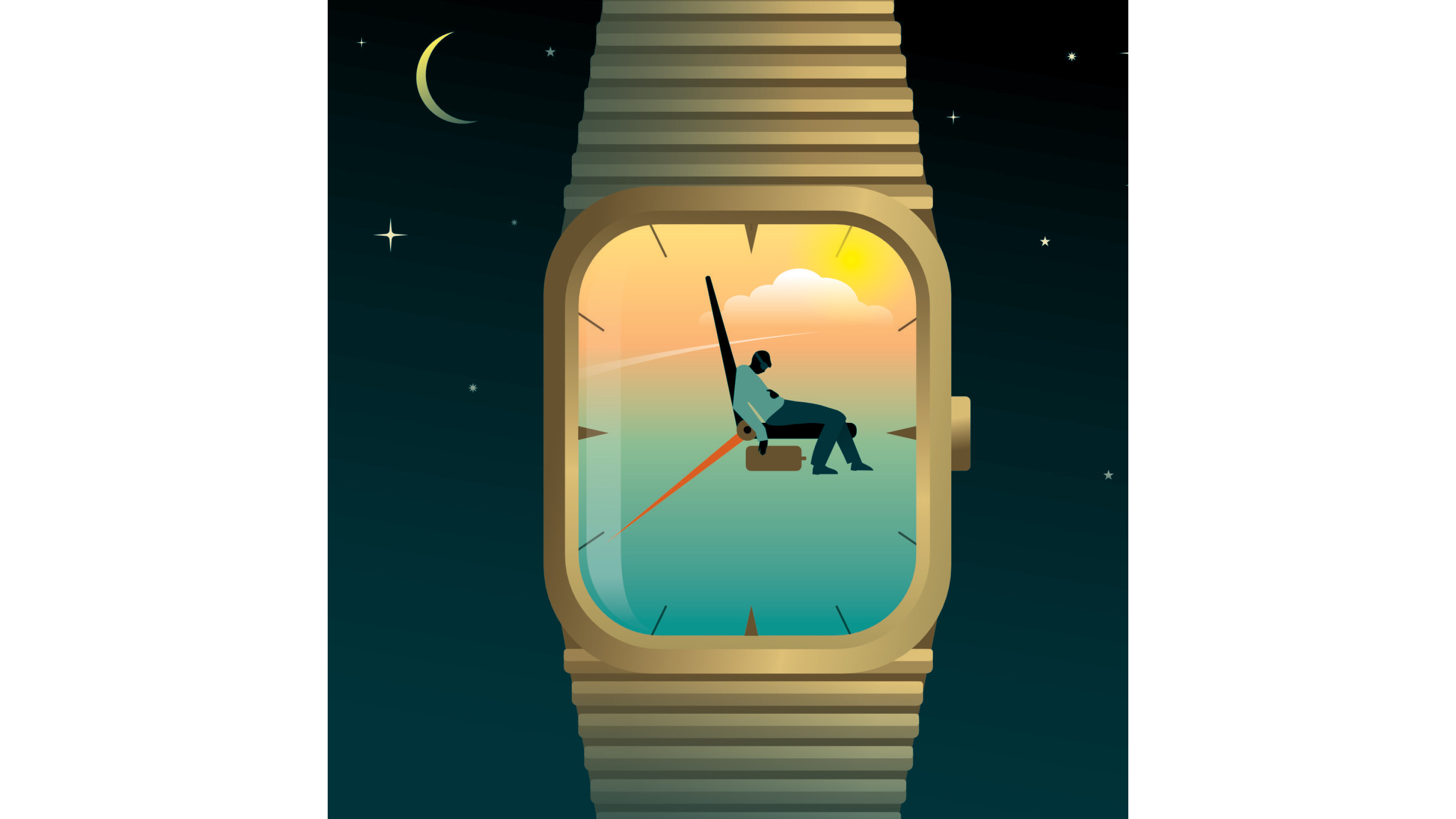
As aircraft evolved to fly higher, faster, and farther, the effects of jet lag began to manifest. In the mid-1960s, the term jet lag began to appear in the lexicon to describe the fatigue, insomnia, performance decline, mood swings, and even gastrointestinal issues associated with long-range jet travel.
Jet lag is more complicated than just the result of becoming fatigued from ripping through time zones at high subsonic speed. The cause and effect of jet lag are also linked to the environmental factors of aircraft design and how extended exposure affects health. Understanding what causes jet lag allows one to take steps to help mitigate its effects.
Light cycles disrupt circadian rhythm
Our bodies run on a solar-powered clock known as a circadian rhythm. The 24-hour cycle that regulates everything from digestion to core temperature, the release of hormones to help us wake up and sleep, and more is a circadian rhythm. Light, typically sunlight, is what triggers certain biological functions. The problem is that body clocks based on the daily arrival and departure of the sun can be confused by light from other sources like electronic devices and traveling through various time zones with the sun rising or setting at times when the body isn’t expecting it.
The primary physiological complication from traversing time zones at high speed comes from confusing the body’s clock with light.
Further, the production of the mood-regulating hormones serotonin and dopamine is triggered by the circadian rhythm. The disruption of their release can manifest as mood swings, irritability, and even mild depression, sometimes called “jet-lag blues.”
And, the more time zones are crossed, the more out of sync the body becomes with its surroundings, and the longer it takes to recover. Traveling far in a day compounds the adverse effects because it artificially shortens or lengthens the cycle of our normal circadian rhythm. Medical experts claim it can take about a day to recover for each time zone crossed. More specifically, returning to a normal rhythm after an eastbound flight (after losing time more rapidly) typically takes a day per each time zone crossed, versus flying west (gaining time), which may only require 16 hours of recovery per time zone crossed.
Since light is the primary cue for the circadian rhythm, it’s understandable how the alignment of the body clock with the external environment, known as entrainment, can be confused or disrupted by artificial light sources like computer screens, cabin lighting while traveling after dark, and even seeing the sun at unexpected times in the 24-hour circadian cycle. The airline solution to this challenge is a fancy sleep mask to block out the daylight or cabin lighting.
Low cabin humidity leads to dehydration
Humidity levels in pressurized cabins are typically very low, often below 20 percent. That is largely because the outside air used for ventilation at altitude has so little moisture.
For comparison, a comfortable humidity range in your home is between 30 and 50 percent. According to the National Oceanic and Atmospheric Administration, the average annual humidity level at Death Valley National Park in California and Nevada—the driest place in North America—is 20 percent. The low humidity leads to dehydration that contributes to any number of health factors.
Being sufficiently hydrated before a long flight is a great start to allay dehydration, and consuming plenty of water in flight is a must.
Conversely, while enjoying a caffeine boost from a cup of coffee for alertness or kicking back with a cocktail while someone else does the flying may sound like good ideas, both caffeine and alcohol are diuretics that can exacerbate the dehydration already in progress in the dry aircraft cabin environment.
Low cabin pressurization causes oxygen deprivation
Pilots know that oxygen saturation drops with altitude. Saturation below 90 percent, which can occur at 8,000 feet msl and above, is getting into the danger zone. Oxygen deprivation, also known as hypoxia, can cause blurred vision, fatigue, headache, impaired cognitive function, and more. A turbine aircraft cabin environment with a reduced oxygen level begins to impact organ function over an extended period like a transcontinental or intercontinental flight.
Most light turbine aircraft and airliners are pressurized to a cabin altitude between 6,000 and 8,000 feet msl. That’s a reasonably comfortable altitude with a blood oxygen saturation level around 93 percent in an environment where you’re not overly exerting yourself, like climbing to a mountain summit at 6,000 to 8,000 feet. But even in a sedentary environment, a long flight in a cabin pressurized to 8,000 feet msl is making the heart and lungs work harder to maintain normal function. Consequently, the body will feel as fatigued as if you spent the day in the mountains in Aspen, Colorado.
For the sake of comparison, some business jets pressurize to a cabin altitude as low as 3,000 feet msl at flight levels as high as FL400. In this case, pilots and occupants making ultra-long-range flights will arrive much less fatigued because they may feel as if they spent the day in Bend, Oregon, rather than in the thin air of Aspen.
The challenge with pressurizing cabins to levels closer to sea level, where the body is most comfortable, is that repeated pressurization cycles stress the airframe. To accommodate higher pressurization levels to achieve a lower cabin altitude, aircraft fuselages need to be built stronger, which of course adds weight.
Metal airframes are the most susceptible to fatigue failures from repeated pressurization cycles—something the industry learned the hard way, beginning with a series of decompression accidents of the de Havilland Comet beginning in 1954. Metal fatigue was largely to blame, and the window design to a lesser degree, for the Comet fuselage failures. And because commercial aircraft tend to undergo thousands more pressure cycles than private aircraft, pressure cycles are now a limiting factor in the airframe lifecycle. Within those design constraints, cabin oxygen levels during cruise are largely fixed, leaving passengers with little ability to influence them and making it all the more important to recognize how even mild oxygen deprivation can contribute to fatigue over the course of a long flight.
By understanding what contributes to jet lag, one can take steps to minimize its effects and expedite recovery by returning to a natural circadian cycle—reducing screen time and cabin lighting when the sun is down—and staying hydrated. 
Randy S. Bolinger is a marketing, communications, and brand management leader in the aviation, auto, and powersports industries. He is an instrument-rated pilot, has been flying for more than 30 years, and owns a Cessna 177 Cardinal.
Related Articles


