'Blown-wing' ultra-STOL
Fixed-wing speed, helicopter-like landings
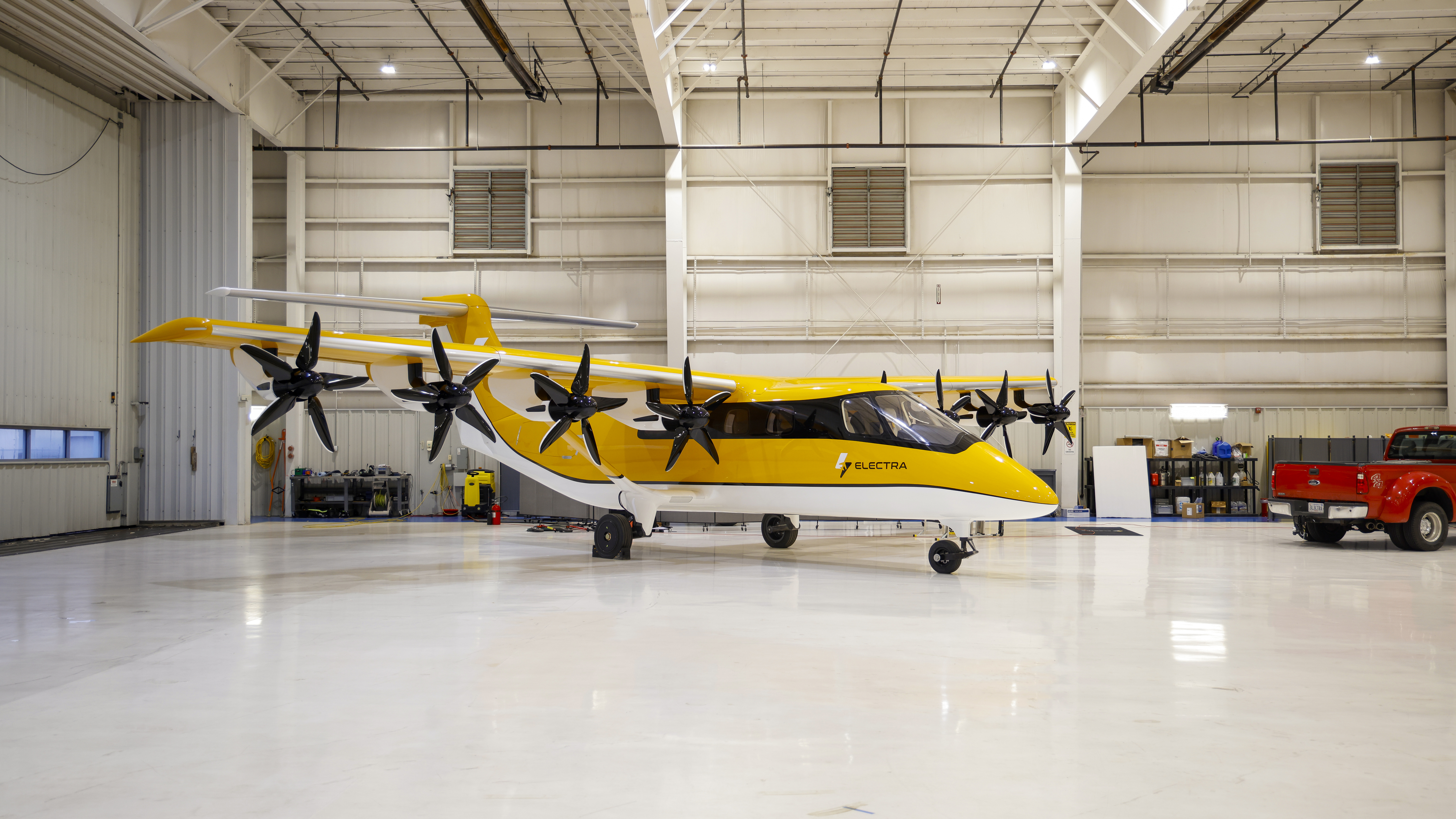
Taking off in the Electra EL2 Goldfinch is an act of defiance.
Mostly, it’s gravity that’s being defied.
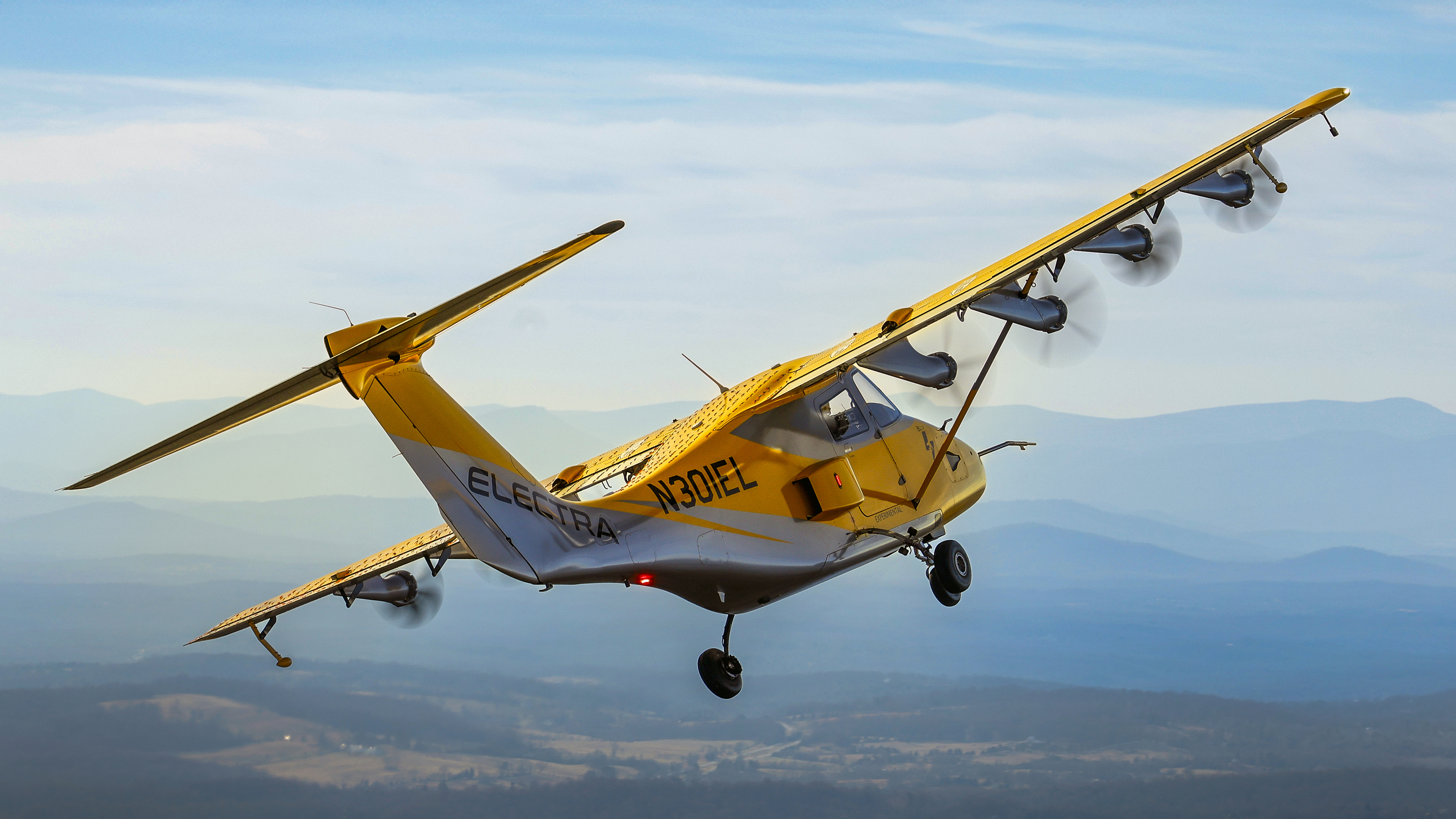
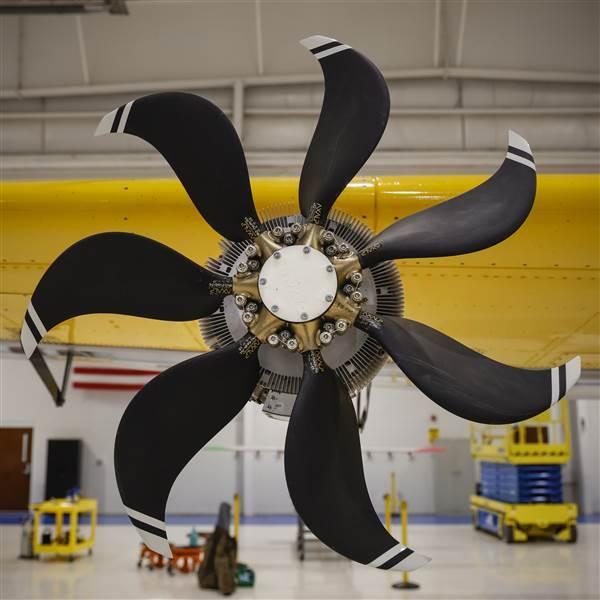
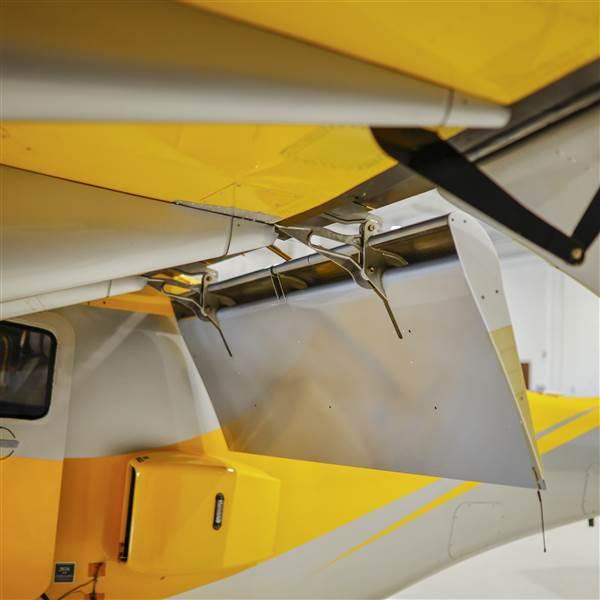
At brake release, the proof-of-concept airplane’s eight composite, fixed-pitch propellers spin up, dig in, and yank the 3,300-pound airplane briskly forward. After an astonishingly short, 2.5-second, 100-foot ground roll, the test aircraft reaches its 27-knot rotation speed, and firm back-pressure on the yoke lifts its nosewheel smartly off the pavement.
Electra test pilot Cody Allee raises the pitch attitude to 30 degrees as the airplane climbs and accelerates to 55 knots. Then, at about 500 feet agl, he lowers the nose to a more standard 10-degree climb, raises the flaps and flaperons, and accelerates to 80 knots as he sets up for an extreme short-field landing at Warrenton-Fauquier Airport (HWY), a nontowered strip about 10 miles from Electra’s home base in Manassas, Virginia.
“Control inputs are intuitive and the airplane responds normally—even at stupidly high angles of attack,” says Allee, a voluble former U.S. Marine test pilot who has flown many notable aircraft, including the NASA X–31, a vectored-thrust jet that explored AOA up to 70 degrees in fighter-type aircraft.
“One of the most impressive aspects of the EL2 is that there’s really no change in handling qualities throughout its speed range. The ailerons remain effective at low speed and there’s no reason to avoid using them at high angles of attack.”
The bright yellow EL2 has performed more than 150 test flights since first taking to the air in late 2023—and it’s a remarkable aircraft in its own right. Yet it exists solely to prove the viability of Electra’s first commercial aircraft, the far larger and sleeker EL9 “Ultra Short”, which aims to combine extreme short-field performance with the cross-country speed and range of traditional fixed-wing aircraft.
We’ll be able to take people from where they are to very close to where they want to be—even if no airports exist there.
—James "J.P." Stewart, Electra senior vice president for product development
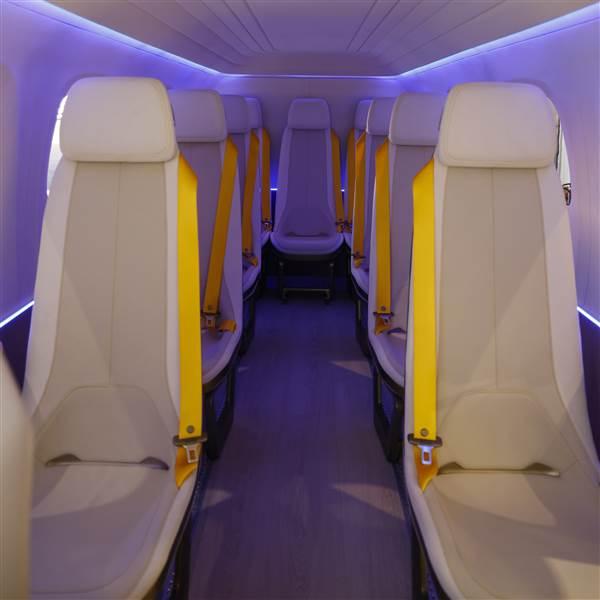
The first EL9, now under construction, will be a 12,000-pound, 11-seat aircraft roughly the size of a Cessna 208 Caravan or Pilatus PC–12. The big difference is that the EL9 is meant to take off and land on surfaces about as long as a soccer field, yet cruise at 175 knots on flights up to 1,000 nautical miles and altitudes as high as 20,000 feet.
The key to Electra Aero’s short-field ambitions is a “blown wing.”
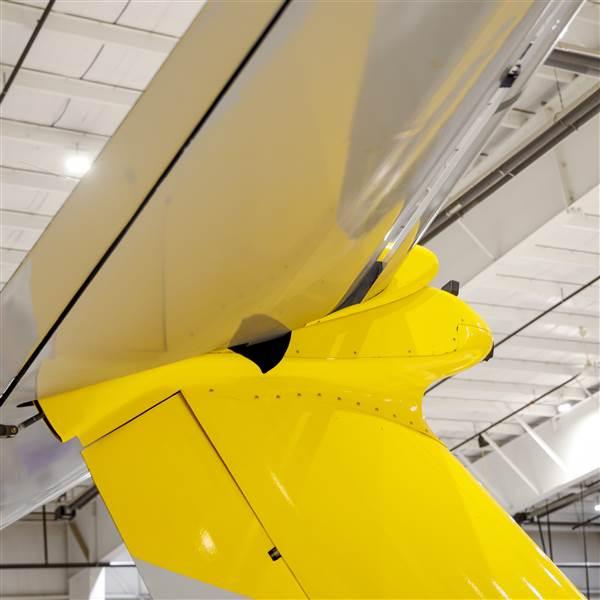
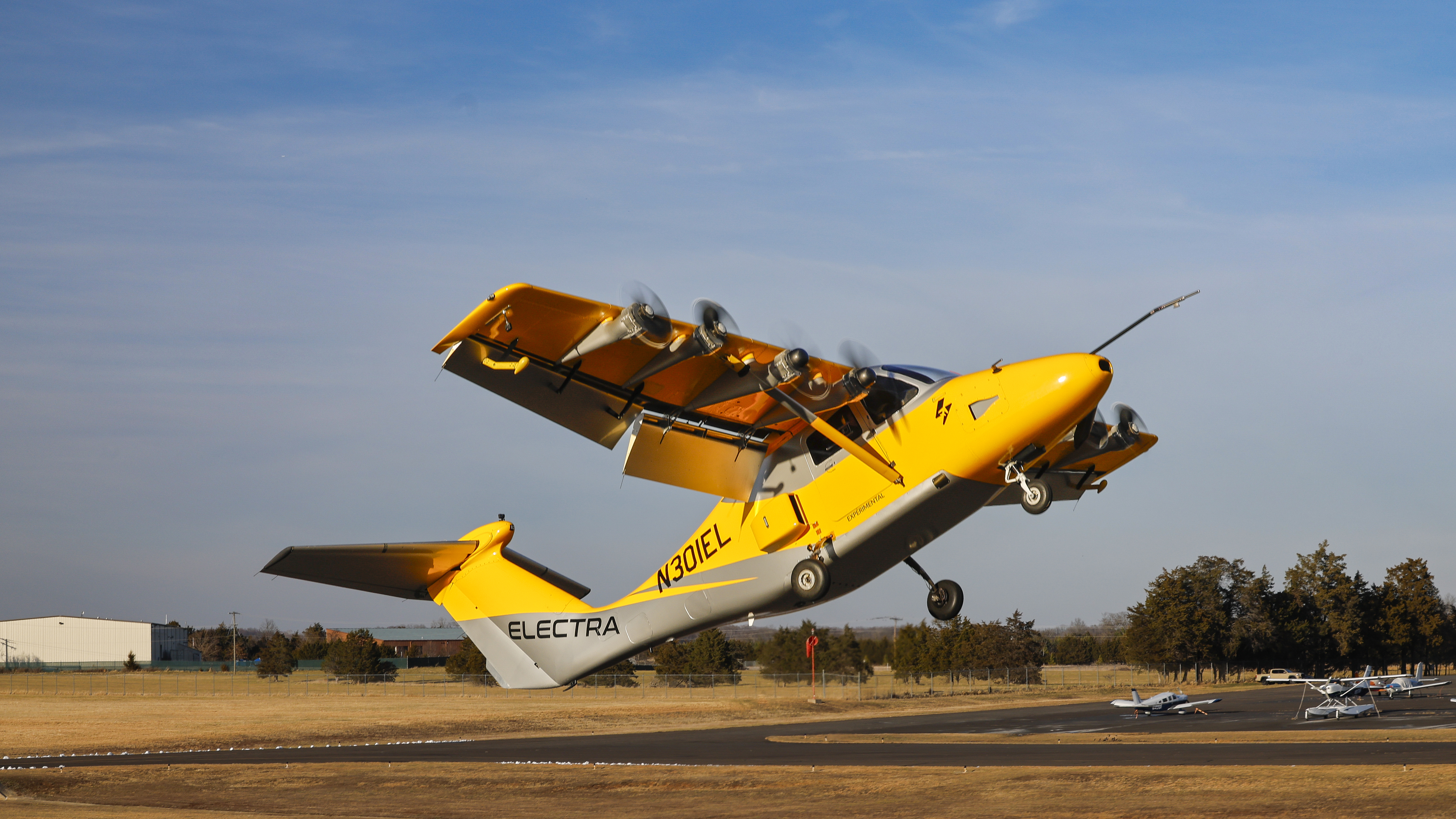
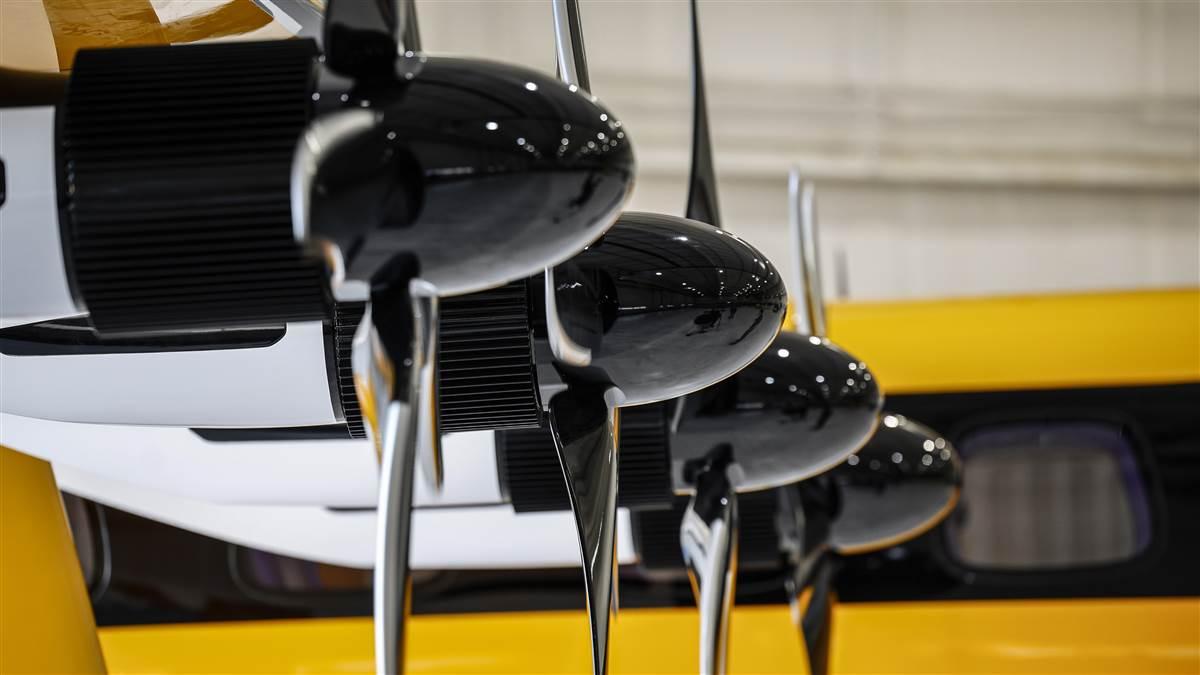
Blasting the entire wing with accelerated air from eight electric motors tricks the wing into behaving as though the airplane were moving at a far faster airspeed than it really is. Flaps that extend up to 60 degrees and drooped flaperons redirect that accelerated air downward which also increases lift.
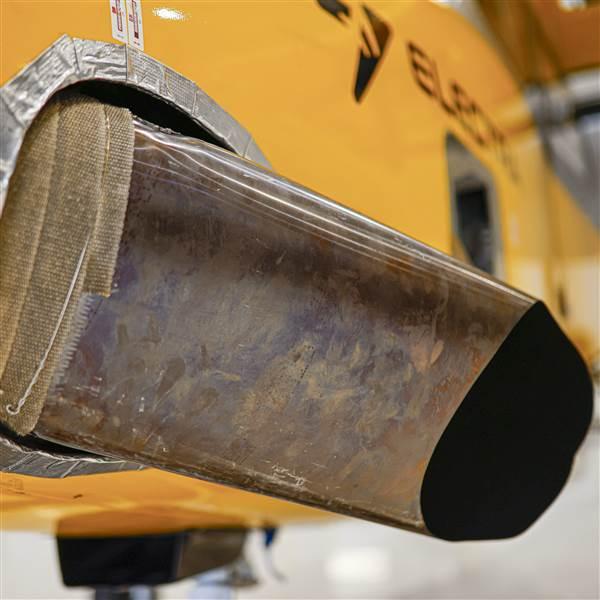
Electra’s hybrid propulsion system is designed to increase range, endurance, and redundancy. The EL2 has an SBM SJ-190 turbine, a derivative of the Solar 62 turbine, attached to a SciMo generator in the nose. The turbine engine runs at its optimum speed all the time, and it gulps jet fuel from tanks in both wings. The generator converts that energy to electricity that’s stored in a battery in the aircraft belly.
Eight electric motors placed ahead of the wings draw current from the battery, and the EL2 can fly for 15 minutes or more on battery power alone if the turbine engine fails. It also can fly on turbine power alone if the battery fails.
“I regard the EL2 as the safest airplane I’ve ever flown,” Allee says. “It’s got a turbine engine as well as battery power, and it can fly just fine on either one. Plus, it’s got eight electric motors that are extremely reliable and have very few moving parts.”


A clear path
Electra was formed by John Langford, an aviation entrepreneur who founded and served as CEO of Aurora Flight Sciences, a pioneer in unmanned aircraft, and sold Aurora to Boeing in 2017.
Electra is focused on building commercial aircraft using research from Massachusetts Institute of Technology professors John Hansman and Mark Drela. Company officials say they’re convinced that their blown wing, distributed hybrid power, and fly-by-wire EL9 will attract individual, corporate, and military buyers—and that it has a straightforward pathway to FAA and European certification.
“We’ve got a clear path to regulatory certification and strong demand for the EL9 from existing markets,” said James “J.P.” Stewart, Electra senior vice president for product development.
“We’ll be able to take people from where they are to very close to where they want to be—even if no airports exist there,” he said. “We’ll be able to do that with high frequency, high reliability, and far lower operating costs than existing turboprops or helicopters.”
Electra has partnered with Honeywell to supply flight control computers and actuators for the EL9, and Safran will supply turbogenerators. Electra is privately held and has about 100 employees at its Manassas facility. The company has a full-size mockup of the EL9 it plans to display at aviation events around the country.
Stewart says blown-wing designs are “scalable” to larger aircraft, and Electra plans to explore those options in the future.
“Our focus is building the EL9, certifying it, and bringing it to market,” he said. “The combination of ultra-short-field takeoffs and landings with fixed-wing speed and low operating costs can definitely be scaled to a wide variety of aircraft sizes.”


Energy management
My introduction to the EL2 takes place at Manassas Regional Airport (HEF). Test pilot Allee is pilot in command in the left seat, and I’m on the right side of the two-place aircraft.
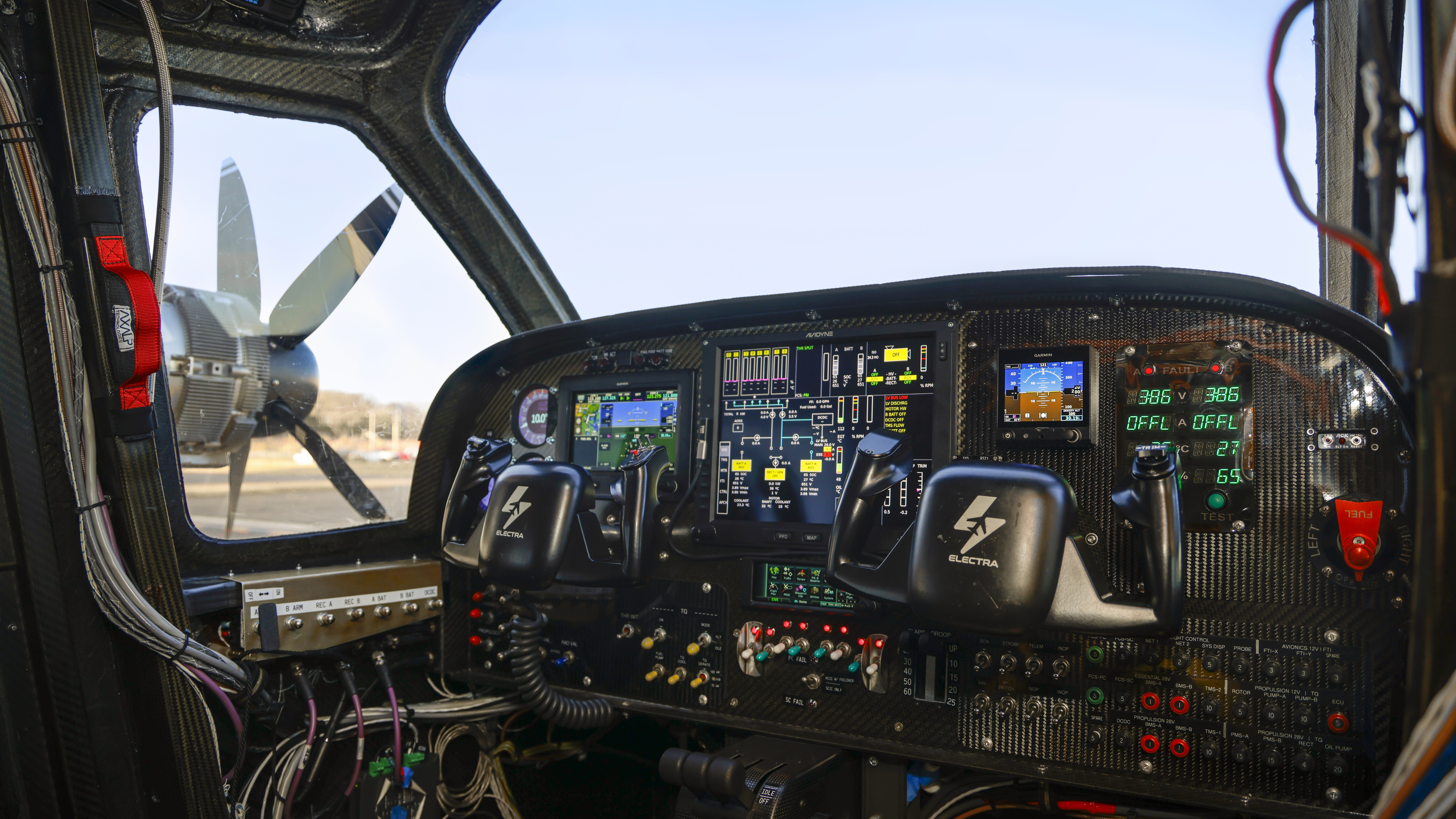
The proof-of-concept airplane has a Garmin G3X as its primary flight display, a Garmin G5 backup instrument, and a Dynon multifunction display for engine information and system status. The EL2 uses manual controls—not fly-by-wire technology like its commercial successor—and yokes instead of side-stick controllers.
Many EL2 parts were lifted from single-engine Cessnas. The wings came from a 172 Skyhawk and were subsequently beefed up and given far larger flaps and flaperons. The EL2 landing gear was taken from a 206 Stationair, an aircraft of similar size and weight. The test article’s austere interior has a great deal of exposed electrical conduit, control cables, and accessories that make the airplane quick and easy to modify.
Flight conditions are ideal with unlimited visibility, calm winds, and a 38-degree Fahrenheit air temperature that puts the density altitude at a performance-enhancing 500 feet below sea level.
Starting the SJ-190 is straightforward, and the whining turbine quickly and fully charges the main battery. There are three power levers on a center pedestal: The middle lever controls four motors (the two inboards on each side), and the outer power levers each control the two outboard motors on each wing.
Taxi steering can be done with differential braking, splitting the throttles, or simply turning the control yoke like a car steering wheel (the airplane’s computer logic adds power to the outside left engines when the yoke turns right, and vice versa). This is the first airplane I’ve flown with electric motors, and it’s startling to see the props instantly stop at idle power on the ground.
We’re soon ready for takeoff, and Allee doesn’t dawdle. From a standing start, he pushes the throttle levers forward, releases the brakes, and hauls the yoke nearly full aft at 27 knots. We’re off the ground in about three airplane lengths—and that’s less distance than a single white runway stripe. I resist the almost overwhelming urge to shove forward on the yoke as the nose rises steeply with less than 40 knots showing on the airspeed indicator.
“It takes a while to get used to the EL2 takeoff profile and how quickly everything happens,” Allee says. “It looks and feels alarming, but it’s well within the airplane’s capabilities. We’re nowhere near an aerodynamic stall.”
Allee transfers control to me and throttles back to a power setting that lets the battery recharge as we climb to 3,500 feet at 70 knots. The EL2 is neutrally stable and requires moderate control forces throughout our shallow climb. There’s very little elevator trim change since so much of the lift comes from the electric motors.
“Flying this airplane is all about energy management,” Allee says. “You can trade altitude for airspeed just like any other aircraft. But there’s also fuel and battery power to consider.”
Running the electric motors at high power depletes the batteries and running them at low power recharges the batteries. The turbine engine maintains a constant power setting and consumes jet fuel steadily.
Allee talks me through power-off stalls that break crisply with a slight left-wing drop when the wing reaches its critical AOA of about 18 degrees. It feels quite conventional.
Then he powers up the electric motors to 80 percent and asks me to raise the nose until the AOA indicator shows 30 degrees. The pitch attitude is about 45 degrees—far too high to see over the nose—so I use the Garmin G5 standby instrument and peripheral vision for orientation.

The airspeed indicator shows about 30 knots, and Allee has me make shallow turns left and right despite the airplane’s dramatically nose-high attitude. The ailerons remain crisp, and there’s no perceptible reduction in roll rate. (Accelerated airflow stays attached to the wing at far higher angles of attack and raises the critical angle to more than double the EL2’s power-off limit of about 18 degrees.)
“You’ll notice there was no hint of an aerodynamic stall even though the airplane was flying at less than the power-off stall speed,” Allee says. “That’s the blown wing in action.”
Next, Allee shuts off the left outboard engine. A quick stab of right rudder and a slight reduction in AOA account for the slight but sudden power loss and asymmetric thrust.
Allee restarts the engine, then he takes the controls, slows to 45 knots, and performs steep, 60-degree-banked turns at 2 Gs. There’s no hint of a stall even as the angle of attack in the turns exceeds 30 degrees—and our low airspeed makes the turn radius seem impossible tight.
Next, we go to Warrenton, where Allee demonstrates a series of short-field takeoffs and landings. Each traffic pattern is flown conventionally until final approach, when the airplane slows to about 35 KIAS. That’s where the EL2 moves to the “back side” of the power curve, or the “region of reverse command” in which flying slower requires more engine power.
At 25 KIAS, Allee holds the pitch attitude at about 12 degrees nose up while increasing engine power to about 65 percent as the airplane descends about 500 feet per minute.
“I’m holding a constant pitch attitude while controlling the rate of descent with engine power,” he says.
We touch down firmly at about 20 KIAS and 70-percent power, and Allee yanks the power levers to idle while applying moderate braking. We stop in about 60 feet—or two-thirds the distance of a single runway stripe.
“There’s no tendency to bounce back into the air because the wing isn’t producing lift at idle power,” he says.

New approach
Electra Aero is vastly expanding the capabilities of fixed-wing aircraft by enabling helicopter-like takeoffs and landings while maintaining the cross-country efficiency of fixed-wing aircraft.
Unlike eVTOLs that must invent an urban air taxi industry and charging infrastructure from scratch using purely electric motors that tilt to transition to and from level flight, Electra’s strategy has far fewer variables. There are countless challenges ahead in certification, production, and sales—but most of that is known territory.
For pilots, extreme STOL will require rethinking the ways we fly, especially during approach and landing. Instead of approaching at 1.3 times the power-off stall speed, flying into ground effect, and flaring while decelerating as pilots have done for decades, a blown wing introduces new possibilities.
When combined with autothrottles and fly-by-wire systems, EL9 pilots will be able to precisely control speed, glideslope, touchdown point, and ground roll. That kind of consistency and accuracy can potentially open up large numbers of nontraditional areas for business, recreation, and adventure flying.
It’s easy to imagine the future of STOL including big, multi-motor, highly automated hybrids flying between city centers and rugged and remote regions—and all they’ll need wherever they go is a flat patch of ground. 

Related Articles


