Endless summer
This pilot chases the waves in his airplane
How to have an endless summer: Buy an airplane and learn to fly.
“Many surfers ride summer and winter; but the ultimate thing for most of us would be to have an endless summer.”
—'The Endless Summer' (1966)That became professional surfer Michael Dunphy’s plan after he took a flight off the Florida coast in a friend’s de Havilland DHC–1 Chipmunk. “My girlfriend’s dad is a pilot, and he took me flying one night, and I was like, dang, this is pretty sick,” Dunphy said. “It was a beautiful night in Florida, and you could pretty much see the Bahamas out there. Being a surfer, I’m like, I could fly myself out there and go surf and do these adventures, that would be so sick….”
Surfer dude
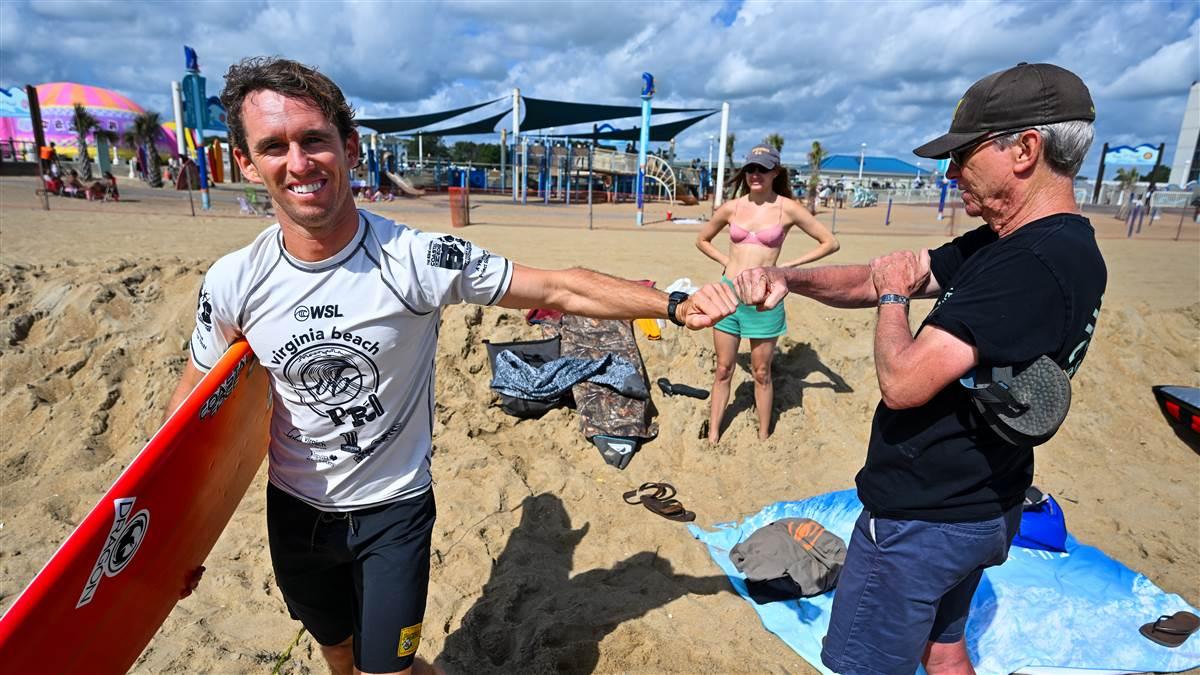
Meet Michael Dunphy. Born and raised in the Virginia Beach, Virginia, surf community, he was on a boogie board by age 6, catching waves next to his dad. His friends and mentors were all surfers, and every day he begged his mom to let him go surfing, eventually being homeschooled so he could surf when the waves were good. Hurley, a California surf clothing company, signed him on as a grommet* (see “The Lingo”) when he was 9.
“I grew up at the oceanfront in Virginia Beach. There’s a huge surf community here, so all my friends in the neighborhood did it. I pretty much caught the bug right away. As soon as I got in the water, in the ocean, I just knew that’s all I wanted to do.”
There are two types of surfers—one is called a soul surfer. That’s the dude* who wants to be at one with the ocean and ride his own wave. He’s a loner and likes the ocean to himself. Then there’s the competitive surfer who loves sharing the waves and seeing who can shred* the best. She enjoys competition and likes the camaraderie of a team or competing in heats*. Dunphy turned out to be the latter.
“Competitive surfing is a whole different animal inside surfing. It takes a different kind of mindset, that’s for sure.”
“I had some older friends who were good surfers, and I looked up to them. One thing led to the next—on the boogie board, in the shorebreak*, and then out to the line-up* waiting for sets* with the adults,” he said. “Pretty much the path to professional surfing is you need sponsors for the travel and events. The Hurley manager approached my mom and wanted to sponsor me. I was lucky. Now I’m sponsored by Quiksilver, and they’ve been great. I’ve been with them for the past 10 years. You have got to have support because obviously traveling the world is expensive.”
As he says, he’s been pretty much everywhere in the world that has an ocean: Indonesia, Fiji, Australia, Japan, Europe, South Africa, Hawaii, the Caribbean.
“My girlfriend, Mandy, says you don’t know anything about, like, Kansas or middle America or anywhere without an ocean. She’s right: I’ve only been to the coasts of pretty much most of the world.”
Learning to fly
The flying bug bit when Mandy’s father took him flying in that tandem Chipmunk (“Pretty sweet,” Dunphy says).
“I never had any interest in flying before. So many airplanes I’ve been on in my life, but I never thought of it for myself. During COVID, we were just sitting around, not traveling, and I started to think about it. Then at the end of 2024, I was committed to it. I was like, I’m going to do it. I’m going to get an airplane, and I’m going to learn how to do it.”
He’d had several lessons but hadn’t been consistent and started asking friends about the best way to quickly get his certificate. By now, he was living in New Smyrna Beach, Florida, and had friends who were pilots. They suggested flight schools, and he looked into them but found training “pretty pricey.” Another friend suggested he buy an airplane to learn to fly in: You could learn in it and then sell it, and at least if you get your license, you have a way to fly because it’s still pretty hard to fly even after you have your license….
“So, yeah, it was like, all right, I’m going to commit. I bought the airplane, but I didn’t know how to fly it. We flew it home to New Smyrna, and then it was just, all systems go and try and learn how to fly. It was pretty intimidating.”
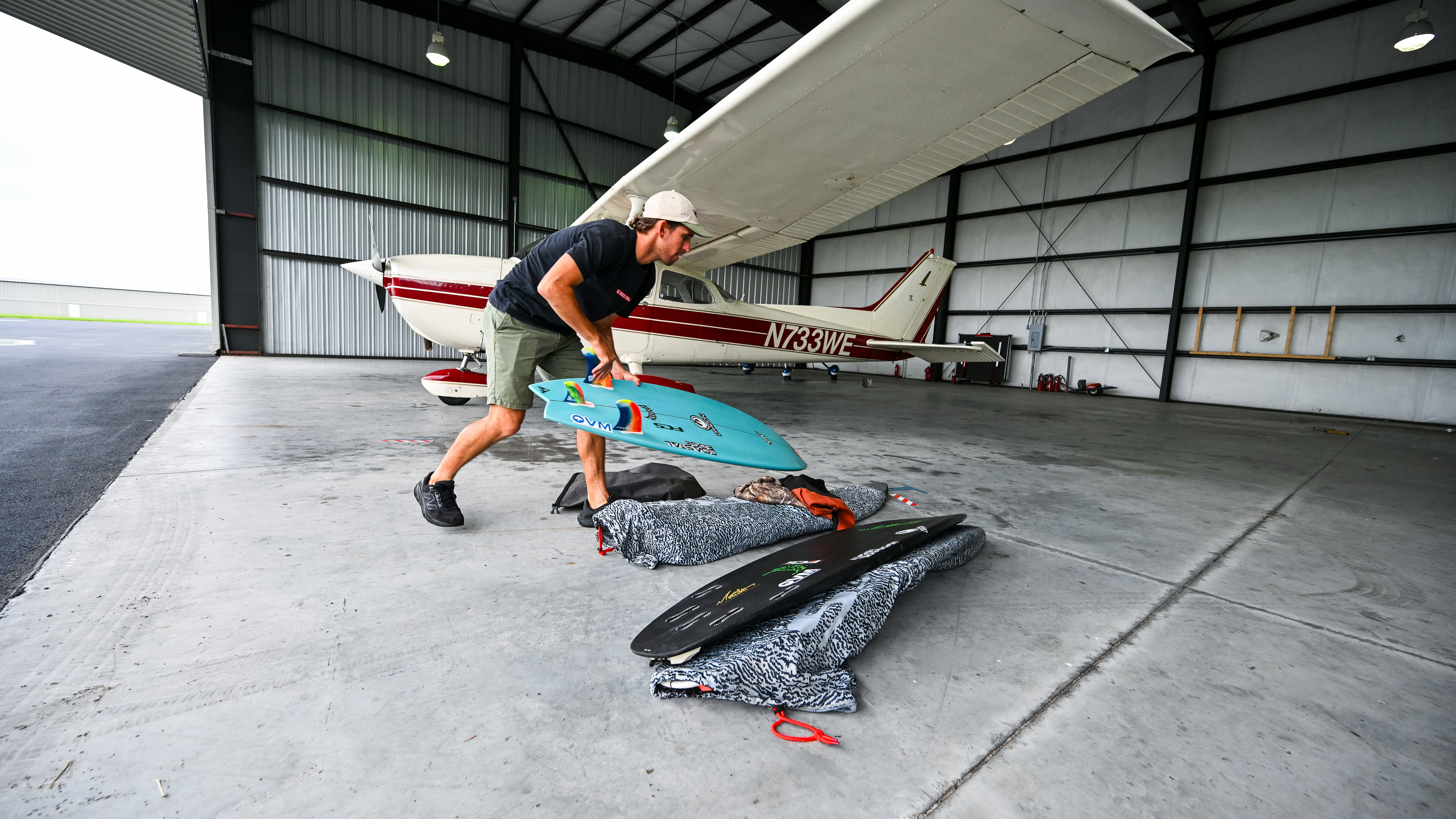
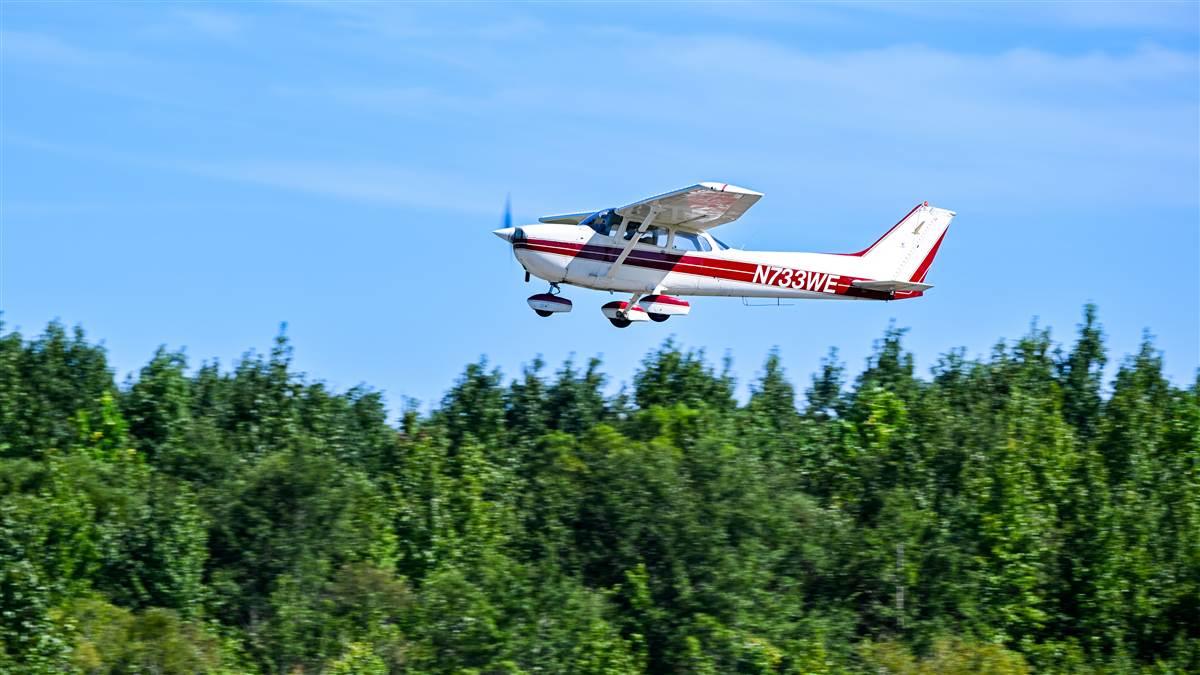
Dunphy bought a 1977 Cessna 172 with a 180-horsepower Penn Yan engine conversion to carry more weight. It has vortex generators, an auxiliary tank, and rudder trim.
“At first, I was like, what the heck am I doing? People thought I was crazy too. I bought it in early November and had my license right before Christmas. I had a bunch of fun instructors who were committed to helping me out. The surf stuff was slow that time of year, so I, like, turned it [learning to fly] into my full-time job. I was like, I’m going to wake up every day, study, and learn to fly.”
For a water-born guy, getting into the air was a surprising challenge in that he discovered it scared him.
“The biggest challenge of flying for me was getting over the fear of it. I freaked out. I didn’t trust myself. But I got over it by practicing every day and committing to it and being consistent.”
He continued learning by earning his instrument rating the next summer.
“That took a lot of my brain power. It was stressful, but I made it out the other side.”
He told Surfer magazine: “The big difference with flying is you have to use your brain so much and remember procedures and stuff.”
About the checkride, he said: “I’ve done this my whole life—been nervous and anxious and still performed well—so I can get through this.”
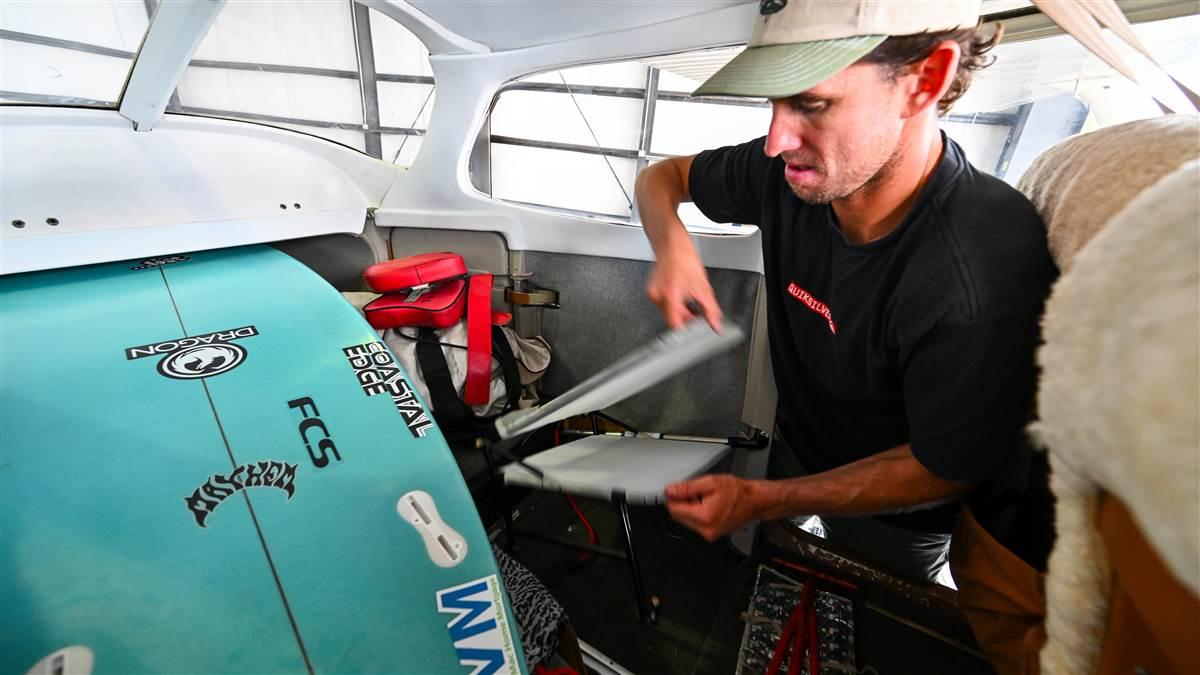
He has taken to posting on social media, showing how he loads his airplane with a quiver* of surfboards and explores remote surf spots along the East Coast and in the Bahamas and Caribbean.
“We have tons of surf out there that’s pretty uncharted. The airplane is like my vessel of freedom; a surfer’s dream is to go places without a lot of people, and so to be able to have this [aircraft], it’s a dream.”


The contest
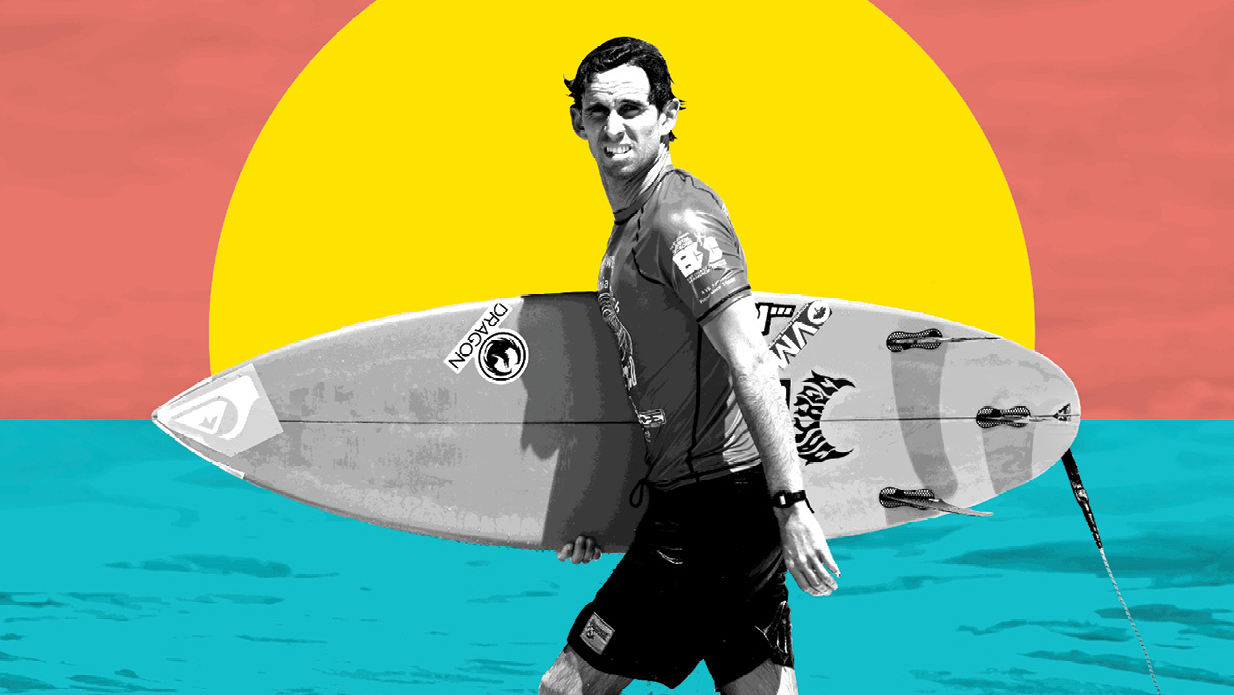
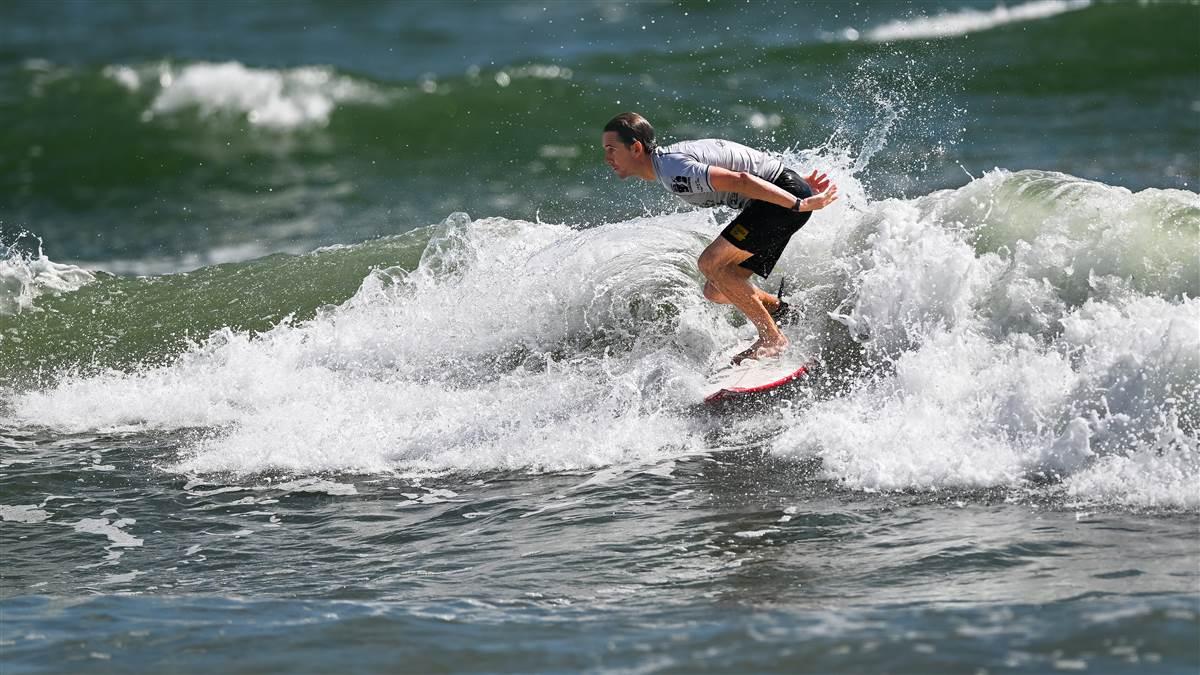
It’s late August 2025, and Hurricane Erin is delivering Virginia Beach something it rarely has—great surf. It is ironic that the longest running surf contest in the world is held on an East Coast beach that is not known for its great wave action. It is a great surfing community, however, and the sixty-third annual Coastal Edge East Coast Surfing Championship attracts nearly 800 surfers from 34 countries for the four-day event. Dunphy is a native son. His visage is on a 10-foot-tall poster in the town center, and he won the contest in 2014. In the World Surf League, he is ranked number 25, down from number one in 2023/2024.
“I’m stoked* to be home,” he says.
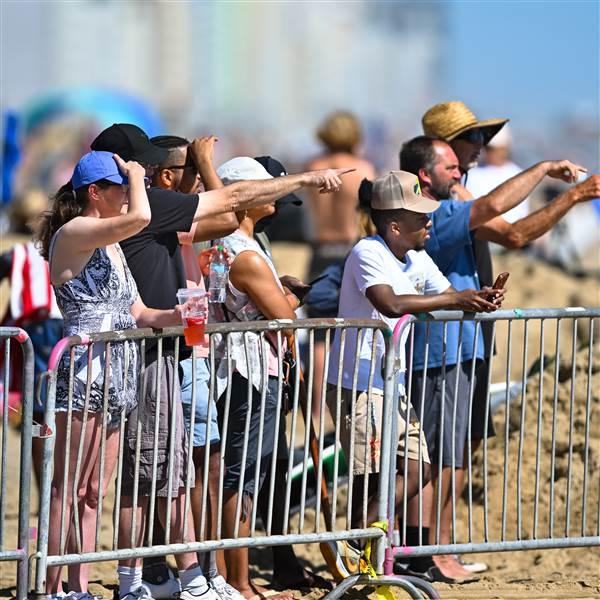
He’s flown his 172 up from Florida for the event. He packed four surfboards in his airplane (“you need different boards for different conditions, and you need to keep extra boards as they ding* and break pretty easily”). He flew in early to avoid the storm and to spend time with family and friends.
“The hurricane off the coast is going to make great waves for Virginia Beach. It’s not usually the first place you’d go to for hurricane swell*, but with the event here and having waves in the six-to-seven-foot range and clean conditions, it should be a really good event.”
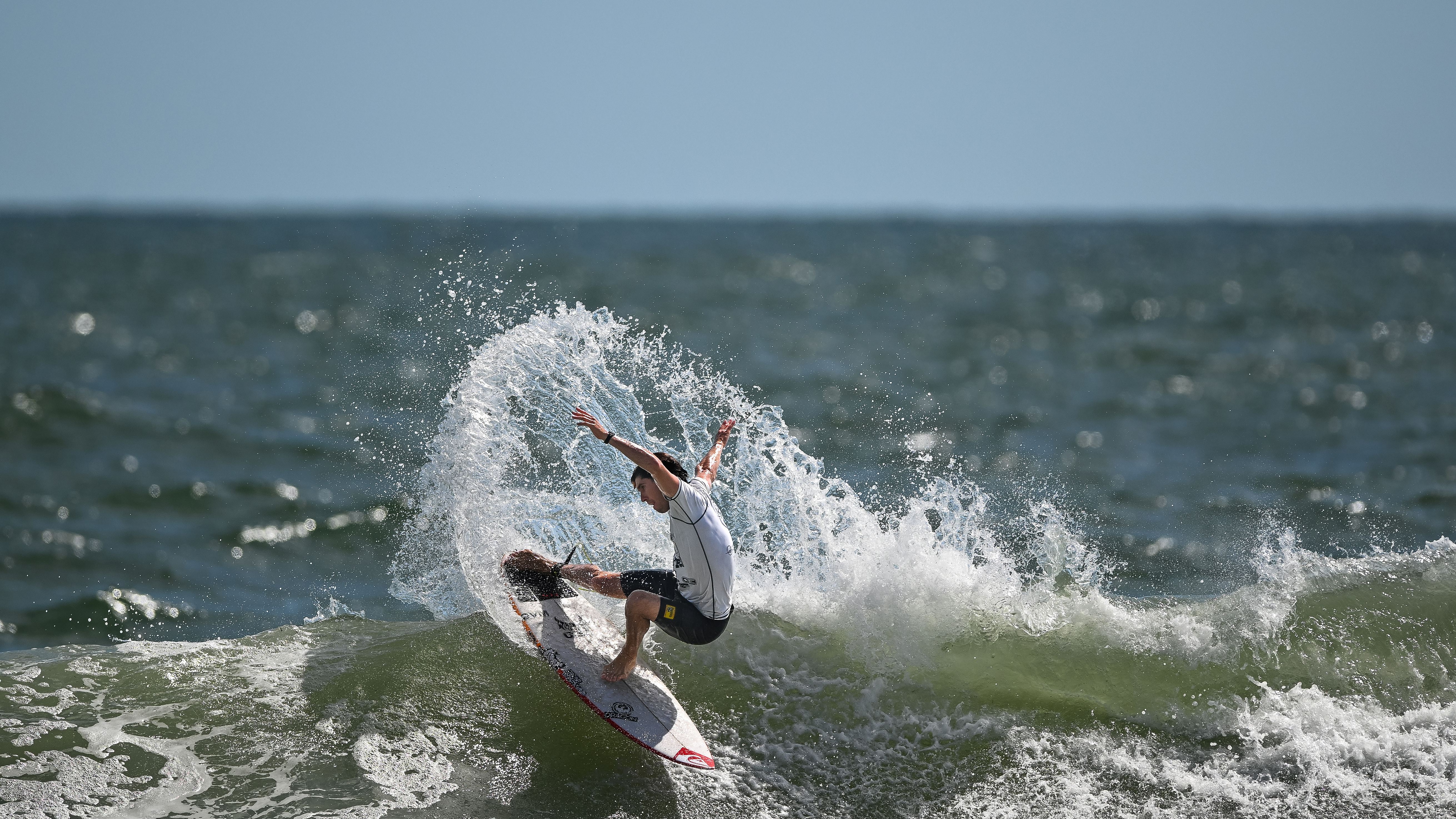
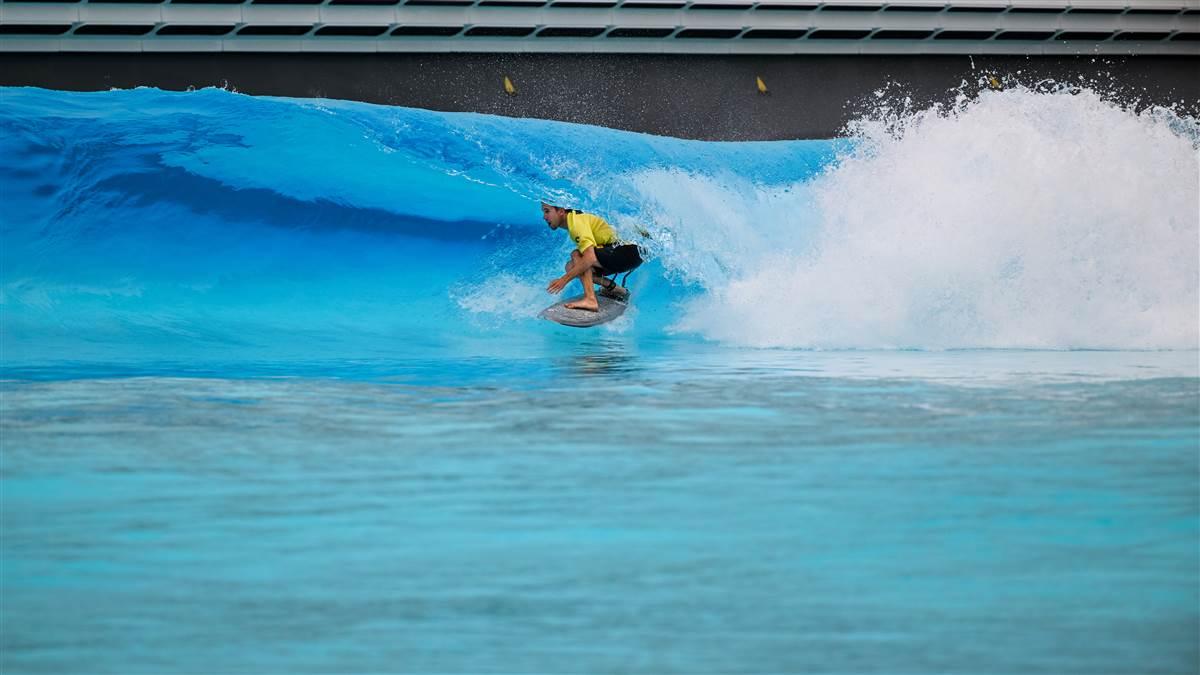
On Thursday, the event is canceled for the day. The wind is onshore*, and the ocean is a washing machine* covered over by a fat, thick overcast sky. So, Dunphy surfs at the newly opened Atlantic Park surf park. The 3.5-million-gallon pool generates waves for seven skill levels. The artificial waves are one to six feet high and are produced 1,000 times per hour. Dunphy shows off his sharp technical skill. He’s an aggressive surfer who is known for getting into the pocket*, his bottom turn*, carving*, and charging* style on kickout*. He’ll shred in the first heats on Friday when the contest waves are cranking*, but the blown-out* surf on Saturday defeats him. He does not place in this tournament.
He is beaten by a fellow contestant who does something most surfers dream of and that an East Coast competitor rarely sees—a barrel*. When he learns that the other surfer was in the barrel, he’s both stoked and envious. “Brah*, that’s gnarly*!” Dunphy has another goal.