Hodograph basics
A look at spiraling winds aloft within thunderstorms

One minute you’re making a stable descent with a constant attitude and power setting, and suddenly your headwind drops and your airspeed and altitude plunge. Time to power up, pitch up, and go around. Wind shear is bad news when you’re flying close to the surface.
Wind shear is also a huge factor when it comes to creating convective weather. Think of wind shear at various altitudes. Depending on the right amount of shear aloft—meaning changes in wind speed as well as direction with altitude—the result can be the difference between a smallish thunderstorm and a huge mesoscale convective complex, complete with severe thunderstorms.
The Aviation Weather Center’s website will issue any airmets, sigmets, and other warnings, as will the Storm Prediction Center’s, plus any briefers you may talk to.
But perhaps you’re more curious about the conditions that portend thunderstorms. You might want to do your own research to learn the shear setups needed to kickoff convective weather. That can be a big meal, so here’s some basic advice.
First off, think of the kind of pop-up, isolated thunderstorms that are common in Florida. The three thunderstorm essentials are in place: moisture, instability, and lift. Moisture, from the tropical environment; instability, from surface heating; and lift, from the heated air’s rising motions. But there’s probably not enough lift from upper-air dynamics to sustain a storm’s growth. So moist, warm air is drawn together near the surface, condenses, rises, produces rain, and then an outflow forms after it falls. The outflow’s boundary prevents any further air from being drawn into storm cell, so it dies after an hour or so.Hodographs can reveal the conditions necessary for severe storms including tornados and other adverse weather.Now let’s go to the central and eastern portions of the country, where conveyor belts of moisture can travel northward from the Gulf. Air near the surface may heat up during the day, rise, then enter cooler air aloft; this provides instability. And high-speed jet stream dynamics tilt any building storm clouds downwind, allowing a free flow of air to be drawn in at lower levels, build to the flight levels, and sent downstream. This creates a circulation that can sustain growth over several hours. During this process, severe storms can morph into various forms (of mesoscale, multicell, supercell scales) and spin off other severe-storm artifacts such as bow echoes, squall lines, and derechos.
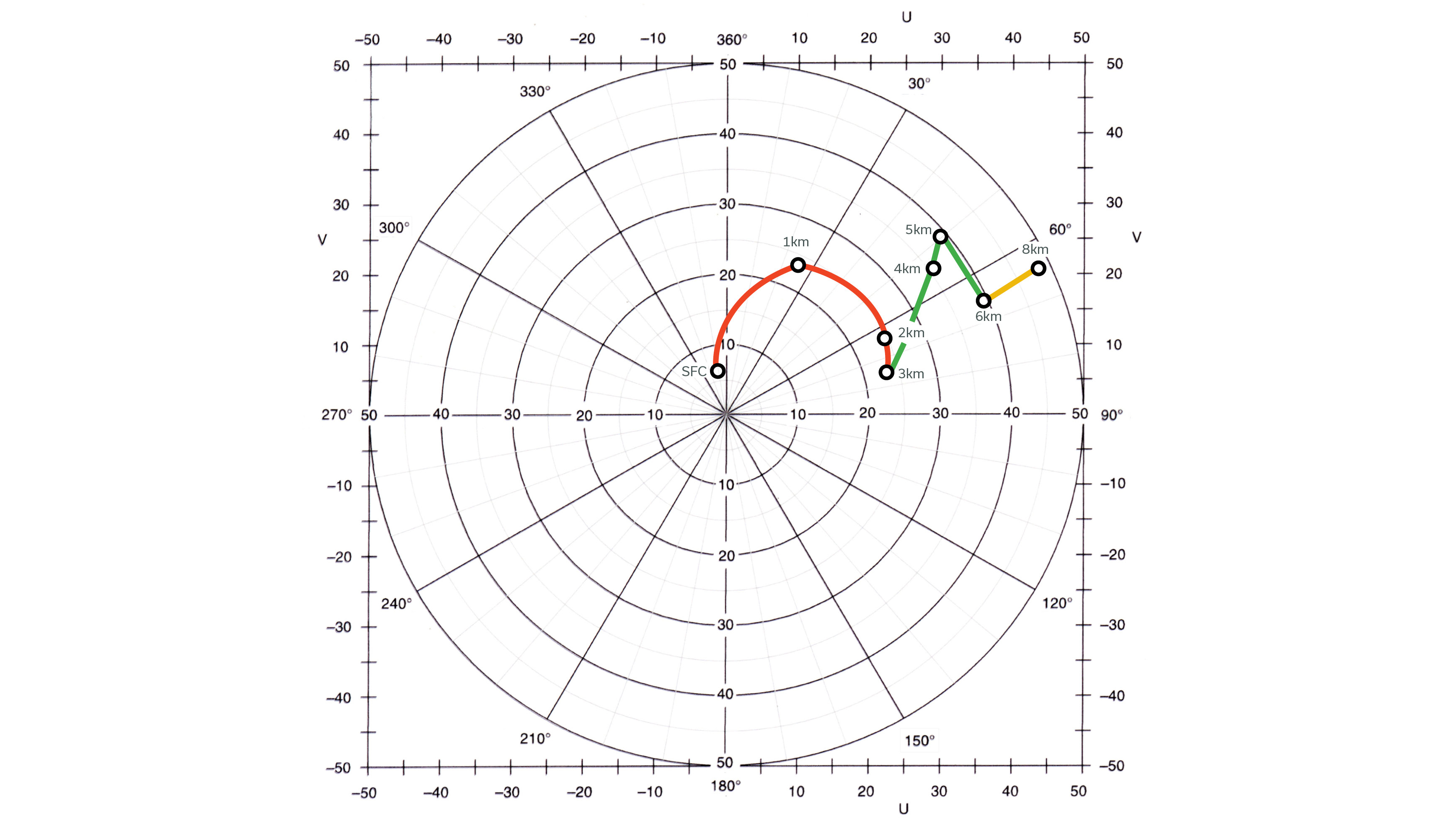
If you’ve read this far, you may already have a weather-geek propensity. So, you may know about hodographs—forecasting tools that plot changing wind speeds and directions for several altitudes, plus the shear vectors between those plots. Connect those plots and you have a visual representation of the wind shear profiles.
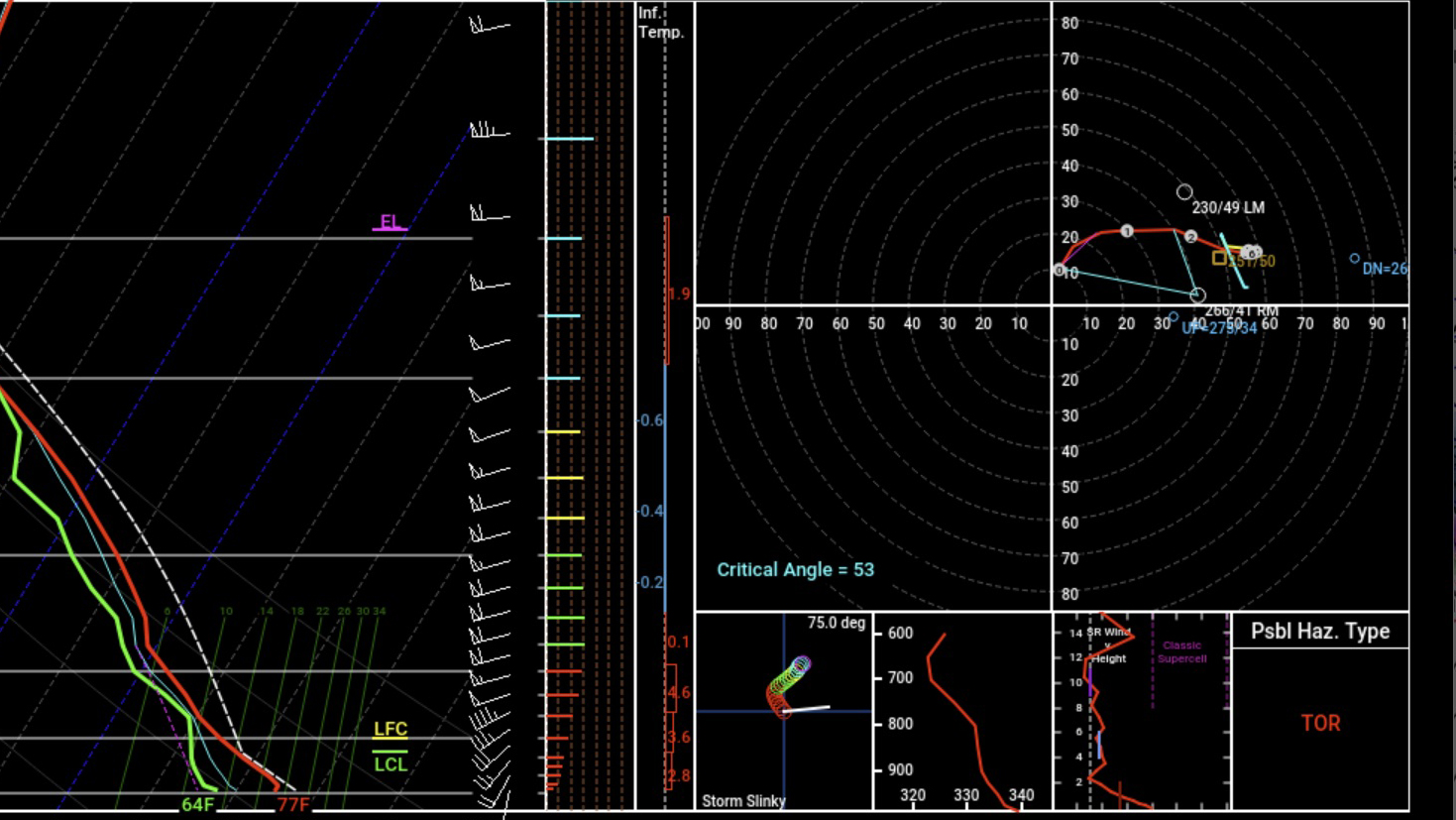
This lets you see any turning of winds aloft, as well as their shear speeds, through the entire vertical atmospheric column.
You can go online and get all sorts of information about hodographs, and computer model-generated hodographs are updated and can even produce forecast conditions. Try pivotalweather.com, click on “models” (e.g. the GFS model), make sure the models’ initial and valid times are current, then click anywhere on the United States map, and a hodograph—together with a Skew-T diagram and much more—will pop up. It may take a while to get the hang of hodographs, but learning them can be of both intellectual and practical value.

Related Articles


