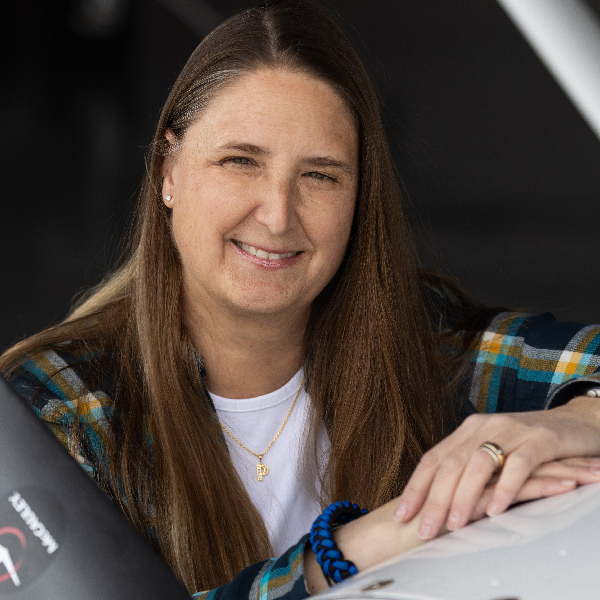
Chris Caputo
Director of flight operations, chief pilot at Beta Technologies

His parents, a state trooper and a nurse, didn’t have the means to pay for their four children’s higher education aspirations. So, the Caputo kids had to be resourceful. Chris went to the U.S. Air Force Academy and spent 30 years in the military. He’s now the chief pilot at Beta Technologies, one of numerous advanced air mobility manufacturers racing to certify their high-tech designs.
How did you get started in aviation?
I’ve always been a little bit of an adrenaline junkie. My brother got a college scholarship through the Air Force ROTC, and he encouraged me to look into the academy and see what it’s like to fly. I got accepted when I was 17. That was super lucky for me, I feel so fortunate. I had almost a dozen combat deployments, and it was just a very, very humbling experience. I would never have gotten into aviation if it wasn’t for the military.
Where did you go then?
I went to Delta Air Lines and flew the 757 and 767 on transcontinental and international routes, and it was just awesome. But after I left the military, there was a part of my soul that was missing. I met Beta CEO Kyle Clark and heard his vision for what he thought the future of aviation would look like. It’s not just about building an electric aircraft; it’s about what electrification of aviation will offer. It will help break down some of the barriers, especially financial barriers, to allow more kids to fly.
What's it like flying Alia?
It’s a dream. The aircraft is very simply designed, we have a high-voltage and low-voltage electrical system, we have an electric engine, and we have a fly-by-wire flight control system. It’s very intuitive to the pilot, very quiet, the visibility is amazing, you can hear the wind over the windscreen, over the wings, and it allows you to kind of become one with the aircraft.
What do you fly when you’re not flying for work?
Yesterday I had a great morning, flying a Cessna 185 amphib on floats, updating my currency, and I did multiple landings. We have a 1956 Beaver on floats as well that I really enjoy flying. The super-unique part of Beta is this fleet of about 30 aircraft that affords us an opportunity that probably doesn’t exist anywhere else in the world. We have everything from Pipistrel Velis Electros to an Extra 300, to various amphibs, and more. I also just got my glider-tow endorsement. I spend a lot of time in the air.
Any advice for people considering an aviation career?
It’s an exciting time in aviation, with many companies developing new modes of transporting cargo, medical supplies, and people safely and efficiently at a very attractive cost. You’re going to see larger aircraft that are all-electric or hybrid-electric—the aircraft doesn’t care where it gets its energy from. And we will still need competent, capable, safe pilots that are highly skilled, and highly trained, to understand how to fly these machines in our national airspace system. The opportunities are endless.
Related Articles