Shaping aviation dreams
Guillow’s model airplane kits are 100 years old
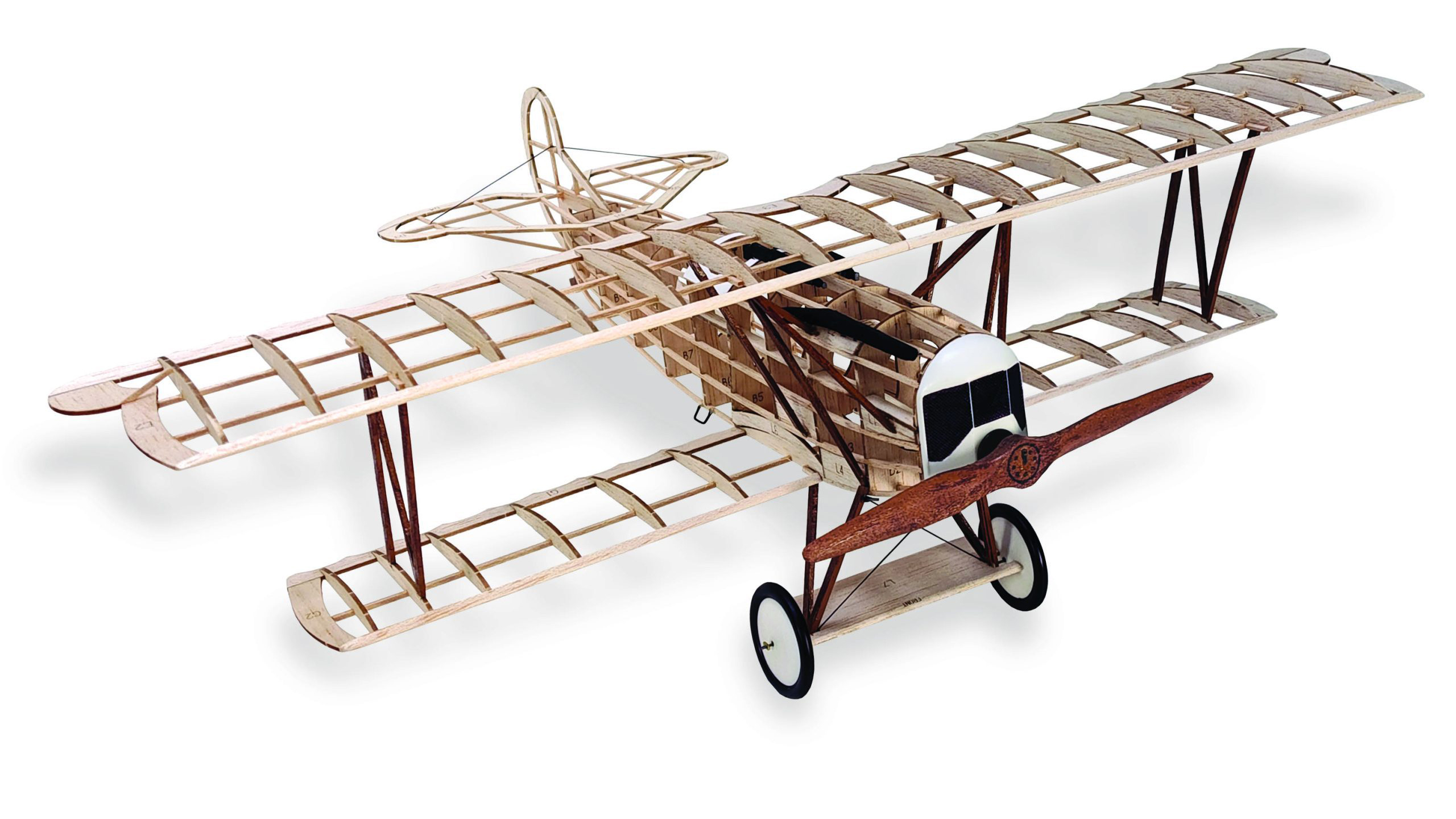
Guillow made an airplane out of lightweight wood, anchored a rubber band at the rear of its fuselage, and connected it to the propeller; then, when wound, the rubber band acted as the “engine,” and zoom—every kid across the nation had an airplane in their hands (see “Rubberband Man,” January 2021 AOPA Pilot).
“For 100 years, Guillow’s has made aviation tangible, giving enthusiasts of all ages a way to connect with the airplanes, the pilots, and the eras that defined flight,” said Thomas Barker, president of the Massachusetts company. “These kits are more than toys; they are a bridge to the past and a gateway to understanding the world of flight.”These kits are a bridge to the past and a gateway to understanding the world of flight.
To commemorate its centennial, Guillow’s is re-releasing three of its most popular World War I aircraft kits from the original 100-series, first introduced more than 70 years ago, still made in the United States. These anniversary kits are the #102 French Spad VII, #103 German Fokker D.VII, and the #105 British Sopwith Camel.
Established in 1926, Guillow’s is one of the oldest and most respected model airplane manufacturers in the world. Headquartered in Wakefield, Massachusetts, Guillow’s produces balsa wood aircraft kits, that, according to the company, “Inspire curiosity, teach engineering, and preserve aviation history.” 
 guillow.com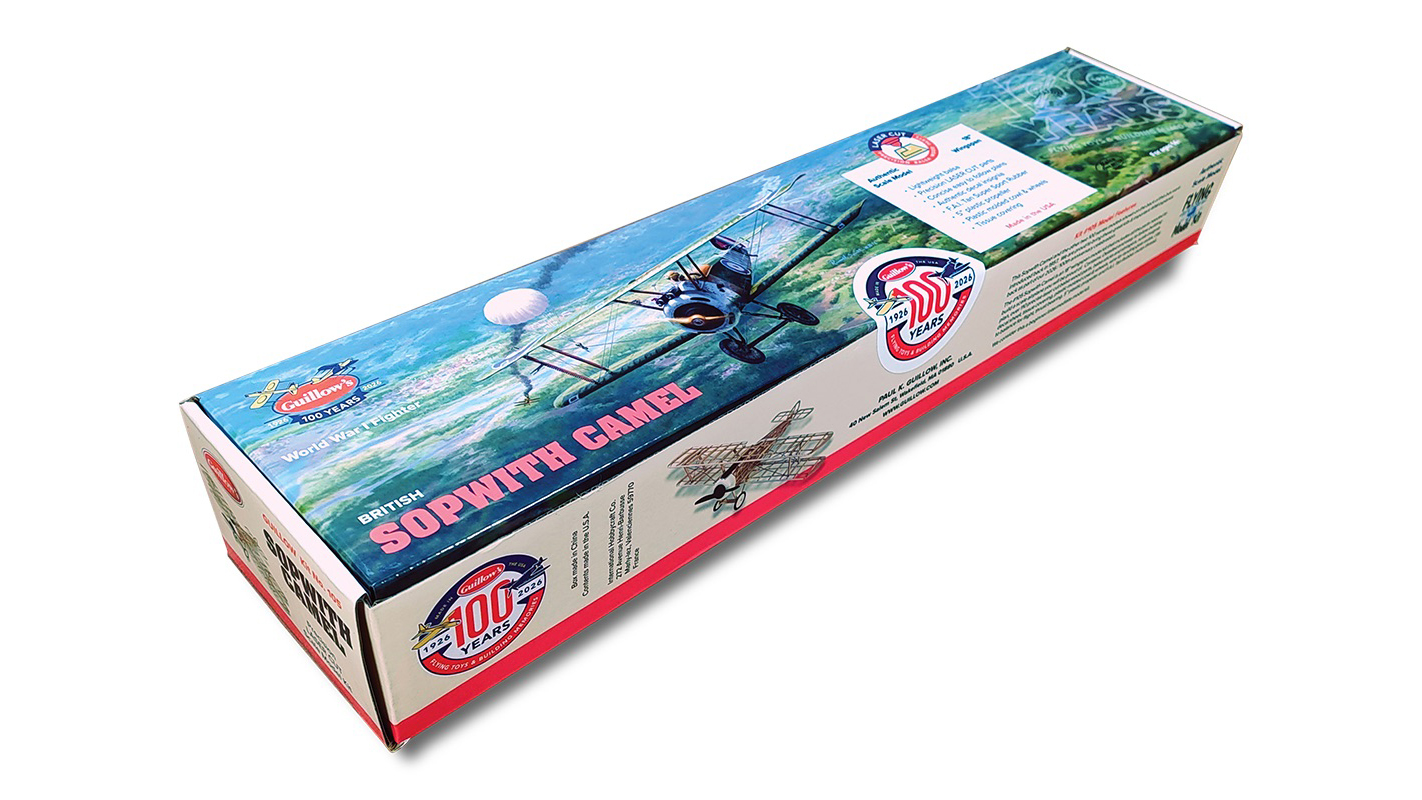

Related Articles


