Your digital aerobatic coach
Pocket-sized data recorder and Acrowrx are a powerful combination

The OnFlight flight data recorder measures aerobatic maneuvers and sequences in detail. It’s available whenever and wherever you are—and it never misses a maneuver because the sun was in its eyes.
The data recorder is about the size of a deck of cards and, when paired with the Acrowrx website, allows aerobatic pilots to record and compare their flights with peers and judges around the world. The recorder is a battery powered, solid-state device that precisely measures ground speed, altitude, heading, ground track, roll rate, and G loads.
That information is stored on a Micro SD card and can be downloaded on acrowrx.com. The website graphically recreates each flight, showing the airplane’s attitude and location within the confines of a standard 1,000-meter aerobatic box and other parameters. Acrowrx, or human judges, can grade each maneuver and sequence, and subscribers can share their performances around the world.
This technology is the basis of a new form of online aerobatic competition in which pilots from around the world compete remotely. Instead of traveling to a single location where they’re at the mercy of local weather and other variables, each competitor can fly at the time and place of their choosing.
I flew with the OnFlight data recorder and used the Acrowrx website recently and found them to be an incredibly innovative and powerful tool with potential applications far beyond aerobatics.
The data recorder itself is an unremarkable-looking 3D-printed box with an on/off switch, LED lights showing its status, a slot for a microSD card, and mounts the same size as those on an action camera.
Configuring the box isn’t complicated—but it’s not simple or intuitive either. And getting it to communicate with the Acrowrx website took several attempts and emailed questions. Once those steps were properly accomplished, however, collecting and analyzing the data was fun and illuminating.
Reviewing flights on a desktop computer provides a far more thorough analysis than hearing a brief critique from an observer on the radio, and patterns quickly emerge. My vertical uplines, for example, are consistently “positive” or too shallow; I tend to “drag” the right wing on over-the-top maneuvers, and I kick too soon on hammerheads.


The flight data recorder also provides lots of quantifiable flight information.
• A 3-G loop in my Van’s R–4 entered at 175 knots, for example, gains 1,467 feet at the apex where airspeed slows to 60 knots.
• Full-deflection aileron rolls reach a maximum roll rate of 113 degrees per second.
• A hammerhead turn entered at 175 KTAS gains 1,450 feet and holds the vertical upline for 5.5 seconds.
Online aerobatic contests take a page from glider pilots who have been holding their own online competitions for years. It also has the potential to tighten the bonds within aviation communities. For example, a competition between pilots of exotic aircraft such as the Bucker Jungmeister or de Havilland Tiger Moth can give a shared purpose to these far-flung afficionados. It can also draw together pilots of similar experience levels wherever they happen to be.
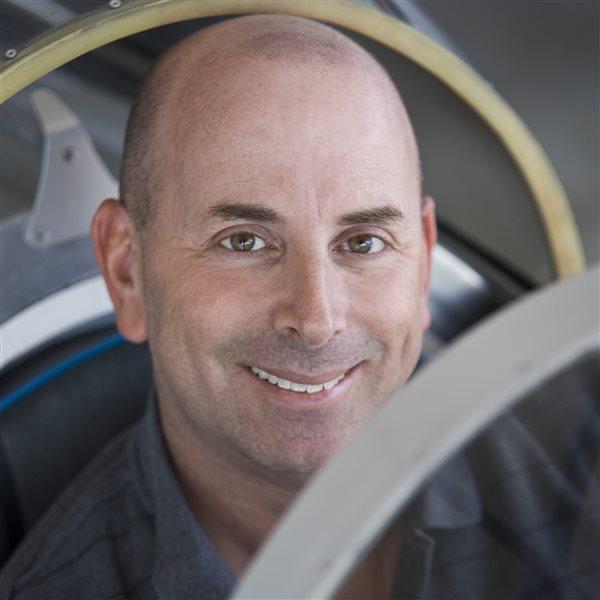
Brian Taylor, a former NASA research engineer, invented the OnFlight recorder in 2019. His New Mexico-based company, Bolder Flight Systems, has sold about 300 units to aerobatic pilots around the world. OnFlight records up to 50 samples per second and it’s accurate to within one degree in heading, 5 feet laterally, and 10 feet in altitude. A single battery charge lasts about 13 hours.
Taylor also is making the OnFlight data downloadable on other platforms such as FlySto and CloudAhoy where it can be useful to student pilots, flight instructors, and flight schools.
“There are lots of potential uses for flight data,” he said. “Backcountry pilots can use it to share information about approaches to remote airstrips. Test pilots can use it for a variety of their own purposes, too.” 

Related Articles
.jpg?mw=650&mh=366&as=1&hash=73D217D9DBE526082C1DAAD9CF28B5C7)

