Look, no windows
Phantom 3500 from Otto Aerospace
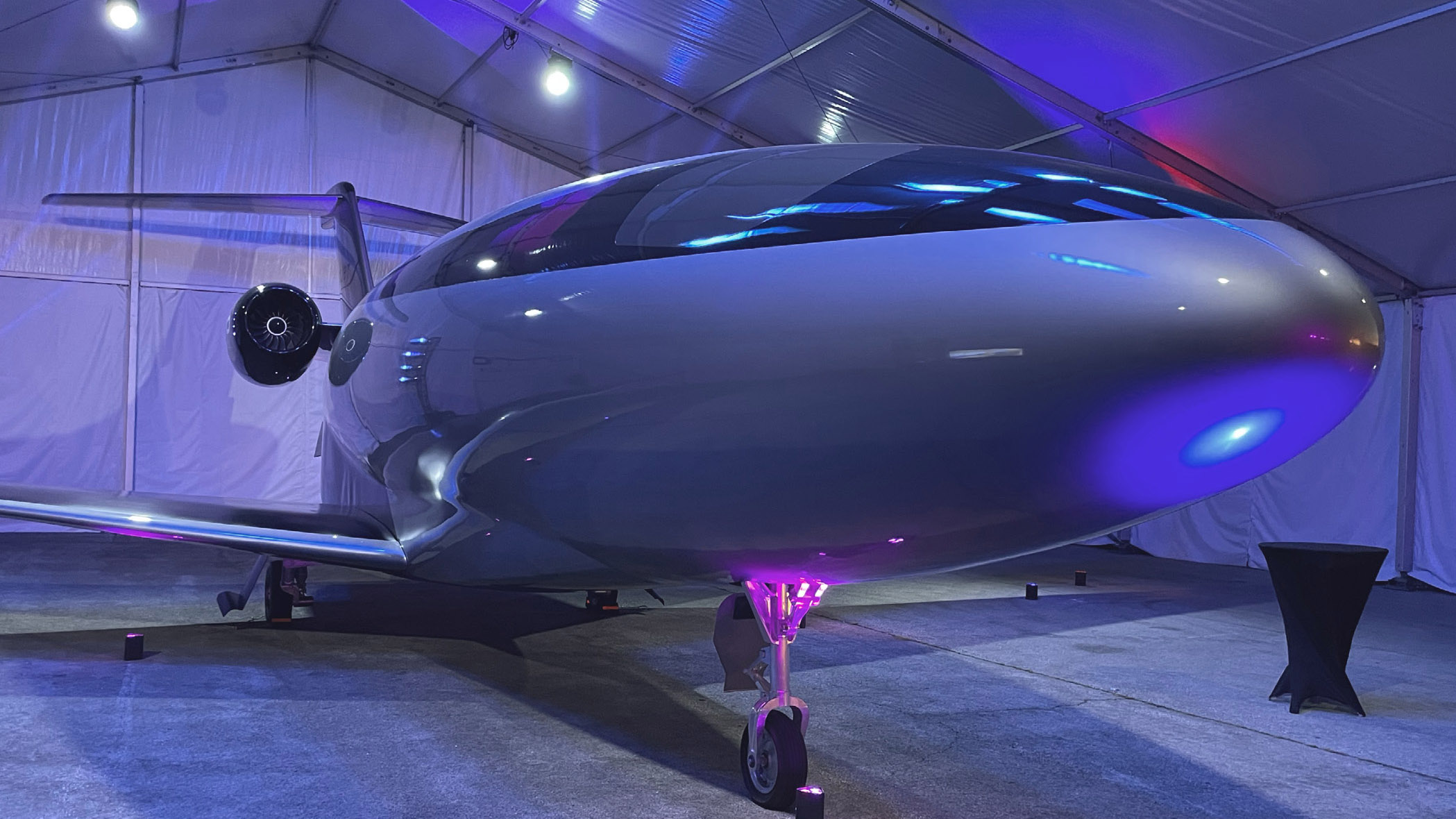
AOPA got an up-close look at the innovative jet’s mockup at the UP.Summit last fall in Bentonville, Arkansas. Featuring very high laminar flow across nearly the entire airplane, the 3500 promises much improved efficiency over conventionally designed super-midsize business jets. While laminar flow has been achieved on certain wing designs for decades, no one has produced an airplane with such high levels of laminar flow across so much of the entire airplane. Honda Aircraft Co. achieved high levels of laminar flow across its wings and parts of the cockpit area on the HondaJet, but Phantom goes even further. The high level of laminar flow can be achieved today because of advanced levels of fluid dynamic analysis made possible with super computers, which helps to design new types of highly precise manufacturing processes. Some of the materials and techniques were pioneered on stealth military aircraft. The Phantom will burn about 115 gallons per hour while cruising at Mach 0.8, about half of what a similarly sized Bombardier Challenger 3500 will burn.
The interior of the aircraft will feature an array of high-definition video screens along each side of the cabin instead of windows. The move improves laminar flow and reduces structural challenges. The displays will be fed by outside cameras. Systems on the airplane will be conventional, including already certified avionics and the Williams International FJ44 engines common on other business jets. As a result, Otto plans to make the Phantom’s first flight in 2027, with certification in late 2029. The company is building a new factory near Jacksonville, Florida. Flexjet announced in late September that it has placed an order for 300 of the airplanes.

Related Articles


