Saying no
It's your duty to tap the brakes when needed
By Jeremy King
Another pilot caught me just before reaching the gate. “You taking this one?” I nodded. He looked left and right. “Let’s go talk somewhere away from here.”
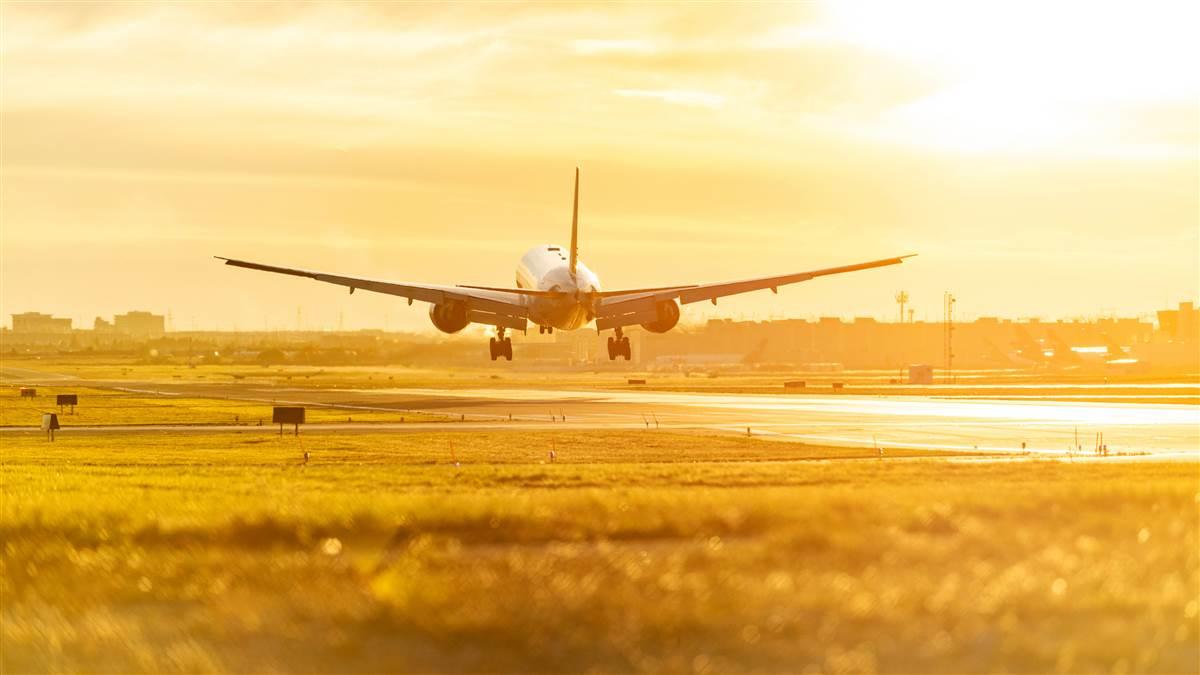
Away from prying eyes and ears, he spilled the beans. The auxiliary power unit (APU) was deferred. The APU is a small jet engine in the tail, the noisemaker that runs between flights to power the jet’s systems. Its generator keeps the electronics sparking along, and its pressurized bleed air is used to start the engines and run the air conditioning. When it’s north of 90 degrees Fahrenheit and 90-percent humidity on the ramp, you really want that cooling air to do its thing before you cram a bunch of people on board.
It’s one of the most frustrating failures to have on a passenger jet.
The other captain told me he’d taken the airplane to Panama City, where he was told the air-conditioning carts were adequate. He really had no reason not to go. He discovered the air conditioning system was so weak for whatever reason, that once the engines were running, he couldn’t cool the cabin at the power settings we use on the ground. It needed the full force of being in flight to ease the sweltering. “We got stuck on the ground waiting for a release time for Atlanta, and it just got hotter and hotter,” he said. “An elderly passenger got sick and vomited.”
I walked back to the gate, where the gate agent gave me her standard briefing. “Full boat. Nobody listed for either jump seat. Flight attendants are already aboard. We’ll start boarding in about five minutes.”
“Hold up on boarding,” I said. “I’ll send you a message when we’re ready to board.”
I walked down the jet bridge to the airplane, and the heat hit me as I stepped aboard. The flight attendants were fanning themselves. A mechanic hovered nearby, hoping to be helpful. Air was trickling out of the vents, but it was warm. He assured me that the conditioned air from the gate was attached, with no kinks in the hose, and blowing strongly. As I watched the temperature indications continue to climb, our ground crews hooked up the huffer, a high-pressure air cart, and used that to power the on-board air conditioning. It still struggled, and that was with two pilots, three flight attendants, and a mechanic onboard. With each additional person aboard, the situation would only escalate.
“We’re not taking this one,” I said to the first officer. “Don’t even bother unpacking your flight bag to build your nest.”
I called the duty pilot and could sense him leaning back in his office chair as I laid the facts out there, followed by “…and that’s why I’m not comfortable taking this airplane today.” It was the first time as an airline captain that I had refused a jet.
“OK, I understand. But we have a sort-of-new procedure, and I’m required to call your chief standards captain or his designee for a conference call for us to run through the situation before we officially begin the tail-swap,” the duty pilot said.
I chuckled. “Shall you call, or shall I?” It took a few moments before a new voice joined the conversation. A familiar voice, at that.
“Jeremy, why are you making trouble for me on a Friday evening?”
In 15 years of airline flying, I’d rarely ever reached out to my superiors. Chief pilots, chief standards captains, fleet captains, and three-letter-title types generally leave us alone for normal operations. Plot twist: I’d recently been tapped by the chief standards captain to help edit our fleet’s newsletter. Two months prior, I’d written the fleet’s article on dealing with equipment challenges in hot weather. We both did a great job of not laughing as the duty pilot filled his checkboxes.
“Maybe them being the second crew to refuse the plane is a sign that it needs to be fixed,” the chief said.
I didn’t have the time to stick around and warn the next crew. So, I scribbled a love letter on a slip of paper and clipped it to the captain’s yoke. “We’re the second crew to refuse this plane…” and I included contact information in case someone wanted more of the story than I had time or space to write.
As pilots, whether your logbook is on its third page or third volume, being in command means making the hard decisions. We want to go fly, and when passengers are along for the journey, there’s that much more pressure. When we are students, the instructor is there to hold us back from making the bad choices, although they have to let you make some bad choices so you learn to make good ones. But once you’re the one truly in command—private pilot or airline captain—your job becomes saying “no” when everyone else says “go.” When you find something that seems wrong, get a mechanic to put eyes on it. If they say it’s good to go and they back that statement with a reference, I’m generally good with it.
Sometimes legal, safe, and right aren’t synonyms. We would have been legal to fly with the busted APU, sure. I’ve done it plenty of times. But the weakened state of the air conditioning system, and inability to get the cabin cool using the external air sources meant that the thing would be unbearable inside. A sauna is one thing when you pay for it and can step outside whenever it gets uncomfortable. Being locked in one, against your will, is a very different scenario. From newborns to the nearly departed, we carry a wide range of ages and health conditions on each flight. Things might be uncomfortable at times, but when it can endanger a passenger’s safety, it’s time to call a time out, regroup, and figure out a different play. The challenges might be weather, maintenance, fatigue, or any other force, but any time you can use the yardstick of safety as the standard for making your choice, any outside second-guessing should be minimal.
Hours later, my phone chimed with a picture message from an unknown number. We’d just parked at the destination and were headed to the curb for our ride to the layover. The image in the message was my note, still clipped to the yoke. The words “second crew” had been scratched out and edited to third crew. Third had been lined-through and amended to fourth. We weren’t the only ones forced to dig our heels in that afternoon.
Jeremy King is an airline pilot, A&P, and owner of a 1965 Mooney M20C.
Related Articles


