Accelerated learning
A near zero/zero takeoff provides a lifetime of lessons
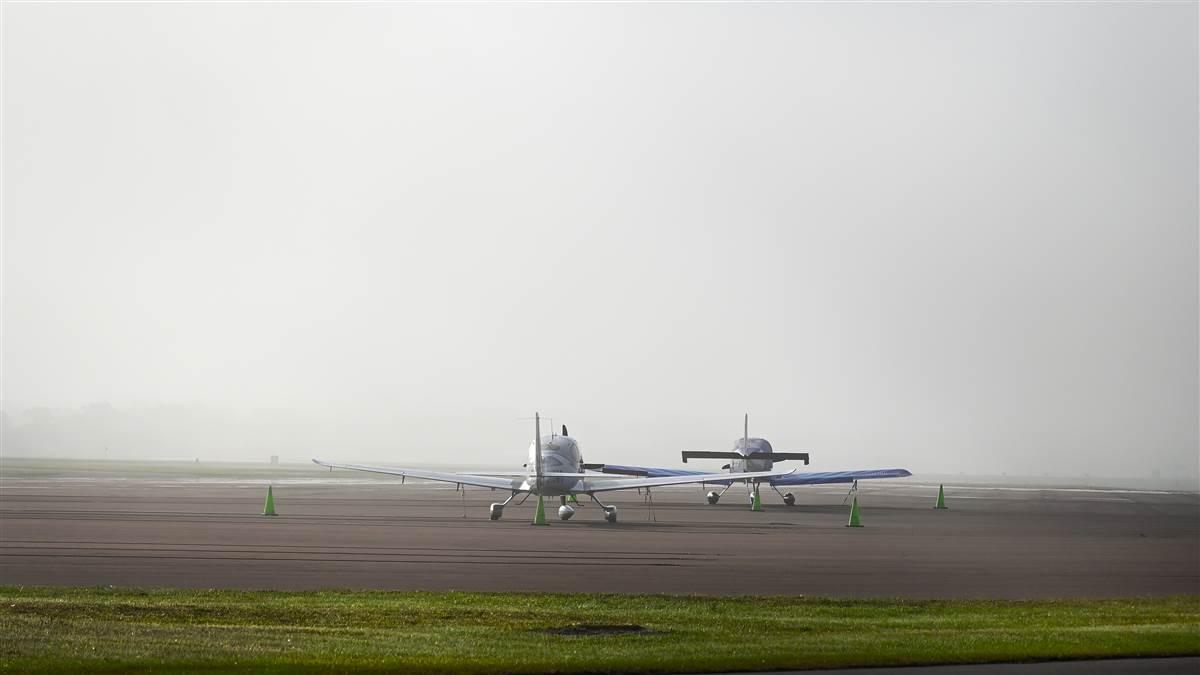
Because this flight was more than 35 years ago, the details are a little murky but given the rapidly deteriorating weather, I believe it was approaching dusk. We watched a companion take off in a Cessna 172 as we were walking up the wing to board the Baron. The 172 quickly disappeared over a low-level fog bank that was forming from the south end of the airport, working northward. I thought I’d be smart and take off the opposite direction where the visibility was still good.
We taxied to the end of the runway and set up for our IFR departure, which had a clearance void time. After copying and reading back the clearance and completing our runup, it was time to go. I looked back out the windshield and—whoa—what happened to the visibility? In a span of just a few minutes, the weather just crashed. I could only see about 200 feet in front of the nose. Well, I was all set up, had a void time to meet, and I could see what appeared to be enough of the runway, so we blasted off.
Coming through about 40 knots, what visibility I had at a standstill was basically gone. Ordinarily, that’s about where in the takeoff roll I’d be scanning engine gauges for any issues. Not today, which was eyes outside gathering whatever clues I could about my whereabouts on the runway. It just disappeared. Do I reject the takeoff? Well, I can’t even see the runway so that’s likely going to lead to a runway excursion into a cornfield, I reasoned. A quick glance to the side showed the edge of runway was in the proper position but it, too, was hard to see in the murk.
I decided to go on the gauges while still on the runway. Realizing the seriousness of this situation, I vowed to scan those instruments better than ever before given that I got myself into this predicament and now relied solely on skill to get me out of it. I rotated at about 85 knots, selected gear up, and climbed out normally in the butter-smooth air while continuing my intense scan. About 200 feet in the air, we burst out of the clouds and into spectacular VFR conditions above the fog. My passenger was in awe of this incredible show from Mother Nature, completely ignorant of the high-risk situation from which we just escaped. Phew!
This whole event occurred in the span of less than one minute, but the lessons learned from it were plentiful and are etched in my brain. Afterward, I talked to one of my instructors who related the fact that grass is a terrible surface for low-visibility conditions. He also pointed out that 200 feet of visibility when you’re standing still quickly turns to zero as you accelerate unless you have a marked runway with high-intensity centerline lights. Finally, after looking up from scribbling my clearance and seeing that awful visibility, I should have just taxied back to the tiedown and called it a day. But I had a bad case of completion bias and a void time to meet. Besides, I can see the runway good enough, I justified.
We were very lucky that nothing went wrong that day with the airplane or its instruments. Any sort of malfunction could have been catastrophic. An engine failure on the ground would have surely led to a runway excursion but we would have walked away. An engine failure after rotation in the soup so low to the ground would have been a monumental challenge. Thankfully, my skills were pretty sharp back then but relying on your skills to get you out of a dire situation that you created is not a good technique for a successful piloting career. I got lucky. Hopefully, this story is a cautionary tale so others don’t make the same mistakes I did that day.
Related Articles


