Bravo (not) only for the brave
What it takes to keep cool when landing in the big city
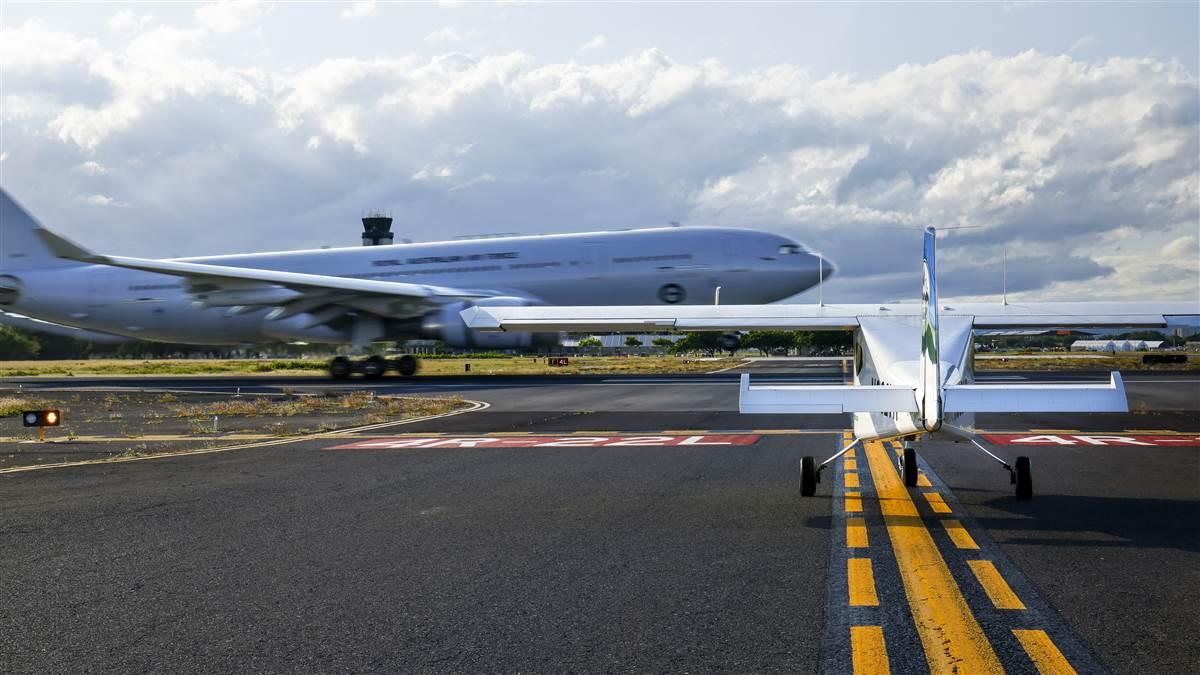
Recently, a friend suggested we go for Philly cheesesteaks. I grew up in the Philly suburbs, and I knew what a nicely loaded cheesesteak can do for the soul. So, I put my big-girl pants on and started planning a flight to Philadelphia International Airport (PHL), the twentieth busiest airport in the country. I was acutely aware that my Cessna 172 is no more than a gnat on the windscreen of the big iron arriving in from the other side of the country. (Remember what you learned in training about wake turbulence? Yeah. That.)
We scheduled our flight in the late afternoon, planning to get into Philadelphia just in time for dinner…and the evening airplane rush hour. The weather on that winter day was clear VFR, with sunset just after 4:30 p.m.
I examined the airport diagram closely, and the jigsaw puzzle of taxiways made my head spin: I counted no less than 60 taxiway designations. PHL has two long parallel runways (9-27) for airline traffic, one perpendicular (17-35), and a shorter GA runway (8-26) tucked into its northeast corner, close to the FBO. The wind was coming from the west.
Chatter on the radio became more hectic as we approached, and we received a clearance into the Bravo airspace and vectors that set us up for a landing on the perpendicular runway. Approach control told me to keep up the airspeed as long as possible. For the first time in my life, I flew a Cessna 172 final approach at 125 knots.
The runway assignment meant we’d have a direct crosswind, and we’d traverse the paths of traffic on the two east-west runways. ATC informed an airline pilot that he’d be landing after a Skyhawk on the intersecting runway, eliciting an audible chuckle on frequency.
Once on the ground, the jigsaw puzzle of taxiways baffled me. The nosewheel hadn’t even settled on the pavement when the controller began rattling off an alphabet soup of taxi instructions.
My situational awareness wasn’t terrible—I knew basically in which direction I needed to go to get to the FBO, but I did have to ask for clarification on the route to get there. In that moment, I was grateful to have an instructor-rated pilot friend sitting next to me to help untangle the rapid-fire transmissions.
So, if you’ve never done it before and you’re up for a fun challenge, here are a few tips on how to get safely to and from an airport in Class Bravo airspace:
- Study the airport diagram ahead of time to get the lay of the land. Seriously. Do your homework.
- Going at an off-peak time of day can simplify the process and increase the chances you won’t get turned away.
- If coming in VFR, you need an explicit clearance to enter the Bravo; it’s best to either file a flight plan or get flight following before you come anywhere near it. (And don’t forget: You need another clearance on your way out, too!)
- Keep a sterile cockpit after you enter the Bravo because lots of things are happening all at once, especially if multiple runways are in use.
- Take a safety pilot who has done it before. It’s useful to have a second set of ears and eyes, just to confirm what you think you heard and saw.
- Let approach know where you will park. It makes the clearances easier.
- If you’re unsure of something, ask. Sometimes, the grandeur of a Class Bravo arrival is anxiety-inducing—the controllers are busy, and airline pilots can be pompous. But it’s in everyone’s interest to make sure you get it right.
- It sounds intimidating in theory, but when you’re actually flying it, it does make a lot more sense.
Oh, yeah, and the Philly cheesesteaks were amazing. Comfort food at its finest. 
 airsafetyinstitute.org/safetycenter/flightplanningandpreflight