Talking about a new generation
More bells, more whistles
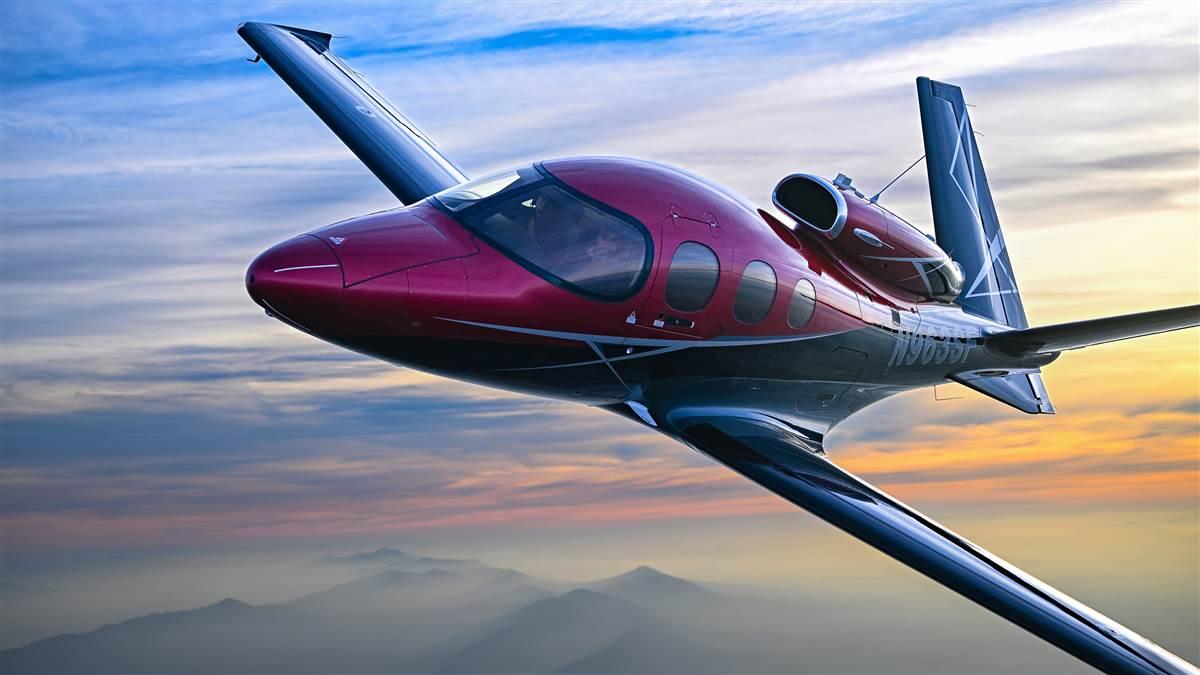
The Cirrus SF50 Vision Jet G3 brings new technology, a revamped interior, and many exterior changes to the pioneering single-engine general aviation jet.
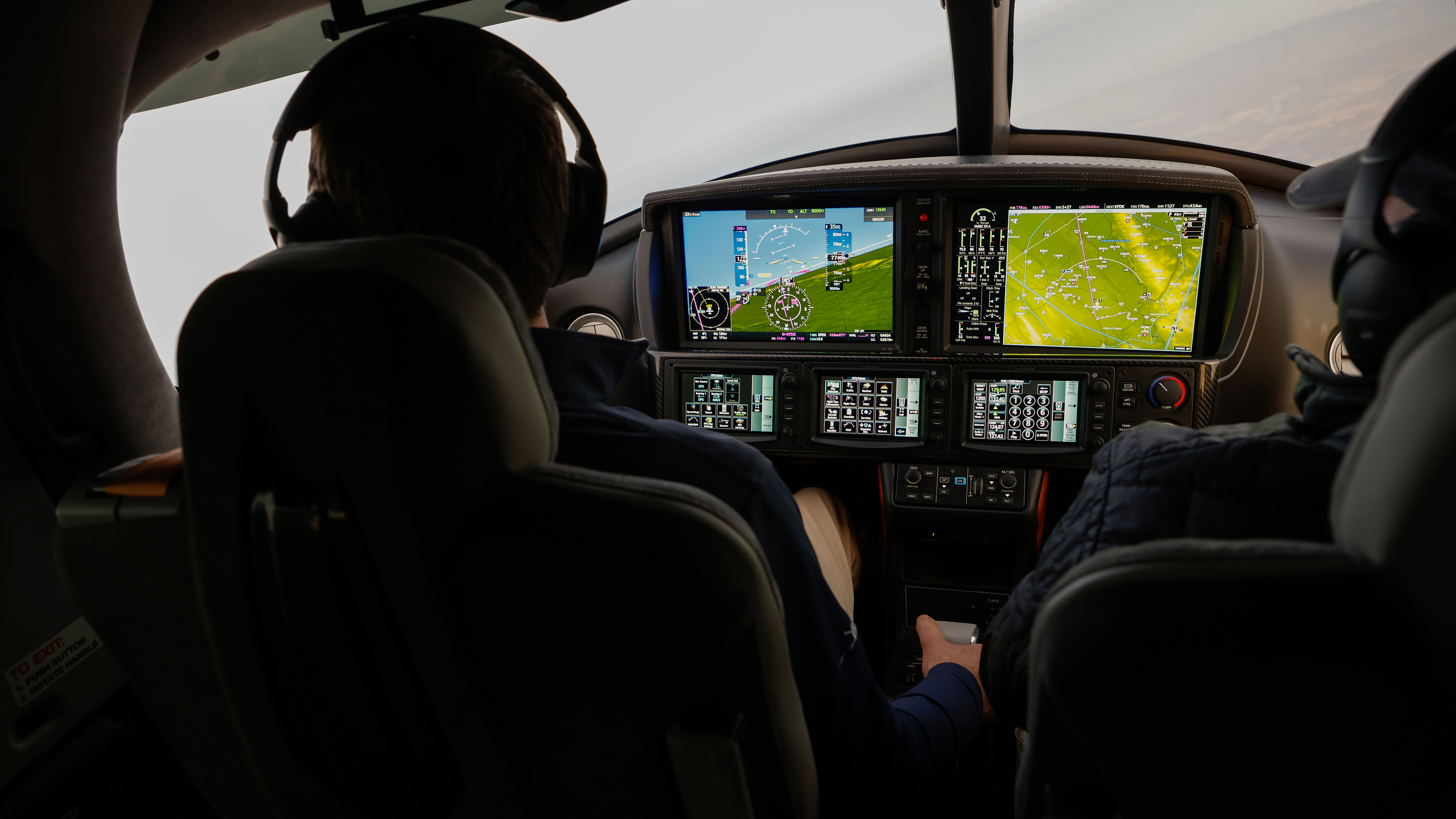
For pilots, the key G3 (for Generation Three) addition is controller-pilot data link communications (CPDLC)—a workload- and error-reducing feature that provides automated clearances, flight plan updates, and frequency changes on the ground and in the air.
“It’s hard to imagine how big an improvement CPDLC is until you see it in action,” says Matt Bergwall, Cirrus executive director of the Vision Jet product line. “Pilots immediately recognize the benefits, and they absolutely love it.”
Inside the cabin, the G3 has six seats instead of seven. The two child seats in the wayback are replaced with a bench seat that can accommodate two adults.
“Our customers have told us they’d like to have room for three couples, and the G3 provides that,” Bergwall said.
The seats themselves have been redesigned for added comfort, and there are mounting and charging ports for electronic devices in some of the seatbacks.
The exterior of the airplane allows for black deicing boots that better match the dark paint schemes most customers adopt. Previously, SF50 boots had a silver tone.
“The black boots also tend to show the presence of structural ice better because there’s more contrast,” Bergwall said.
The SF50 G3 allows owners to get Garmin automatic database updates and use the Cirrus IQ system, a cloud-based connectivity platform, for remote aircraft monitoring, maintenance records, and approach scoring.
The wing tips include LED landing/taxi lights that are far brighter than the lights on previous models and sleek “Spectra” shapes similar to those on piston SR20s and SR22s.
The G3 is fitted with the same Williams FJ33 engine as previous models, and the service ceiling remains 31,000 feet. The aircraft costs $3.68 million with available options, and there’s a roughly nine-month backlog.
Cirrus has delivered more than 700 SF50s since 2016, and it’s been the top-selling single-engine GA jet every year since 2018.