The new baseline
Gulfstream builds on a 68-year legacy
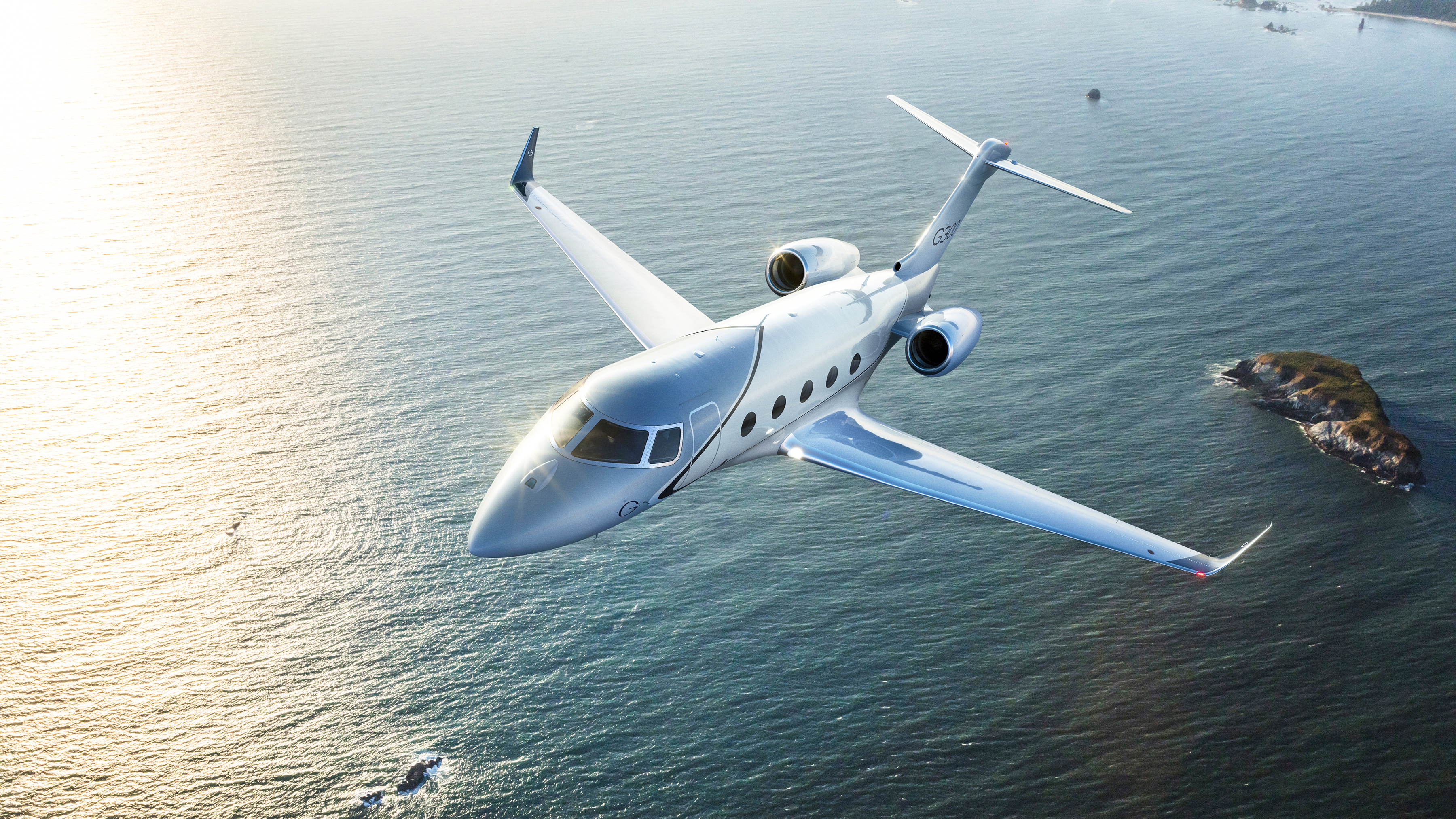
I mean, who hasn’t wanted to rock it “Like a G6”—as the Far East Movement song goes? (Although many of us recall the Learjet evoking a similar cachet in Carly Simon’s “You’re So Vain.”)
From the GIV and GV that were in production through 2021 and 2006, respectively, iterations evolved adding a -SP to the official model while the marketing model number changed with differing maximum landing weights, Mach numbers, and ranges. For example, the G300 designation was first applied to a variation on GIV with a shorter range in 2002. An improved version of the GIV-SP became the G400 after 500 units were produced, and then evolved into the G450 in 2001 with a longer fuselage and more expansive flight deck. The G450 ended its production run in 2018—the last of the GIV line.
But this did not signal the end of the marketing model designation “G300” for Gulfstream. On September 30, 2025, the company unveiled its successor to the G280 (itself an extension of the original Gulfstream II) and declared it the G300—which was dubbed as an “all-new” airplane because it targets a niche that wasn’t quite the same 25 years ago.
Call it inflation, perhaps, but the rationalization of the Gulfstream model numbers in this way makes sense. If the GII had continued to evolve in a linear way, it would have surpassed the original GIV variants in its technology and efficiency at some point. Now, the new G300 takes its place as the entry point to the current Gulfstream model line, with the new large-cabin G400 following on when it debuts in the next year or so. (Gulfstream President Mark Burns wouldn’t say exactly, when asked during the launch event in September.) From that point on up the food chain, customers can choose from the G500, G600, and G700 already in service, and the G800 that just began deliveries in June 2025.
Just so you can keep track: The large-cabin G400/G500/G600 are officially extensions on the GVII type certificates, as are the ultra-long-range G700 and its even-longer-range sister, the G800. Until FAA approval, the commonality of type rating for the G300 is not yet known.
Making midsize ‘Super’
You can tell the new model apart immediately on the ramp because it’s decidedly shorter by more than 23 feet in length. However, it carries the same elegant profile as its siblings, along with a 63-foot wingspan. With a pair of high-efficiency Honeywell HTF7250G powerplants, the G300 boasts the capability to utilize runways less than 5,000 feet, and a basic trans-Atlantic range (3,600 nautical miles at Mach 0.8), along with a maximum cruise altitude of 45,000 feet (with a cabin altitude of 4,800 feet at FL410). That’s not quite as high as the other models fly (FL510 maximum) or as fast (the G700 and G800 have an MMO of Mach 0.935), but it will pace its class if those figures hold true post-certification.
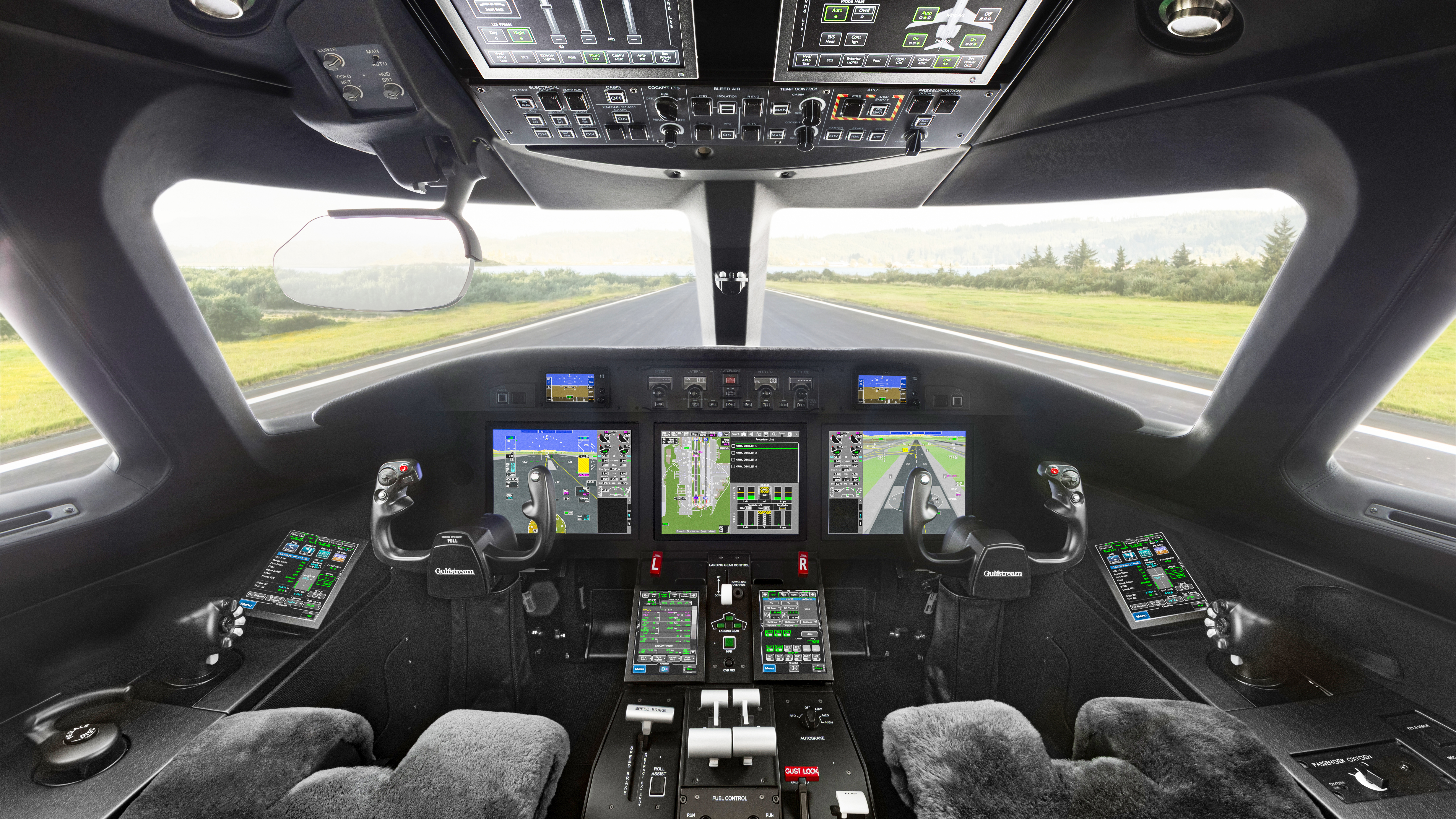
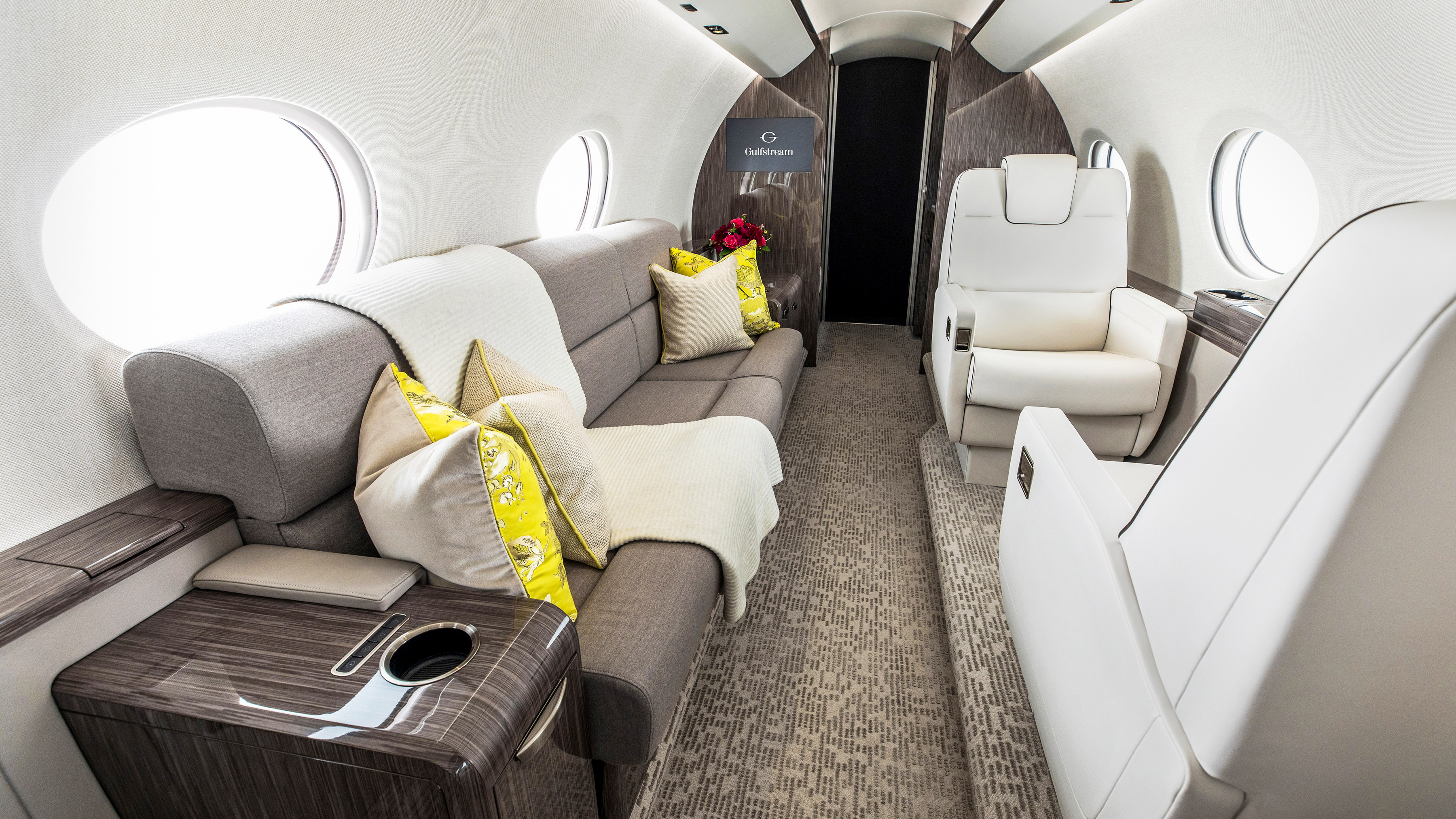
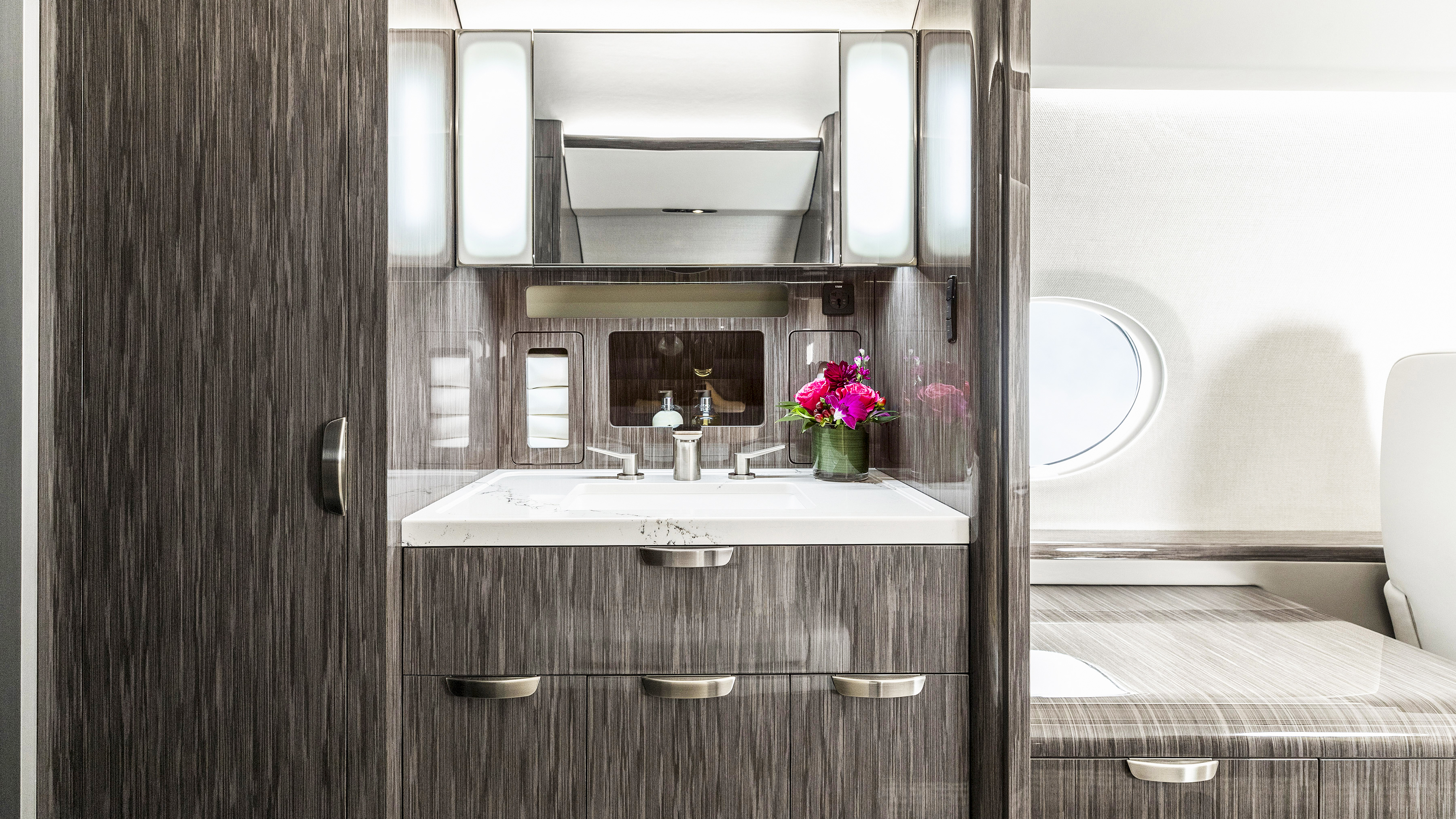
And in the back? Customers can configure two luxurious living areas, and enjoy 100-percent fresh air, plasma ion air purification, and 10 large, beautiful panoramic oval windows, a Gulfstream signature. The cabin cross section (just under 7 feet) and height (just over 6 feet) takes it out of the large cabin class, yet remains spacious enough for up to 10 passengers. And there’s no requirement for a third crewmember/flight attendant in the back—just two pilots up front.
The company has already put in more than 22,000 hours of testing, including the Integrated Test Facility at Savannah, complete with “Iron Bird” capabilities. The airframe completed its initial “flight” within the ITF. A real-life test article was seen taxiing around Savannah/Hilton Head International Airport during the launch event on December 5, green and baby blue in its primer and composite cloak.
Enter the flight deck
Beyond the luxury in the back, however, the flight decks on successive Gulfstreams have captured the attention—and affection—of pilots wanting to leverage the latest technology whether circling the globe or on more targeted missions.
I had my first taste of what long-range jets could offer when I sat in the cockpit of a GIV variant in 2006, which demonstrated the newly standard first-generation EVS (enhanced vision system) along with flight displays that at the time reminded me of a wall of TVs at Best Buy—the GIV was the first business jet with a truly “full glass cockpit.” Early in the game to call a market leader, perhaps, but when Gulfstream stood up its Center of Excellence for Advanced Vision Systems in 2004, the OEM had the next iterations of EVS already in work, along with the synthetic vision (SVS) and evolving head-up displays (HUD II) in progress.
Flash forward 20 years, and we have many of those advanced safety systems on board airplanes down to piston singles such as the Cirrus SR series, and certainly in single-engine turboprops and single-pilot jets.
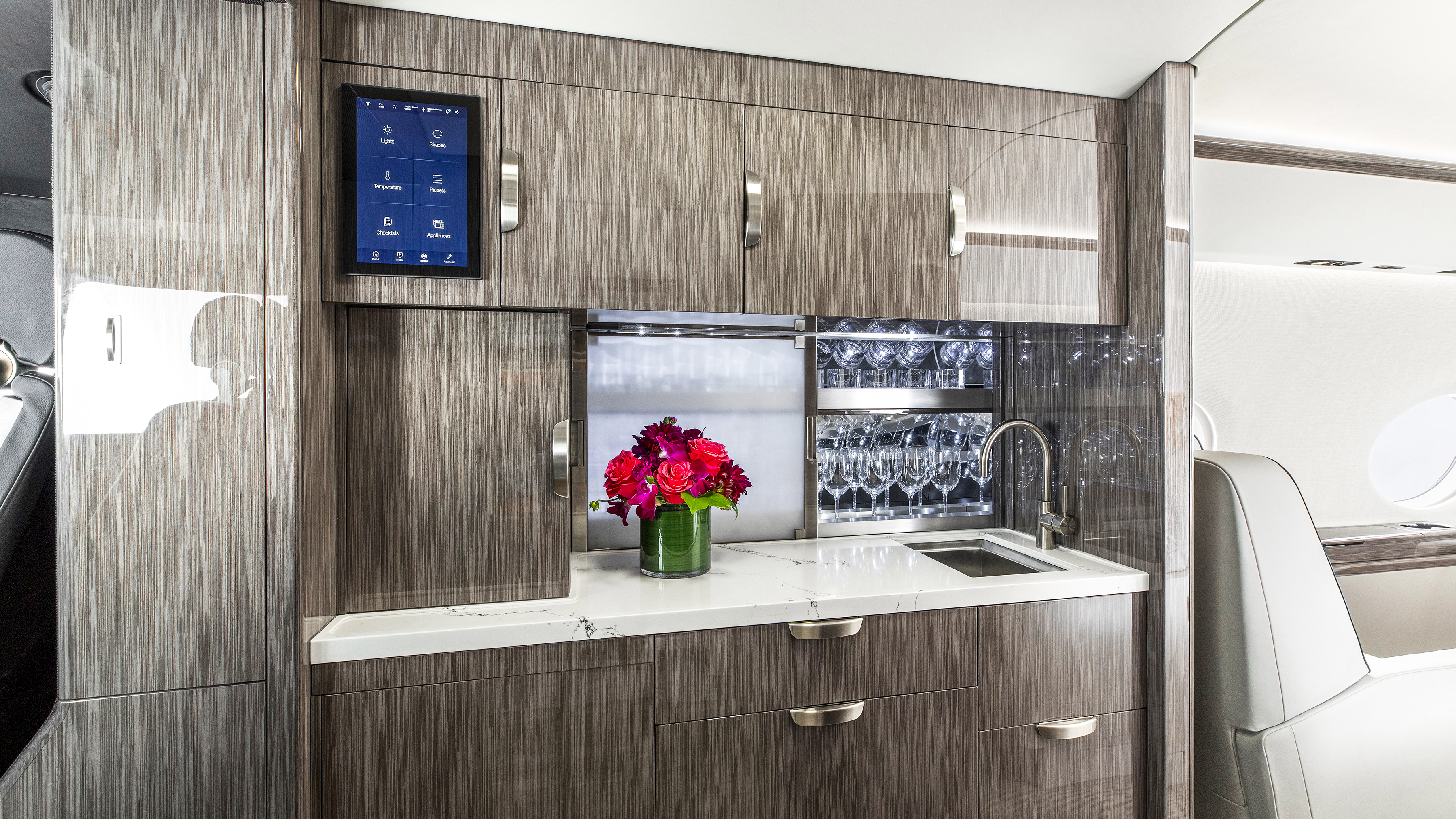
In the present day, the models G400, G500, G600, G700, and G800 all feature minor variations on the proprietary Gulfstream Symmetry Flight Deck. The G300, however, in order to keep pricing in line with the super midsize market segment, features the Harmony Flight Deck. Harmony preserves key elements from Symmetry, such as Phase-of-Flight intelligence, synthetic vision incorporated into the primary flight displays, and Gulfstream’s Predictive Landing Performance System (which displays a dynamic runway stopping point generated in real time during the approach and landing).
But the flight deck features conventional hydraulic flight control actuating with the yokes, as opposed to the fly-by-wire Digital Flight Control System (DCFS) BAE Systems active side sticks that interplay with Symmetry, and which form part of the basis for the common type rating between the G300’s larger and faster brethren, the G500 and G600, and the G700/G800 (officially FAA-designated as GVIII type ratings). When the G400 earns type certification, that type rating will be officially known, but likely common to the G500/G600 (a GVII type).
Scott Evans, director of demonstration, airborne customer support and corporate flight operations for Gulfstream, anticipates the same short time period between walking up to the G300 and being ready to taxi as is in the G700 and other Symmetry-installed models in the product line.
“One of the key features of the Symmetry Flight Deck is the short taxi-to-takeoff time. It was a strategic priority in our development efforts and is certainly proving true in practice,” says Evans. “We also anticipate a reduced preflight workload for the G300 Harmony Flight Deck.” This was a core design principle on Symmetry, and it works by supporting the pilot “in the subtasks of an action,” according to Evans.
One preflight example lies in starting the APU, reducing the number of tasks the pilot must complete (turning on the APU master, fuel pump, nav lights, and inertial reference systems) and bundling them in the APU Start task set that is activated in sequence when the APU master is selected.
Evans said the G300 Harmony Flight Deck builds on the Symmetry Flight Deck, which increases safety and situational awareness while decreasing workload and the potential for human error. “Harmony brings many of those key technologies, including extensive use of touchscreens and Phase-of-Flight Intelligence, to the super-midsize segment.”
As long as it capitalizes on those intentions, I expect the G300 to inspire those seeking a super midsized mount—and finding that it makes for a “right-sized” fit to their missions. Rocking like a G3 now?
Related Articles


