CJ3 gets an A-plus
Garmin panel revitalizes a popular light jet
It seems about the only thing we did right that day was to choose the correct airplane—a sturdy, proven one with long legs. Otherwise, we might as well have stayed home and watched football on this Sunday.
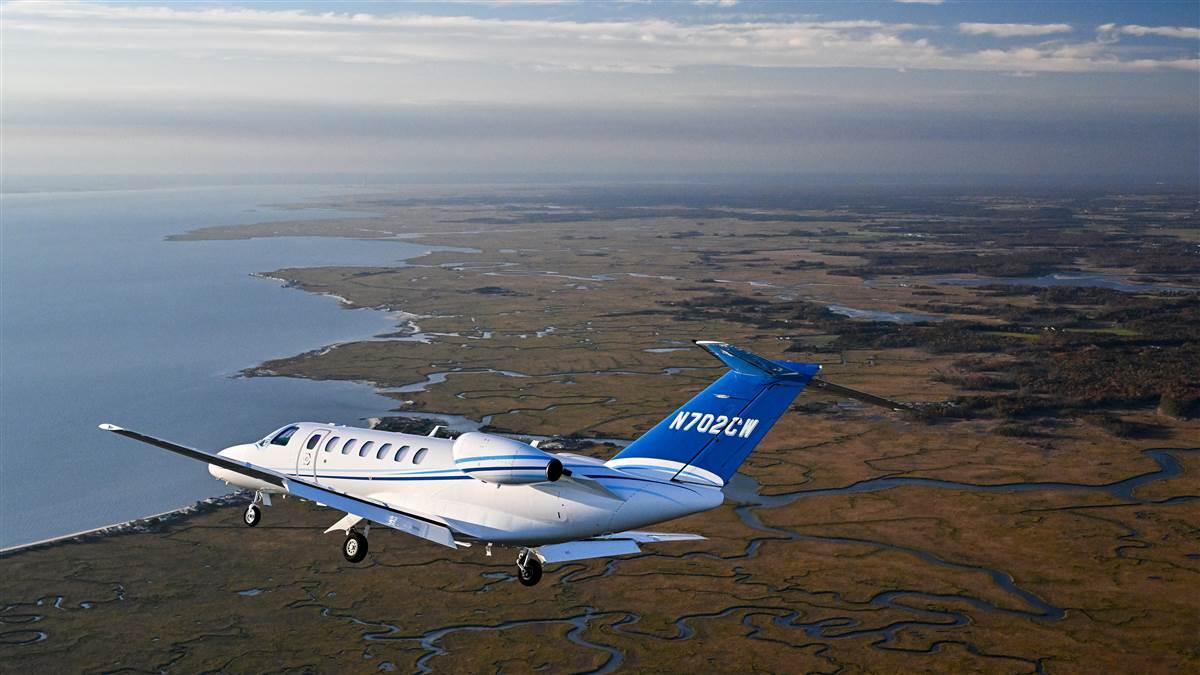
As with football, we did have to use a lot of strategy to cross the goal line—the sopping wet runway exit at St. Pete-Clearwater International (PIE) in Tampa.
It was December 29, 2024, one of the busiest travel days of the year for airlines. And, as has happened every year since COVID-19, the FAA air traffic control system along the East Coast was saturated with traffic on this Sunday after Christmas, especially at the choke point around Jacksonville Center for aircraft flying to and from Florida.
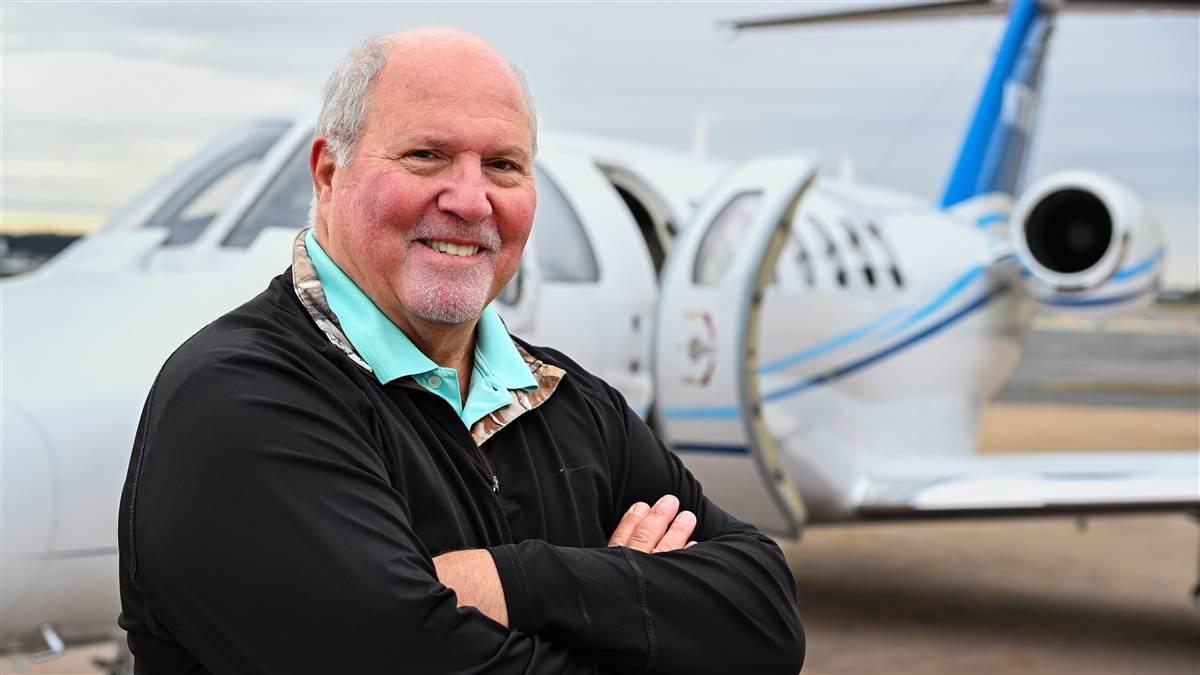
When Bert Seither initially filed his 12:30 p.m. flight plan from Wilmington, Delaware, to Tampa, he was told to expect at least a three-hour ground hold because of traffic flow issues. Seither, a former naval aviator and captain for Southwest Airlines, has decades of experience flying all sorts of airplanes. Retired from Southwest, he is currently an airline inspector for the FAA and, on the side, a pilot for longtime friend Richard “Dickie” Mumford, who owns a Cessna Citation CJ3+. He previously flew a Raytheon Premier IA for Mumford (see “Raytheon Premier IA: Diary of a Teenage Jet,” February 2021 AOPA Pilot, Turbine Edition).
Seither flew the CJ3+ from Florida to Wilmington earlier in the day—uneventfully. Given the news about the delay, he refiled for an 11:30 a.m. return from Wilmington, learning that the delay then might only be 1.5 hours. We contacted clearance delivery at about 11:30 and got the confirmation that we would not receive an IFR release for about 90 minutes. The delay was somewhat welcome in that it would give the storm system rattling the Southeast a chance to move out. The system was the same one that had wreaked havoc across Texas and Louisiana the day before, bringing tornadoes and flooding. It had been forecast to be off the East Coast by late Sunday morning but was taking its time—drenching Georgia and northern Florida with loads of rain and lots of wind and turbulence. Did I mention the turbulence?
As we eventually trundled southward, the teeth rattling began as we leveled off at FL380. Within a couple of minutes, the cruise speed increased to 403 knots true airspeed, burning 490 pounds per side. A 58-knot wind out of the southwest wicked the groundspeed down to 350 knots. But no worries, we had plenty of fuel for the 800-nautical-mile trip to Tampa, having left with a full load of 4,700 pounds. We could have reduced the fuel burn by a couple of hundred pounds an hour by climbing up to the maximum altitude of FL450, but the winds there were brutal. Even at FL380, the winds picked up to more than 80 knots as we headed farther south and closer to the weather. Meanwhile, the continuous light chop became continuous moderate frontal turbulence with an occasional shot of severe. Happily, the Garmin GFC 700 autopilot hung in there, but my hand never left the yoke, just in case.
SPEC SHEET
Cessna Citation CJ3+
Specifications
Powerplants / (2) Williams International FJ44-3A, 2,820 lb thrust each
Recommended TBO / 4,000 hours
Length / 51 ft 2 in
Height / 15 ft 2 in
Wingspan / 52 ft 11 in
Wing area / 294 sq ft
Seats / 2+6/7
Basic operating weight / 8,580 lb
Max ramp weight / 14,070 lb
Max takeoff weight / 13,870 lb
Max zero fuel weight / 10,510 lb
Max useful load / 5,885 lb
Payload w/full fuel / 780 lb
Max landing weight / 12,750 lb
Fuel capacity / 703 gal (4,710 lb)
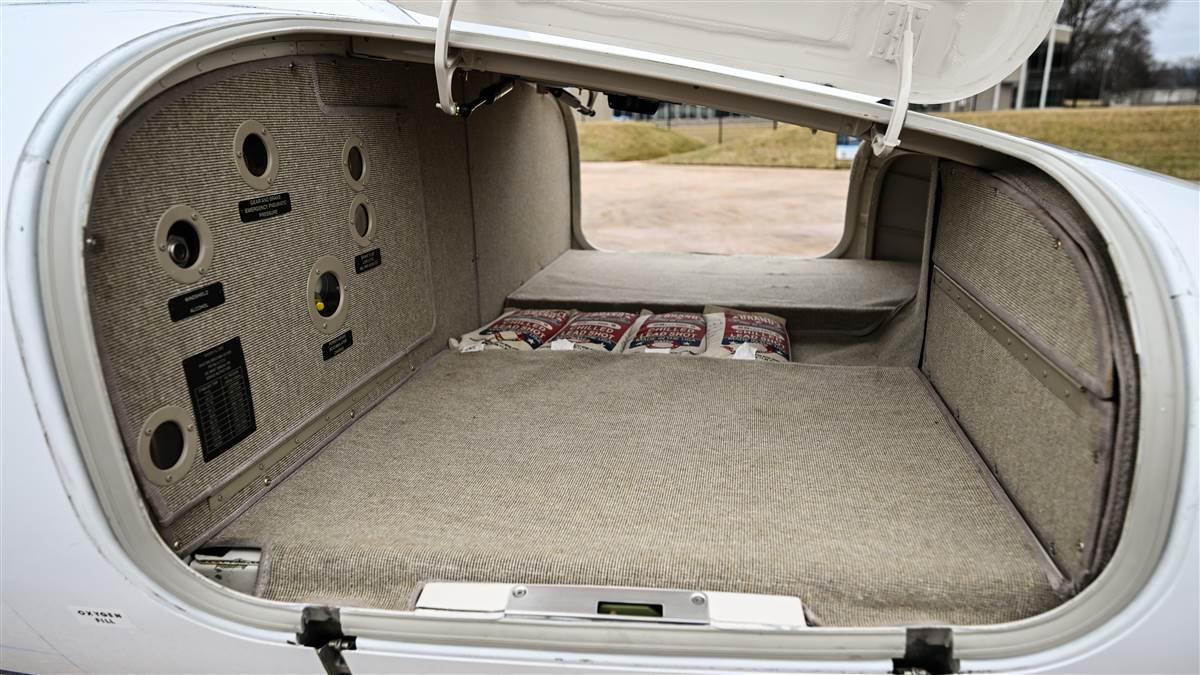
Baggage capacity, aft / 1,000 lb,
65 cu ft
Performance
Takeoff field length, SL @ 15 deg C/59 deg F / 3,180 ft
Max rate of climb, sea level / 4,478 fpm
Time to climb to 45,000 ft / 27 minutes
Single-engine ROC, sea level /
1,020 fpm
Max cruise speed/fuel consumption
@ 33,000 ft / 416 kt/1,308 pph
@ 45,000 ft / 387 kt/734 pph
Max range (+/- 4%) / 2,070 nm
Max operating altitude / 45,000 ft
Sea-level cabin to / 23,586 ft
Landing distance / 2,770 ft
Limiting and recommended airspeeds
VR (rotation) / 102 KIAS
V1 (takeoff decision speed) / 105 KIAS
V2 (takeoff safety speed) / 114 KIAS
VFE(max flap extended) 15 deg / 200 KIAS 35 deg / 161 KIAS
VLE (max gear extended) / 200 KIAS
VLO (max gear operating) Extend / 200 KIAS Retract / 200 KIAS
VREF (reference speed, final approach) / 107 KIAS
VMO (max operating speed) / SL-8,000 ft / 260 KIAS
8,000–29,300 ft / 275 KIAS
MMO (max Mach number) / M0.737
VSO (stall, in landing configuration) /86 KIAS
For more information, contact Cessna Aircraft Company, 800-4-CESSNA, cessna.com/en/citation/cj3.
All specifications are based on manufacturer’s calculations. All performance figures are based on standard day, standard atmosphere, sea level, gross weight conditions unless otherwise noted. Find more specifications in AOPA's Aircraft Guide.
 aopa.org/aircraftguide
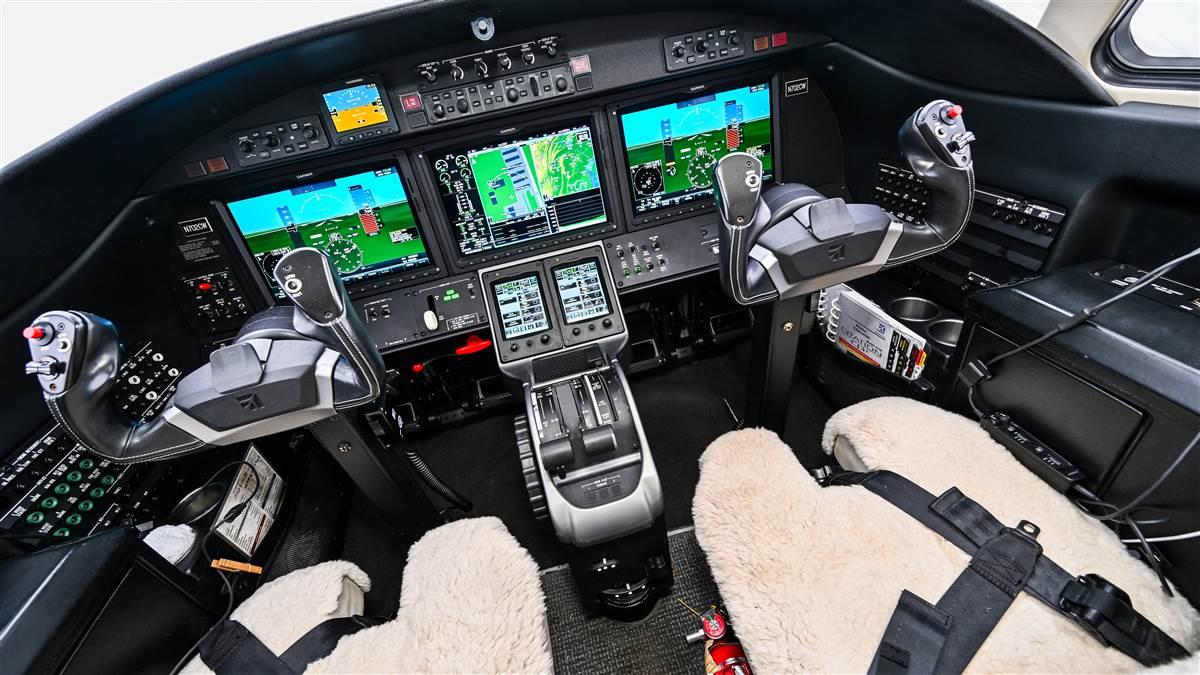
It’s the Garmin G3000 avionics suite that sets the CJ3+ apart from its older sibling, the CJ3. The CJ3 was introduced in 2004 with a Rockwell Collins Pro Line 21 avionics suite. While a highly capable system, the user interface was complicated, especially for those flying single-pilot and for those who only flew every couple of weeks, as opposed to daily by professional crews. Cessna heard the complaints and came out with the CJ3+ in 2015. Swapping the Collins system for the G3000 was the biggest difference, but there are changes elsewhere, including USB ports throughout the cockpit and cabin, restyled seats, and upgraded interior components.
However, that avionics change is significant. Many manually controlled systems in the CJ3 are automated through the G3000 in the CJ3+. Gone is the multi-station testing knob in the original cockpit. System checks are conducted through two Garmin GTC touchscreen controllers below the multifunction display, drastically reducing the switch count. Pressurization is completely automatic, as are ignitors. Flight planning, air conditioning, and other environmental controls are managed via touchscreens. Thankfully, anti-icing and exterior lighting are still actuated by dedicated toggle switches for easy access at any time.
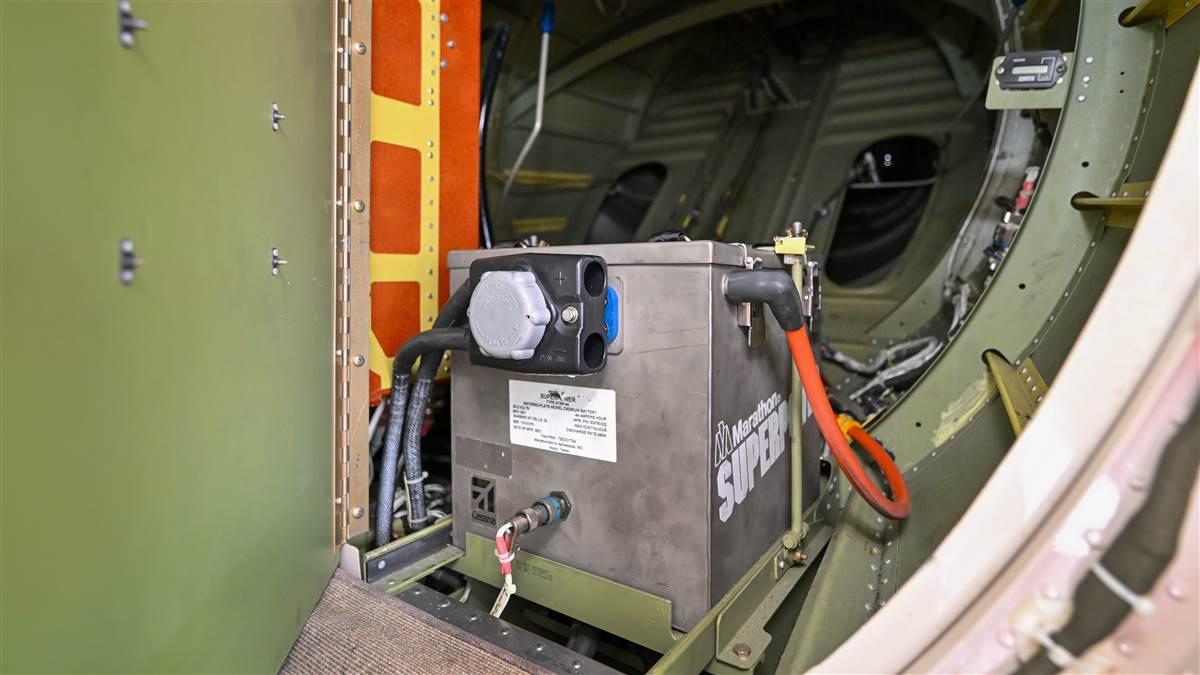
Screen management is handled through dedicated hard keys below the bezels, allowing for a dizzying array of possibilities for the primary and multifunction displays. Like Burger King, you can have it your way. The 3+ brings with it an additional battery in the nose compartment to provide electrical redundancy for the avionics system for when all else fails and during the start sequence. A small standalone and battery-powered backup PFD rests above the captain’s PFD. And, finally, the autopilot controls are top center—easy for either pilot to reach and allows the crew to be heads up when making changes. The Collins autopilot controls were on the aft portion of the center console—so heads down. And speaking of that center console, it’s been shortened a little, allowing for somewhat easier access to the cockpit, another customer-driven change.
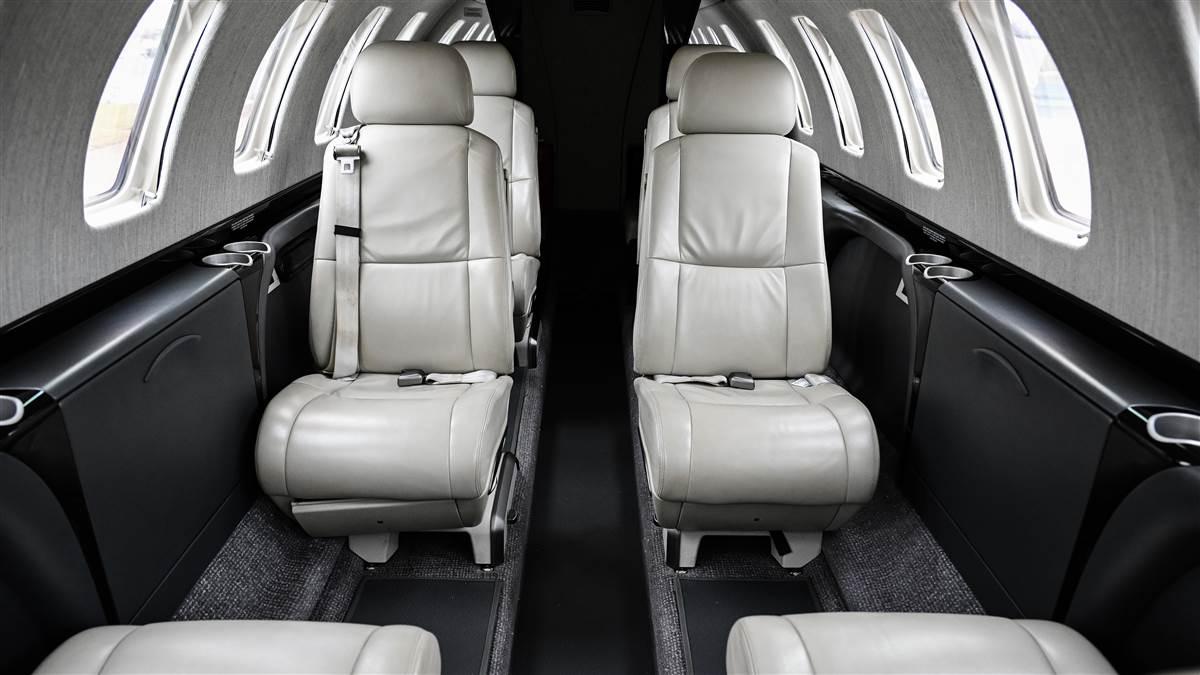
While restyled, the cabin maintains the same club-plus-two configuration with a belted lavatory in the back. Buyers can opt for a side-facing seat opposite the entry door in place of some cabinetry. Most important, the switch for the coffee pot remains far forward on the right, within reach of the captain.
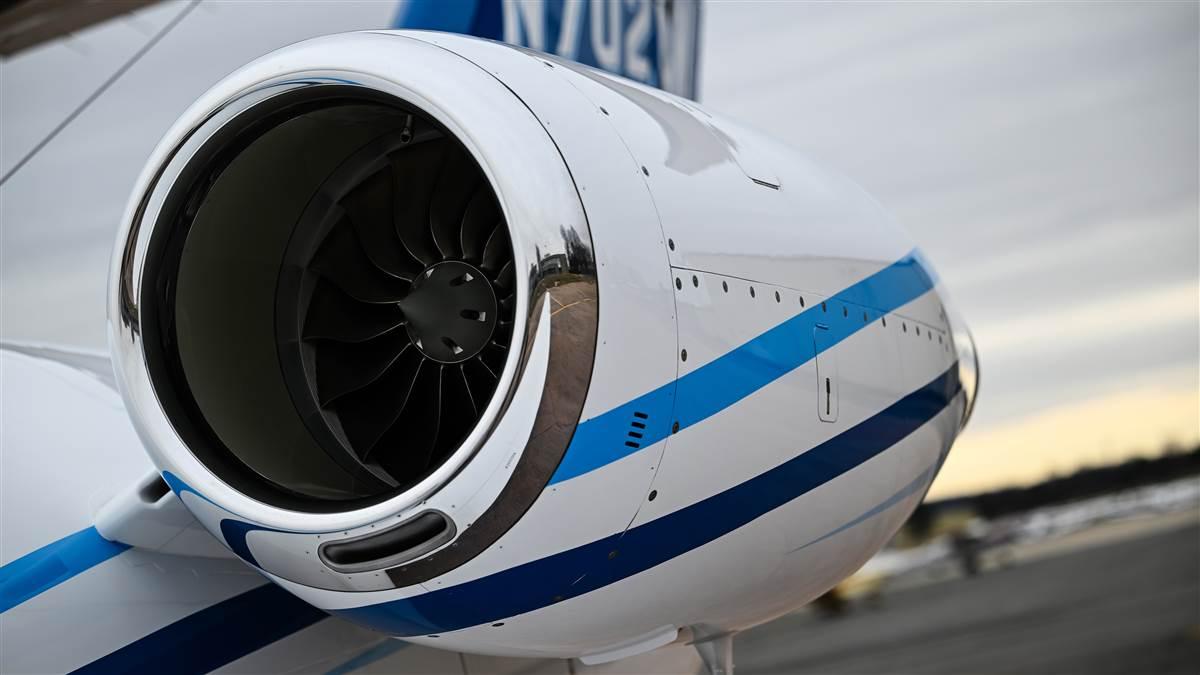
Also, what’s not changed is the excellent runway performance and fuel economy of the CJ3. The 3+ is powered by the same Williams International FJ44-3A engines at 2,820 pounds of thrust each. At optimum altitude and weight, cruise speeds nudge 416 KTAS, but expect normal cruise speeds of just more than 400 knots. With 703 gallons available, you can expect a maximum range of just more than 2,000 nm. That range number was a primary driver of Mumford’s decision to swap the Premier for the CJ3+. He frequently travels to Costa Rica, and the faster yet short-range Premier could barely squeak that trip in, especially considering the dearth of alternates near his destination. The CJ3+ makes the trip with no concerns about range.
While not the fastest in the light jet category, the 3+ carries an impressive load of about 5,500 pounds. Top the tanks and you can carry a pilot plus four passengers and bags.
With two pilots up front and only one passenger in the back, we depart Wilmington with what seems like plenty of fuel, even when flying at a lower altitude than optimal. But as the headwinds pick up and the ATC diversions kick in, we suddenly find our fuel margins wicking away—along with our patience as the turbulence continues to hammer us. And it’s not just us. Everyone is griping about the ride. With every check-in, we hear harried controllers saying, “Don’t even ask about the rides; it’s rough at all altitudes.” Typical when the skies are saturated with traffic in that part of the world, ATC starts us down early. We are at FL280 in North Florida and descending while watching the pounds per hour climb.
The SiriusXM Aviation Nexrad shows a plethora of green over the center of the not-so Sunshine State, with swaths of yellow and some red and even magenta here and there. Seither turns on the Garmin weather radar and displays it next to the satellite Nexrad for comparison, a convenient feature possible because of the G3000. The pairing gives us a regional look at the weather via the datalink weather and a real-time glance in front of us via the onboard radar. As we turn toward the coast, a storm cell is building over the Gulf. Descending through FL180, we enter dark clouds, with heavy rain pounding the windshield. There’s a path of dark green and some yellow toward the airport. We get vectored southbound between the airport and the coast, a downwind for the ILS to Runway 36—all the while keeping a close eye on the storm now off our right wing, the rain and turbulence unabated.
The Tampa approach controller advises that she can give us a turn in for an early intercept of the localizer or we can continue farther south for a more normal approach, but with the possibility of having to hold while the storm passes over the airport. With fuel margins slipping away, Seither advises we’ll take the shortened approach. I crank the airplane to the left as we head for an intercept just outside the SONES initial approach fix. Established and on the glideslope, we break out of the clouds at about 1,800 feet, but still in heavy rain that is obstructing visibility. With low-level windshear reported, Seither advises I fly the approach at about 120 knots until short final, rather than closer to the VREF of 105. With more than 9,700 feet of runway available, we’re not worried about getting stopped—even on the very wet pavement. I lower the left wing into the crosswind, kick the nose straight, touch down at about the 1,000-foot mark, and just let the airplane roll with only light braking, no need to exercise the anti-skid system. We clear the runway and both finally exhale.
“Well,” Seither says later as we debrief over an adult beverage, “I’ve never had so much turbulence for so long in a ‘light’ airplane. That’s one for the logbook.” This, from a guy who has decades of experience flying F–14s, Boeing 737s, and a passel of piston airplanes and business jets.
A challenging flight for sure, but it was comforting to be in a proven airframe with a great safety record, decked out with terrific situational awareness equipment and one awesome autopilot. Just another day at the office for the capable CJ3+. 
Thomas B. Haines is former editor in chief of AOPA media.