Burke Lakefront supporters make case to City Council
Students, businesses, former airport officials testified
Members of the Lakefront Airport Preservation Partnership (LAPP) and other stakeholders testified at the Cleveland City Council Transportation and Mobility Committee hearing on October 7, making the case for future investment at Burke Lakefront Airport.

The coalition—made up of local businesses, public schools, flight schools, and pilots in Cleveland, as well as national aviation organizations—was invited to testify by committee Chairman Charles Slife after nearly a year of increased pressure from Cleveland Mayor Justin Bibb to close the airport.
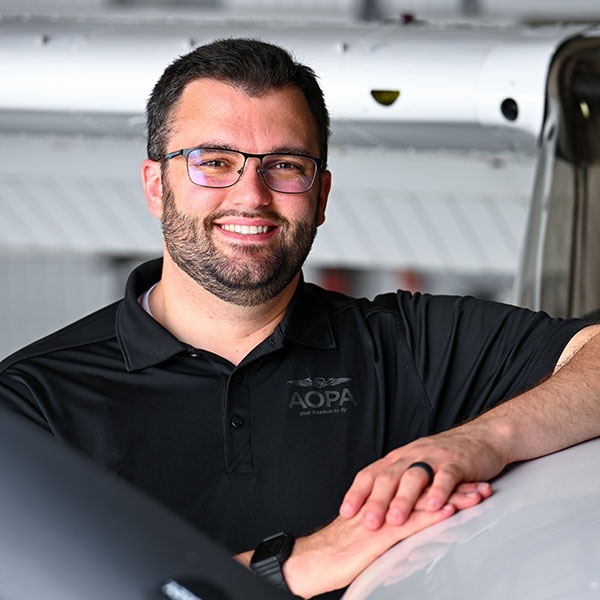
AOPA Great Lakes Regional Manager Kyle Lewis quickly assembled a wide-ranging group and formed the LAPP, which sent a letter to the same group of federal officials.
The committee later scheduled a series of four hearings, held in March and April, where Bibb’s staff and hand-picked consultants briefed council members on what it would take to close an airport, the “hypothetical concepts” of what could potentially be built on the site, and other challenges. At the time, the LAPP urged Slife to hold an additional hearing to learn why airport operators and stakeholders wanted to keep the airport open; he quickly agreed, but since the mayor’s office had not (and still has not) presented a formal plan on what could replace the airport, the hearing was not scheduled quickly.
Because the airport accepted federal and state grants for airport improvements as recently as 2019, the city is currently obligated to keep the airport open until at least 2039. An act of Congress or FAA permission would be required to allow the city to close the airport before its obligation expires.
In August, FAA Administrator Bryan Bedford and Ohio Sens. Bernie Moreno and Jon Husted all publicly stated their opposition to Bibb’s proposal to close the airport.
That laid the groundwork for the October 7 hearing. While only a few council members voiced opposition to closing Burke Lakefront at the earlier hearings with the mayor’s staff, committee members were nearly unanimous in their opposition to closure after hearing from the LAPP.
“We appreciate the Cleveland City Council for holding today’s hearing, and giving local companies and pilots, along with national organizations, the opportunity to speak about the future of Burke Lakefront,” Lewis said after the hearing. “It’s clear that the vast majority of the City Council’s Transportation and Mobility Committee members not only oppose the mayor’s plan but strongly support future growth and development at Burke Lakefront because of the economic benefit to the community.”
In addition to several national and regional aviation organizations, local LAPP members that spoke during the hearing included:
- George Katsikas, the founder of medical evacuation and charter operator Aitheras Aviation, which is based at Burke Lakefront.
- Drew Ferguson, the founder and CEO of Argonaut, a nonprofit organization that provides aerospace and maritime education for Cleveland students at Benjamin O. Davis Jr. High School.
- Two students in the aviation program at Davis High School.
- Signature Aviation, which operates the only FBO at Burke Lakefront.
Katsikas and Ferguson described plans to invest in and grow their operations at Burke Lakefront—totaling tens of millions of dollars—but Bibb’s refusal to offer long-term leases has kept operators from making those investments.
The sole operator with a long-term lease at the airport, Signature, said it has made more than $10 million in investments since 2016, and has plans for more.
“This administration will not extend leases at Burke Airport, doesn’t want to get any investment at Burke Airport, which is mind-boggling to me,” said Cleveland City Council Member Michael Polensek. He later called the status of the airport “demolition by neglect.”
Ferguson and the students from the aviation program at Davis High School spoke about the unique opportunities that the location offers.
“The airport is more than just a place where planes take off and land; it’s a place where people can learn about aviation and discover careers in the industry,” said Davis High School sophomore Edward Sotello, who wants to be an aircraft mechanic. “Because of my experiences at the Cleveland Burke Lakefront Airport, it has helped me to realize that aviation is the career path I want to pursue and has motivated me to continue learning and working toward my future goals.”
“There’s just not a lot of opportunities for young individuals for people to get close with aviation. A lot of people don’t even know it or understand it,” said Davis High School senior Samuel Vega, who is training at Burke Lakefront to become a pilot. “There’s just a lot of opportunities for people of all ages to use that airport.”
Several stakeholders including Khalid Bahhur, who served as Cleveland's commissioner of airports prior to his retirement, pushed back on false and misleading statements presented in the previous hearings.
These statements include Bibb’s claim that Burke Lakefront Airport loses more than $2 million every year, along with the implication that deficits are paid by taxpayers. While the airport did have a shortfall of about $1.3 million in 2024, that is covered by the Cleveland Airport System, which includes Burke Lakefront and Cleveland Hopkins International Airport.
Bahhur said that airlines pay into the airport system to cover the cost of operating Burke and that forcing all of the general aviation traffic that currently flies into Burke (about 50,000 operations per year) would cause congestion, and force airlines to reevaluate their operations and future investments at Hopkins.
"The airlines will question, ‘Wait a minute, do I want to continue growing at Hopkins Airport because now we have helicopters and small aircraft and all these things going on at that airport?’” said Bahhur.

Lewis later reiterated that, despite past statements from the mayor’s office, airlines do not support closure.
“From conversations we’ve had across the industry, there is no support for closing Burke Airport, including from the airlines because ... [it] would create congestion and issues at Hopkins,” said Lewis. “There is no support in the aviation industry for closing Burke.”
Alex Gertsen, senior director of airport advocacy at the National Business Aviation Association, read a letter from the National Air Traffic Controllers Association stating NATCA’s opposition to closure as well.
Gertsen also provided council members with a case study from Detroit, where the mayor proposed closing Coleman A. Young Municipal Airport but the city chose to invest in the airport instead, and it has seen continual growth ever since.
“The mayor and city council … made a 180-degree turn,” said Gertsen. “They saw that there was value in investing in the airport and growing the airport, and building the airport, and strategically thinking about its future as an airport.”
Several council members also criticized Bibb for focusing so heavily on closing Burke Lakefront.
“The administration and others ... put so much effort into trying to close Burke and get government dollars and private dollars to help support this development,” Cleveland City Council Member Richard Starr said. “But when it comes to just the basic needs of Cleveland, we don’t have that same type of energy from the administration.”
“I can’t understand for the life of me who’s advising the mayor,” said Polensek. “I’m becoming more and more concerned not only about this, but other issues in the city—where he’s getting his advice from, who’s advising him. I’m becoming more concerned he might be advising himself.”
“It’s been one year since the mayor restarted his effort to close Burke Lakefront Airport, and he doesn’t have anything to show for it,” Lewis said after the hearing. “The airport is getting busier. The FAA, Ohio’s senators, and now many City Council members all publicly oppose closing it. The widespread support the mayor claimed to have is nowhere to be found, and many of his claims about benefits to the community have been debunked.
“It’s time to move on from the discussion about whether to close the airport and focus on investing in it for the future—at no cost to Cleveland taxpayers,” Lewis added.